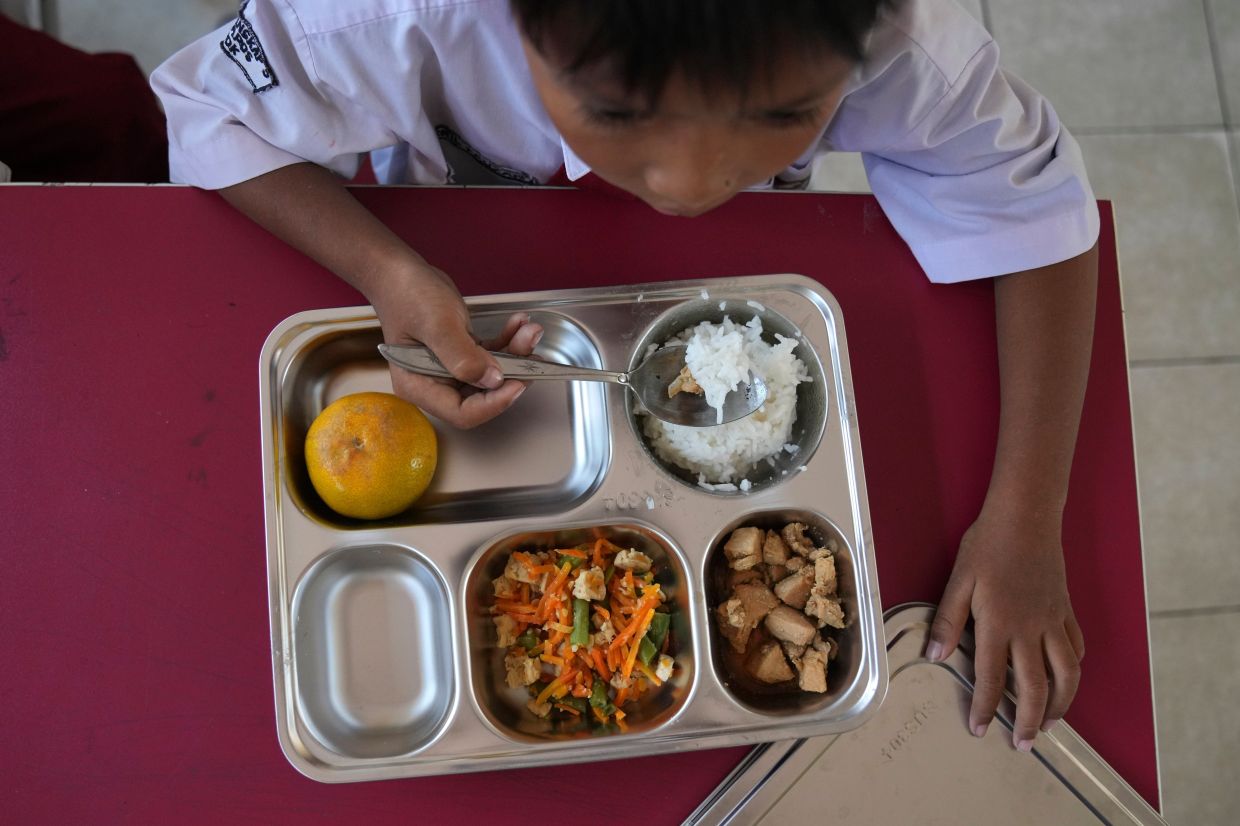
Indonesia's leading anti-corruption advocacy group has intensified pressure on the government to freeze President Prabowo Subianto's expansive free meals programme, arguing that current enforcement efforts do not adequately address systemic governance failures embedded within the initiative. Indonesia Corruption Watch has gone further than previous critics by recommending the outright dissolution of the National Nutrition Agency, or BGN, which administers what is nominally a poverty-reduction and nutrition initiative but has become a focal point of controversy barely two years after its establishment.
The watchdog's call for drastic action stems from mounting evidence of mismanagement and potential corruption across the sprawling operation. Earlier this month, authorities dismissed Dadan Hindayana as head of BGN and subsequently launched a formal corruption investigation into him, marking the first major accountability move since the programme's inception. The investigation has already ensnared four additional suspects, including two of Hindayana's former deputies, signalling that impropriety may extend well beyond the agency's top leadership. For Malaysian observers, this pattern of graft discovery within a government institution tasked with managing massive social expenditure carries resonance, as Southeast Asian nations continue wrestling with accountability in large-scale welfare programmes.
Wana Alamsyah, who heads the law and investigation division at Indonesia Corruption Watch, argues that authorities have barely scratched the surface of a far larger problem. He contends that investigators must systematically examine the roles of vendors, procurement committee members, and other parties who may have profited from the programme's chaotic rollout and inadequate oversight mechanisms. His organisation's previous research uncovered troubling connections between kitchen operators and politically-connected individuals, including politicians, military figures, and business networks, suggesting that the programme has become a vehicle for patronage distribution rather than genuine nutritional improvement.
The scale of the initiative underscores why corruption risks loom so large. The BGN oversees a roughly US$15 billion nationwide operation that currently delivers meals to more than 60 million people across Indonesia, making it one of Asia's most ambitious social feeding programmes. The sheer volume of transactions, procurement decisions, and kitchen operations creates countless opportunities for diversion and fraud, particularly when institutional safeguards prove inadequate. That such a massive programme was established and rapidly scaled within less than two years, without corresponding development of robust monitoring and accountability frameworks, represents a critical governance failure that observers across the region should view with concern.
Public criticism of the programme has been mounting for months, yet the government only moved to investigate once formal complaints were lodged through official channels. Wana notes the curious lag between widespread complaints on social media about food poisoning, poor meal quality, and ultra-processed foods in early 2025 and the government's current investigative action. He suggests that deteriorating fiscal circumstances, rather than institutional conscience, may have finally prompted authorities to act, pointing to strains on Indonesia's budget caused by rising fuel subsidy costs amid regional geopolitical tensions. This interpretation suggests that the investigation may be less about genuine anti-corruption commitment and more about creating political cover for programme restructuring.
The newly-appointed head of the BGN, Nanik S. Deyang, has announced a recalibration of the initiative's objectives, acknowledging that the original approach was unsustainable and poorly conceived. Rather than pursuing the government's ambitious target of reaching 82.9 million recipients, Deyang has signalled an intention to focus on remote regions and quality improvement, with spending expected to fall below the budgeted 268 trillion rupiah for this year. She has also imposed a moratorium on new kitchen construction and proposed redirecting meals through existing facilities such as school canteens, recognising that the rapid kitchen expansion may have occurred without proper due diligence.
President Prabowo has publicly warned against tolerance for corruption within the programme, declaring that he will not countenance the theft of public funds and that no officials should expect exceptions from accountability standards. Yet critics question whether presidential rhetoric can overcome structural vulnerabilities that allowed such extensive mismanagement to flourish. Independent research institutions have raised fundamental questions about the programme's design and targeting, noting that implementing free meals across all Indonesian schools rather than concentrating resources in genuinely deprived rural and poorer areas represents a significant misallocation of resources. A Centre of Economic and Law Studies report found that nearly 80 per cent of respondents recognised potential conflicts of interest in vendor selection processes, demonstrating how openly flawed procurement arrangements proceeded.
Public opposition has also manifested in street protests, with students clashing with police in Jakarta in early June whilst demanding the programme be scrapped entirely. Subsequent demonstrations in major cities prompted authorities to deploy more than 6,000 police and military personnel in the capital, reflecting genuine public disquiet over both the programme's cost and its implementation. For a region already watchful of government spending and fiscal management, Indonesia's struggles with programme integrity serve as a cautionary reminder of how quickly well-intentioned social initiatives can become vehicles for waste and corruption when oversight mechanisms are weak.
The Indonesia Corruption Watch investigation findings carry implications beyond Jakarta's immediate political dynamics. The discovery of extensive patronage networks embedded within what should be a technocratic nutrition programme demonstrates how vulnerabilities in institutional design can systematically compromise social spending across multiple government agencies. As Southeast Asian nations increasingly launch ambitious welfare initiatives to address poverty and malnutrition, the Indonesian experience suggests that programme architects must prioritise governance frameworks, transparency mechanisms, and procurement discipline from inception rather than treating these as afterthoughts.
Economists and investors have grown increasingly nervous about the budgetary implications of the free meals programme, particularly as fiscal pressures mount from rising energy costs and subsidy obligations. Some analysts question whether the initiative will deliver the promised employment, health, and economic multiplier effects, or whether it represents primarily a consumption transfer that leaves underlying productivity challenges unaddressed. The programme's redesign may ultimately prove less about principled anti-corruption action and more about fiscal rebalancing, a concern that Wana's scepticism appears to reflect.
As Indonesia's new leadership attempts to recalibrate the free meals initiative, the broader question of institutional accountability remains unresolved. Dissolving the BGN, as Indonesia Corruption Watch has recommended, would represent a dramatic acknowledgement of failure. More likely, the agency will be substantially reformed whilst maintaining the programme in modified form, allowing the government to preserve its signature social initiative whilst appearing responsive to corruption concerns. Whether such reform addresses the underlying governance vulnerabilities that enabled extensive mismanagement remains uncertain, making close monitoring essential for both Indonesian civil society and international observers concerned with the integrity of large-scale social spending across Southeast Asia.

