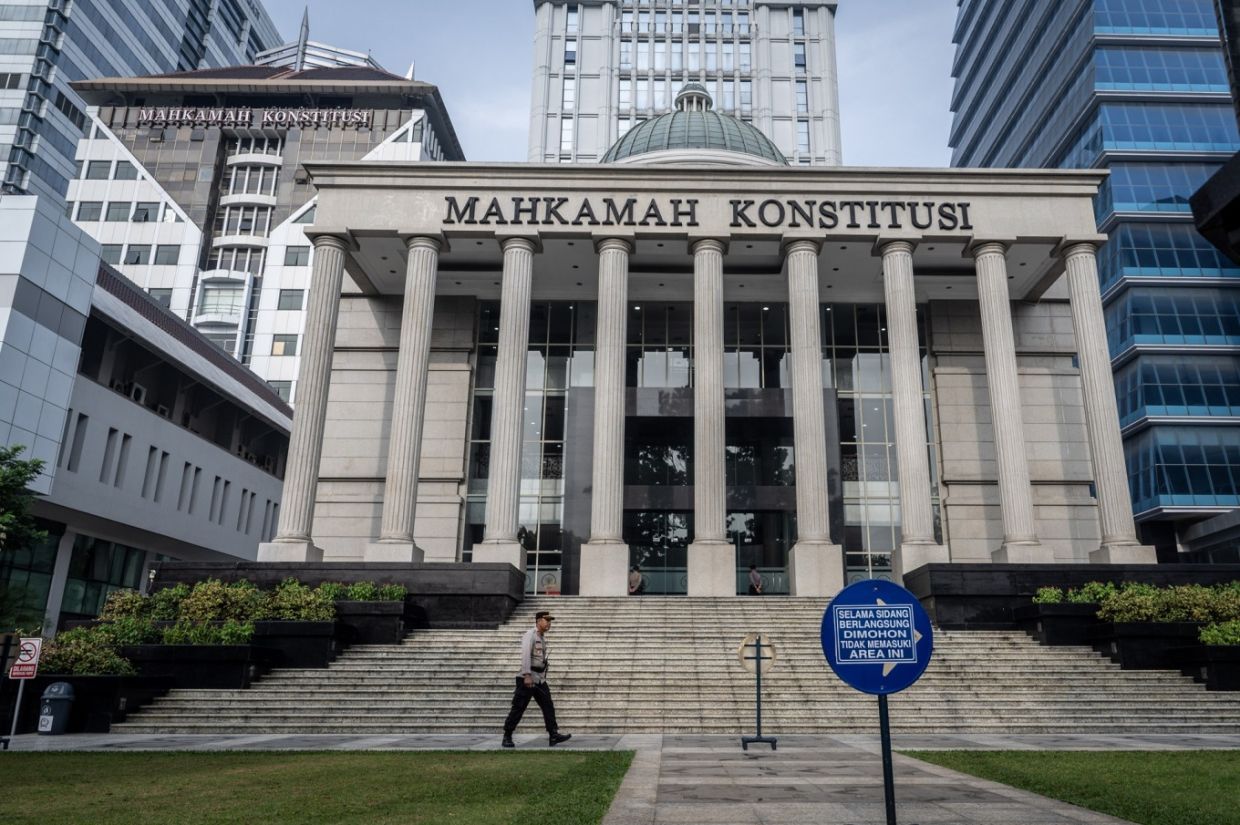
Indonesia's Constitutional Court has dealt a significant blow to President Prabowo Subianto's flagship free nutritious meal initiative, ordering the government to cease financing the programme through education budget allocations. The nine-justice panel issued the directive on Thursday following a petition brought by education nonprofit Yayasan Taman Belajar Nusantara, alongside a university lecturer and contract teacher who contested the budgetary arrangement. The ruling represents a major constitutional rebuke to one of the administration's most high-profile social programmes, raising questions about its long-term sustainability and government priorities.
The court's fundamental objection centres on a constitutional incompatibility: the 1945 Indonesian Constitution mandates that at least 20 per cent of the national budget must be dedicated exclusively to education, and the justices determined that nutrition subsidies, however socially beneficial, do not fall within this protected category. Justice Enny Nurbaningsih explained during the ruling's delivery that the programme structure violates this constitutional safeguard. This interpretation suggests the court views education funding as requiring ringfencing for strictly pedagogical and institutional purposes, rather than broader social welfare initiatives that might improve learning conditions. The decision carries profound implications for how Southeast Asia's largest economy categorises and prioritises spending across competing social needs.
While the court set 2028 as the official deadline for implementation, Justice Nurbaningsih signalled flexibility regarding the 2027 budget cycle. The justice indicated that if the government could restructure spending allocations already negotiated since early 2026, separating the meals programme from education finances for the coming fiscal year would align better with constitutional requirements. This pragmatic language suggests the court recognised the political and administrative complexities of immediate reallocation, yet simultaneously emphasised the urgency of compliance. The messaging essentially permits a transitional adjustment period whilst maintaining the principle that education budgets cannot subsidise the programme indefinitely.
The scale of the financial stakes underscores why this ruling matters beyond mere constitutional technicality. From the Rp 3.8 quadrillion total state budget allocation, the free meals programme initially claimed Rp 335 billion this year—a staggering increase from Rp 71 trillion in the previous fiscal period. Within the education sector's Rp 769 trillion allocation, the meals initiative consumed approximately one-third of available funds. This concentration of education spending on nutritional provision rather than teaching infrastructure, curriculum development, or teacher compensation created the judicial opening that challengers exploited. The disproportion raised legitimate concerns among educators and education advocates that critical institutional needs were being squeezed.
Public and administrative pressures have already forced downward revisions to the programme's budget. Following various cost-containment measures and operational disruptions triggered by a significant corruption scandal within the National Nutrition Agency (BGN), funding was reduced to approximately Rp 229 trillion. The arrest of BGN head Dadan Hindayana and two deputies in a corruption investigation linked to the sprawling programme exposed governance weaknesses that compounded budgetary concerns. These institutional failures demonstrated that scale alone does not guarantee effective programme delivery, particularly when oversight mechanisms prove inadequate.
Social satisfaction metrics reveal declining public confidence in the initiative's value proposition. The latest survey from pollster Saiful Mujani Research and Consulting recorded approval at just 33.8 per cent this month, representing a precipitous 30 percentage-point collapse from 62.5 per cent in November 2025. This erosion reflects accumulating frustrations: incidents of mass food poisoning raised safety questions, while mounting concerns about programme cost and government financial strain shifted public perception from enthusiasm to scepticism. When flagship initiatives haemorrhage popular support whilst simultaneously triggering constitutional challenges, their political sustainability becomes questionable regardless of stated objectives.
The ruling carries particular significance for Malaysian and broader Southeast Asian observers monitoring Indonesia's institutional development. The Constitutional Court's willingness to constrain executive spending priorities through rigorous constitutional interpretation demonstrates that Indonesia's judicial institutions retain meaningful autonomy and interpretive authority. This capacity to review and occasionally restrict government budgetary choices represents a form of institutional check on executive power, even when the president commands substantial political capital. For regional democracies, the case illustrates how constitutional courts can become forums where resource allocation battles between competing social goods receive formal adjudication.
The implications for Indonesian education finance are profound and multifaceted. Removing approximately one-third of current education budget allocations from the meals programme should theoretically free substantial resources for reinvestment in schools, teacher salaries, learning materials, and infrastructure. Yet the political feasibility of such reallocation remains uncertain. The Prabowo administration championed the meals programme as a signature anti-poverty initiative, and defending it against constitutional challenge may have become a prestige matter. Alternative funding sources—whether through specific nutrition budgets, health ministry allocations, or new revenue mechanisms—will require negotiation and potential political compromise that may prove contentious.
The court's decision also exposes tensions within Indonesia's development strategy regarding poverty reduction approaches. Nutritional support for schoolchildren addresses immediate material deprivation and potentially enhances learning capacity, making it attractive as a populist policy. Yet prioritising such direct transfers through education budgets over institutional educational investment reflects particular policy choices with long-term consequences. Whether Indonesia's education system gains net benefit from separating meals funding and potentially recovering budget space for traditional educational expenditure depends entirely on government follow-through—a proposition rendered uncertain by the administration's clear attachment to the programme.
For regional policymakers, the case demonstrates the judiciary's capacity to shape budgetary debates through constitutional interpretation. As Southeast Asian governments increasingly pursue ambitious social spending programmes, courts may become more active in scrutinising whether financing mechanisms align with constitutional mandates. This development suggests that careful attention to budgetary architecture—which account finances which programme—becomes legally consequential, not merely administrative. Governments must ensure social initiatives occupy constitutionally appropriate funding categories or face judicial intervention that can disrupt programme delivery and political planning.
The Constitutional Court's ruling ultimately reflects judicial institutional maturity and constitutional fidelity, even when constraining popular presidential initiatives. The court accepted the petitioners' fundamental argument: that constitutional budget protections for education require actual educational spending, not broader social programmes however meritorious. Whether this judgment spurs effective programme relocation, genuine education sector investment, or simply political recalibration around the ruling remains to be seen. What seems certain is that Indonesia's free meals initiative, despite its poverty-reduction intentions, must now find alternative funding pathways or face steady marginalisation as education budgets reorient toward strictly pedagogical purposes.

