President Prabowo Subianto's flagship free nutritious meal programme, launched to address malnutrition and child stunting nationwide, has become a flashpoint of public controversy, triggering duelling demonstrations across Indonesia that expose profound fault lines over fiscal responsibility, governance integrity and social protection priorities.
The nationwide initiative, allocated Rp 335 trillion (approximately USD 15 billion) in the current fiscal year and designed to reach roughly 83 million beneficiaries including schoolchildren, pregnant women and nursing mothers, represents one of the administration's most ambitious social expenditure commitments. Yet the scheme has deteriorated into a credibility crisis for the government, overwhelmed by mounting complaints of systemic corruption, food safety failures and unsustainable budgetary demands at a moment when Jakarta is simultaneously implementing austerity measures across other sectors. The detention of three senior National Nutrition Agency (BGN) officials on corruption allegations has intensified scrutiny and emboldened critics questioning whether the programme delivers genuine developmental benefit or functions primarily as a vehicle for siphoning public resources.
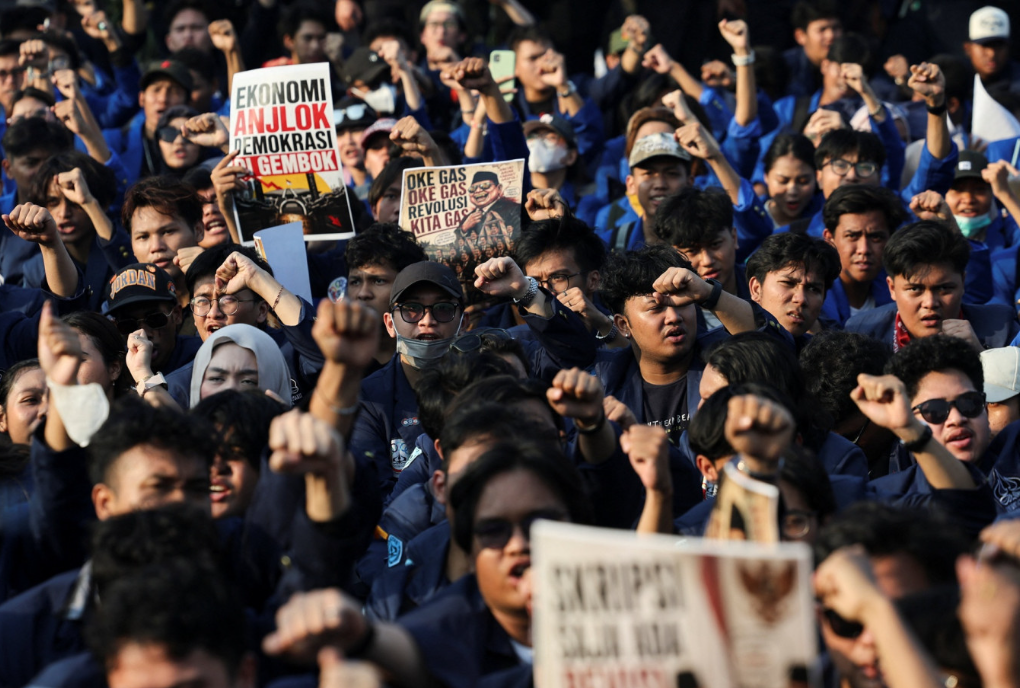
On Monday in Denpasar, Bali, hundreds of university students assembled outside the regional legislative headquarters to demand a sweeping examination of the programme's operations and finances. Their call for intervention by the Supreme Audit Agency (BPK) reflected broader anxiety about whether state money designated for nutritional support is reaching intended recipients or being diverted through corrupt intermediaries. The students simultaneously articulated grievances extending beyond the meal scheme itself—including dissatisfaction with Indonesia's macroeconomic trajectory and governance institutions—suggesting that the nutrition programme has become a symbolic focal point for youthful frustration with perceived administrative mismanagement.
Meanwhile, in Jakarta's Central Business District, thousands of students mobilised by the Indonesian Islamic Student Movement (PMII) and supported by activists from Trisakti University, Mercu Buana University and Esa Unggul University converged on the House of Representatives complex on June 22 to demand complete replacement of BGN leadership. Their slogans concentrated fire on what they characterised as reckless government profligacy, framing the free meal programme as emblematic of wasteful spending patterns that squander resources needed for economic stabilisation and public sector wage improvements. These demonstrations reflected persistent student activism traditions in Indonesia, where campus-based movements have historically served as early-warning mechanisms for broader societal discontent with policy implementation. Similar protests materialised simultaneously in Batam, where university student coalitions pressed authorities to conduct rigorous programme evaluation and suspend operations if assessments indicated ineffectiveness or poor targeting.
However, the narrative became considerably more complicated when those directly dependent on the programme's continuation mobilised counter-demonstrations. In Batam, approximately 1,500 kitchen workers employed through the scheme organised protests asserting that proposed reductions in meal distribution frequency—from six to five days weekly—and suspension during school holiday periods would devastate household incomes for labourers compensated on daily wage bases. Their coordinator Langga Husein emphasised that operational cutbacks would disproportionately harm vulnerable populations including pregnant women, nursing mothers and infants, who require consistent nutritional support irrespective of school calendars. This argument highlighted a critical tension: those experiencing material precarity saw the programme not as wasteful expenditure but as essential income support, whereas student critics viewed it primarily through fiscal and governance lenses.
The economic constituencies benefiting from programme continuity extended beyond direct employees. In Bandar Lampung, residents including agricultural producers staged rallies supporting the initiative, characterising it as a vital stimulus for rural commodity markets. Coordinator Maradoni outlined how the scheme's sourcing of corn, rice, cassava, fruits and vegetables had stabilised agricultural prices, thereby supporting farmer incomes throughout supply chains. This perspective revealed how the programme's fiscal footprint extended beyond direct recipient nutrition to encompass broader rural development and livelihood implications, complicating simplistic cost-benefit assessments that treated the initiative solely as an expenditure line requiring trimming.
Government officials have resisted demands for programme suspension, though they have acknowledged implementation deficiencies warranting structural adjustment. Muhammad Qodari, head of the Government Communications Agency, publicly committed to programme continuation alongside remedial improvements rather than termination. This stance reflects official recognition that abrupt suspension would create severe political costs, particularly given the scheme's visibility to beneficiary populations and dependent workers. Nevertheless, authorities have already implemented significant budget reductions, cutting the original Rp 335 trillion allocation to Rp 228.4 trillion according to BGN Deputy Head Agustina Arumsari, and introducing efficiency measures including operational suspension during the late June through mid-July school break and cessation of meal distribution in 76 schools located in affluent areas presumed capable of privately securing adequate nutrition.
These targeted adjustments represented an attempt to balance fiscal pressures against political sustainability, yet they proved insufficient to satisfy either constituency. Student activists perceived the reforms as insufficient remediation of systemic corruption and wasteful spending patterns, viewing efficiency measures as cosmetic gestures incapable of addressing underlying governance failures. Conversely, programme beneficiaries and workers characterised even modest reductions as threatening their livelihoods and vulnerable populations' nutritional security. The impasse reflected fundamental disagreements about programme objectives—whether the scheme primarily functioned as social protection infrastructure requiring preservation or as discretionary spending vulnerable to contestation during periods of fiscal strain.
The competing demonstrations across multiple regions—including sustained protests in Jakarta, West Nusa Tenggara and East Java alongside Bali and Batam mobilisations—suggested that the programme had crystallised genuine ideological and material divisions across Indonesian society. University-based critics invoked governance standards and macroeconomic responsibility, while workers and rural communities emphasised livelihood preservation and social protection coverage. These competing narratives reflected divergent economic positions, with those facing material precarity perceiving the programme as essential survival infrastructure, whilst those possessing greater economic security viewed it through fiscal discipline frameworks.
For Malaysia and broader Southeast Asia, Indonesia's experience offered cautionary perspectives on implementing large-scale social expenditure commitments during periods of macroeconomic uncertainty. The scheme's encounter with corruption allegations and public contestation underscored how social protection initiatives, whilst nominally advancing poverty reduction and health objectives, required robust governance architecture, transparent procurement systems and genuine beneficiary targeting to maintain political legitimacy. The Indonesian case suggested that absence of these institutional foundations could transform well-intentioned programmes into liabilities, fuelling public distrust in state capacity and generating political mobilisation from both reform-oriented constituencies and programme beneficiaries themselves.
Looking forward, President Prabowo's administration faced the challenge of navigating between programme preservation and governance renovation, between fiscal retrenchment and social protection coverage. Whether the government could accomplish simultaneous implementation improvements, corruption prosecution and efficiency gains remained uncertain, but the intensity and geographic spread of competing demonstrations suggested that the issue would persist as a defining test of administrative competence and developmental commitment throughout the presidency.

