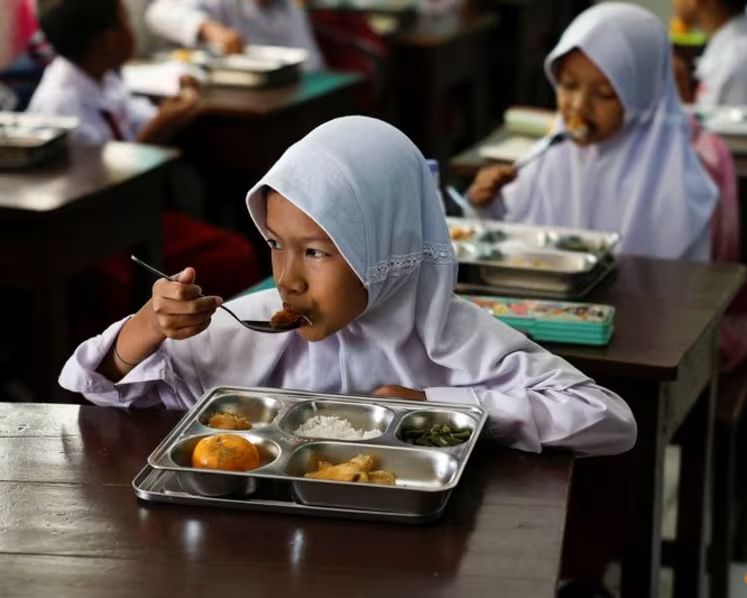
President Prabowo Subianto's centrepiece social programme encountered another significant setback on Wednesday when Nanik Sudaryati Deyang, head of the National Nutrition Agency, announced her resignation citing medical reasons. The departure represents the second major leadership upheaval at the agency within a span of just over a month, underscoring the mounting difficulties surrounding what was intended to be Indonesia's most transformative welfare initiative. Nanik, who assumed control of the agency only in June, cited the need to seek overseas medical treatment for a heart condition that worsened under the pressures of the role.
The resignation unfolds against a backdrop of mounting institutional strain at the National Nutrition Agency. Nanik's immediate predecessor was removed from office last month and subsequently arrested on corruption allegations tied to the multibillion-dollar free meals scheme. The rapid turnover at the helm signals deeper governance challenges that extend well beyond personnel management. In her departure announcement via social media, Nanik indicated that President Prabowo had granted her request to step down, while simultaneously offering her a position leading a proposed supervisory board for the agency—a move that suggests the government is contemplating structural reorganisation of how the programme operates.
The medical circumstances of Nanik's exit shed light on the extraordinary pressures facing those responsible for executing the scheme. She disclosed that her physician had warned of dangerously clogged arteries, attributing the condition to extreme occupational stress. This revelation underscores the genuine human toll of managing such an ambitious and scandal-plagued undertaking. The nexus between her health crisis and the job's demands raises questions about whether the agency's operational environment remains sustainable for effective leadership, regardless of who fills the vacant position.
Financial constraints have emerged as a critical constraint on programme implementation. The National Nutrition Agency announced a second round of budget reductions on the day preceding Nanik's resignation, with the 2026 allocation slashed from 268 trillion rupiah to 229 trillion rupiah—equivalent to approximately $12.79 billion USD. This cut represents only the latest reduction affecting the programme's finances. The initial budgetary allocation of 335 trillion rupiah has been progressively eroded, leaving the current budget more than 100 trillion rupiah below the original estimate. Agency officials suggested that the possibility of further reductions could not be excluded pending subsequent budgetary reviews, introducing uncertainty about the programme's future resource availability.
The initial scope of the free meals initiative demonstrates how radically the programme has contracted under fiscal pressure. When first announced, the scheme targeted the provision of subsidised meals to approximately 83 million Indonesians, encompassing children, pregnant women, and other vulnerable populations. This represented an extraordinarily ambitious undertaking that would have required substantial logistical coordination across the archipelago. However, by the time of Nanik's resignation, the agency had managed to reach only 62.5 million beneficiaries—substantially below the original target and leaving a significant gap between aspiration and implementation.
The free meals programme has been beset by operational and reputational difficulties since its rollout in January 2025. Multiple episodes of mass food poisoning have generated negative publicity and eroded public confidence in the initiative. Beyond contamination incidents, beneficiaries and observers have raised concerns about the quality and nutritional adequacy of meals being distributed. Logistical challenges in reaching remote areas and coordinating supply chains across Indonesia's diverse geography have further complicated implementation. These practical difficulties have intersected with the political controversies surrounding the programme, creating a complex challenge for administrators seeking to salvage its credibility.
Succession planning remains uncertain as the agency navigates the leadership vacuum. Nanik indicated that her successor would be a junior colleague within the National Nutrition Agency, though she did not publicly identify the individual. The absence of immediate clarification from the agency regarding the incoming chief suggests ongoing disarray within the institution. The lack of transparency about continuity and succession raises concerns about institutional stability and whether newly appointed leadership will possess the authority and political cover necessary to address the programme's mounting difficulties.
Nanik's positioning of the free meals scheme as fundamentally a nutritional intervention rather than a political project speaks to underlying tensions surrounding the programme's place in Indonesia's political economy. Critics and observers have characterised the initiative as driven by election campaign commitments and political considerations rather than evidence-based social policy. By reframing the programme as an intervention to address childhood malnutrition, Nanik attempted to depoliticise it—a rhetorical strategy that underscores how deeply the initiative has become entangled with broader questions about the government's priorities, competence, and management of public resources.
The programme's travails carry implications that extend well beyond Indonesia itself, particularly for Southeast Asia and the broader developing world. As one of the region's largest economies and most influential democracies, Indonesia's experience with large-scale social welfare initiatives shapes perceptions about the feasibility and risks of ambitious public programmes in middle-income contexts. The free meals scheme exemplifies the considerable implementation challenges that emerge when governments attempt to rapidly scale welfare provision across geographically dispersed, institutionally complex societies. The combination of budget pressure, administrative dysfunction, and quality control failures offers cautionary lessons about the tempo and ambition of programme expansion.
The ongoing criminal investigation into the free meals programme suggests that the leadership instability reflects not merely operational difficulties but potential systematic corruption. The arrest of Nanik's predecessor on graft charges indicates that resource diversion and malfeasance may have compromised programme integrity. This dimension transforms the challenge from one of administrative incompetence into a governance crisis with possible criminal dimensions. Prabowo's willingness to remove agency heads and support criminal investigations demonstrates pressure to restore institutional credibility, though sceptics might question whether such measures address fundamental structural weaknesses.
President Prabowo's consideration of establishing a supervisory board for the National Nutrition Agency represents a potential structural response to the programme's accumulated difficulties. Such a governance arrangement might attempt to introduce external oversight and coordination while insulating the agency from direct presidential direction. However, the effectiveness of such measures depends crucially on the composition, authority, and independence of any supervisory body. If constituted as another layer of patronage or populated by politically connected figures, such a board might compound rather than resolve institutional challenges.
The trajectory of the free meals programme from flagship election pledge to crisis management situation within months encapsulates broader challenges facing Indonesia's governance apparatus. As the nation confronts questions about fiscal sustainability and administrative capacity, the difficulties surrounding this high-profile initiative will likely feature prominently in assessments of government performance. Future beneficiaries and policymakers across Southeast Asia will closely monitor whether Indonesia can stabilise the programme or whether it evolves into a cautionary tale about the perils of overambitious welfare expansion without adequate institutional preparation.

