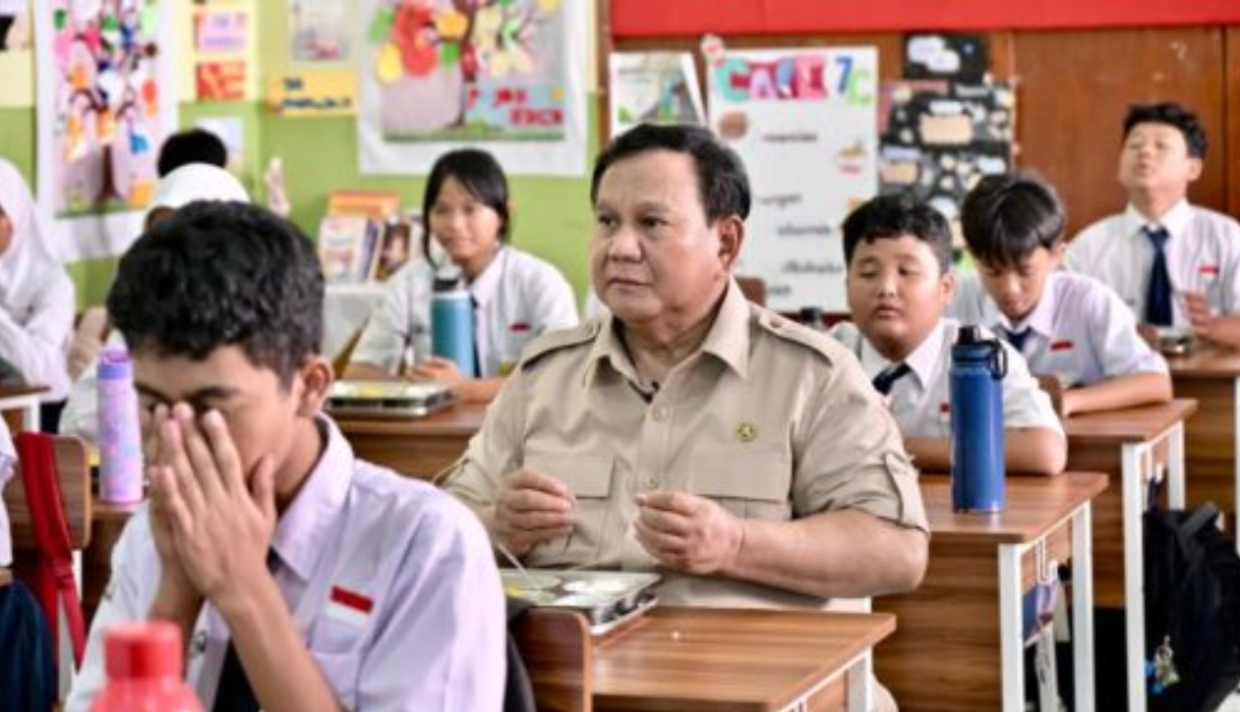
President Prabowo Subianto's centrepiece nutritional intervention programme is facing an intensifying political and legal challenge, with influential institutions questioning both its implementation and constitutional basis. The National Commission on Human Rights (Komnas HAM) has formally documented serious shortcomings in the scheme, which currently serves 61 million students and pregnant women nationwide, triggering renewed calls for suspension and comprehensive restructuring.
In a formal statement released on June 15, Komnas HAM commissioner Pramono Ubaid Tanthowi detailed systematic failures across the initiative's delivery architecture. The commission identified ineffective programme rollout, persistent gaps in public accountability, recurring food poisoning incidents that have affected thousands of beneficiaries, and inadequate response protocols for victims suffering foodborne illness. These findings represent a formal human rights body's assessment that fundamental protections for vulnerable populations have been compromised during implementation. The commission's investigation concluded that children's constitutional rights to health and nutrition have been violated, alongside broader public entitlements to transparent food distribution and access to remedies when harm occurs.
Komnas HAM's analysis revealed that the programme's emphasis on rapid expansion to maximise recipient numbers has come at the expense of nutritional quality and safety assurance. The commission recommended that policymakers redirect focus toward concentrated service delivery in remote areas and disadvantaged regions where malnutrition remains most acute, rather than pursuing universal coverage that stretches administrative and logistical capacity. This reframing suggests that better targeting of vulnerable populations would produce superior health outcomes compared to the current mass-distribution model.
Student activism has amplified institutional criticism through organised campus rallies across the country, escalating pressure on the government to pause operations pending reform. These protests reflect broader student concern about the programme's structural deficiencies and its implications for the education system. The momentum generated by youth mobilisation has created a political environment in which continued programme expansion becomes increasingly untenable without addressing underlying implementation failures.
The Constitutional Court has emerged as a critical arena for challenging the scheme's legal architecture, with seven petitions now before the bench. Civil society organisations, teacher unions, and student groups have argued that allocating Rp 335 trillion (approximately US$18.86 billion) from the 2026 state budget to the meals initiative violates Indonesia's constitutional education spending mandate. The constitutional requirement stipulates that 20 per cent of the state budget must be dedicated to education, particularly to enhance educator compensation and welfare. Petitioners contend that redirecting education funds toward the meals programme breaches this fundamental obligation, creating a constitutional conflict at the programme's financial foundation.
A teacher's emotionally resonant testimony during Constitutional Court hearings on June 15 crystallised the competing budgetary pressures facing Indonesia's education sector. The educator emphasised that despite the constitutional mandate to allocate one-fifth of all state spending to education, many teachers remain inadequately compensated. This testimony underscored the perception that the meals programme diverts resources that should flow toward professional educator development and income enhancement—investments that sustain education quality across the system. Edy Kurniawan Wahid, representing petitioners through the Indonesian Legal Aid Foundation (YLBHI), argued that the programme's continuing operation during court proceedings undermines education infrastructure. He recommended that operations be halted immediately until constitutional deliberations conclude, preventing further resource diversion while legal questions remain unresolved.
Muhammadiyah, one of Indonesia's largest Islamic civil society organisations, has joined the coalition of groups challenging the scheme. Muhammad Busyro Muqoddas articulated the coalition's position that the programme demonstrates pervasive transparency deficiencies and generates consequences that outweigh its intended benefits. He called for at minimum a temporary suspension coupled with thorough evaluation of implementation mechanisms, suggesting this pause would allow structural improvements before resuming operations on a revised basis. This position from a major civil society player reflects broader assessment that the current implementation model requires fundamental recalibration.
The government has resisted suspension calls, with Government Communications Agency head Muhammad Qodari insisting that continuing the programme constitutes essential commitment to Prabowo's electoral pledges. Officials frame programme preservation as politically necessary, implying that scaling back or halting operations would signal governmental reversal of campaign commitments. This stance has created tension between government accountability for implementation quality and political defence of flagship policy commitments.
Meanwhile, fresh National Nutrition Agency (BGN) leadership has moved to implement operational improvements during the upcoming school holiday period spanning mid-June through mid-July. BGN deputy head Agustina Arumsari disclosed plans to audit all 27,000 existing nutrition fulfillment service unit kitchens, utilising the school closure window to suspend meal preparation while conducting comprehensive facility inspections. The audit framework will assess kitchen hygiene standards, food safety compliance, quality assurance systems, and beneficiary data accuracy. This operational pause represents implicit acknowledgment that current facilities require urgent improvement before resuming food service.
The BGN's reform agenda extends beyond facility inspection to restructure financial incentive mechanisms underpinning the programme. Currently, participating kitchens receive a flat Rp 6 million incentive regardless of beneficiary volume, creating misalignment between compensation and actual service delivery. The revised approach would calibrate incentives to match actual beneficiary numbers served by each facility, theoretically improving resource efficiency. The agency is also considering consolidating some catering units to achieve operational streamlining and reorienting the programme toward highest-need populations. Deputy head Arumsari emphasised that upcoming assessments will prioritise food quality and safety standards alongside quantitative output measures, signalling agency commitment to accountability across multiple dimensions.
The Constitutional Court's deliberations will ultimately determine whether the Rp 335 trillion allocation can continue or whether the education budget constraint forces programme restructuring. The court's timeline and ruling will significantly influence whether the meals initiative continues under current parameters, undergoes scaled reform, or faces suspension pending substantial redesign. For Southeast Asian observers, Indonesia's experience illustrates challenges inherent in rapidly scaling ambitious social programmes without adequate implementation oversight—a pattern increasingly familiar across the region as governments pursue expansive welfare initiatives.
The intersection of legal challenge, administrative dysfunction, and political commitment suggests that Indonesia's meals programme will undergo material transformation regardless of Constitutional Court outcomes. Whether reform emerges through judicial intervention, negotiated government revision, or continued pressure from rights bodies and civil society, the current implementation model faces terminal challenges. The programme's future increasingly depends on whether officials can demonstrate meaningful improvements in food safety, transparency, and financial accountability during the upcoming audit period and Constitutional Court proceedings.

