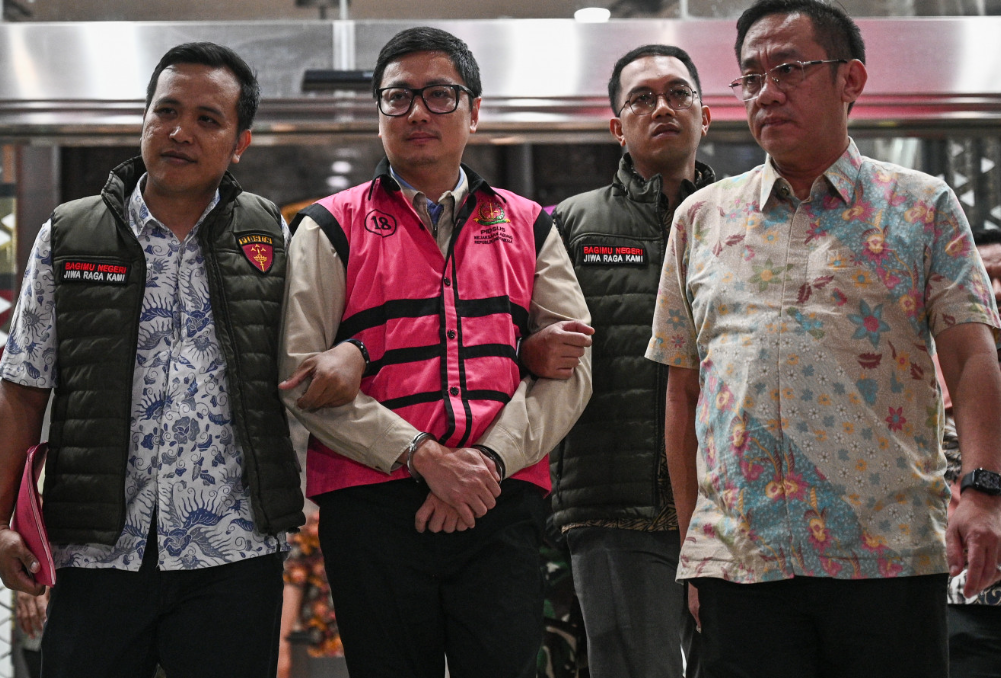
Indonesia's sprawling corruption investigation into its free nutritious meals initiative has widened significantly with the arrest of two additional suspects, bringing the total number of people detained in the scheme to five. The Attorney General's Office has been systematically dismantling the network allegedly behind the theft and mismanagement of funds in what was intended to be a flagship social welfare programme feeding over 80 million schoolchildren and pregnant women across the archipelago.
The latest detentions centre on allegations of procurement fraud involving motorcycles earmarked for programme kitchens nationwide. Andri Mulyono, a commissioner at logistics company PT Yasa Artha Trimanunggal, was arrested on June 12 after investigators determined he had manipulated pricing on more than 21,000 electric motorcycles to artificially inflate costs and reach the National Nutrition Agency's budgeted spending ceiling of Rp 1.03 trillion. This scheme allowed him and his associates to siphon off substantial sums that should have been devoted to the programme's core mission. The investigation's special crimes division has characterised this as unlawful enrichment through deliberate manipulation of procurement processes, a finding that underscores how deep corruption penetrated the programme's operational infrastructure.
Another businessman, Asep Yusuf Somantri, was also detained as part of the expanding investigation. Authorities allege he leveraged his relationship with former National Nutrition Agency deputy head Sony Sonjaya to gain inappropriate access to the partner verification process. This allowed him to influence which kitchens could participate in the programme and to approve applications even after official registration periods had closed, fundamentally compromising the integrity of the selection mechanism. The pattern suggests corruption was not incidental but systematic, woven into multiple layers of the programme's administration and involving well-coordinated networks of officials and private sector figures.
The three initial detainees arrested in early June remain central to the investigation. Former agency head Dadan Hindayana and deputy heads Sony Sonjaya and Lodewyk Pusung were all taken into custody immediately after President Prabowo Subianto terminated their positions, indicating the scale of the scandal was severe enough to warrant presidential intervention. These senior officials appear to have enabled or directly facilitated the corrupt arrangements that allowed contractors and associates to exploit the system for personal gain. The speed of their removal suggests officials within the administration recognised the reputational damage and legal jeopardy posed by the scandal.
A significant development involves Sony Sonjaya's application to become a justice collaborator, which would grant him legal protection in exchange for disclosing information about others involved. Investigators have indicated Sony possesses knowledge of approximately twenty additional individuals allegedly connected to the corruption scheme. If Sony's application proceeds, his testimony could substantially expand the investigation and potentially implicate officials and businesspeople currently operating outside the government's legal spotlight. This mechanism could prove instrumental in untangling the full scope of the network and identifying whether corruption extended into other government agencies or levels.
The programme itself has faced cascading crises beyond the corruption allegations. Since its rollout in early 2025, authorities have documented at least 33,000 reported cases of mass food poisoning, raising fundamental questions about food safety oversight and implementation quality. These health incidents have inflicted real harm on the intended beneficiaries and generated widespread public anger. The combination of theft and health failures has transformed the initiative from a symbol of government competence into a emblem of institutional dysfunction and mismanagement.
The motorcycle procurement component of the scandal particularly galvanised public attention and sparked international criticism. In April, media outlets and civil society organisations questioned why the government was purchasing over 21,000 electric motorcycles for programme kitchens, arguing the expense seemed disproportionate and non-essential at a time when Indonesia's economy was struggling with currency weakness and inflation pressures. Finance Minister Purbaya Yudhi Sadewa has since acknowledged that no further motorcycle purchases will be authorised in 2026, attributing the initial approval to internal miscommunication within the ministry. This admission effectively conceded that budget allocation processes lacked adequate coordination and review mechanisms.
Public frustration boiled over into street protests on June 12, when students organised a demonstration symbolically titled #MenujuIndonesiaBangkrut, or Indonesia heading for bankruptcy. Demonstrators characterised the free meals initiative as a misplaced priority given the country's economic headwinds and deteriorating currency conditions. The protest reflected broader concerns among Indonesians that public resources were being squandered on poorly managed programmes while more pressing economic and social needs remained unaddressed. This sentiment poses a political threat to the government's credibility and raises questions about its ability to implement large-scale social initiatives effectively.
Government officials have nonetheless defended the programme's continuation despite the corruption arrests and food safety crises. Muhammad Qodari, head of the Government Communications Agency, stated on June 13 that the initiative remains essential for addressing Indonesia's stunting crisis among vulnerable populations. His comments acknowledged that implementation challenges are inevitable but argued that corruption and operational failures should not justify programme termination. This defence reflects the government's commitment to the programme's core objective, even as the execution has plainly faltered. The argument also subtly shifts responsibility for failures to inevitable implementation difficulties rather than systemic design flaws or institutional capture.
The scandal carries significant implications for Southeast Asia's development community. Indonesia is the region's largest economy, and widespread corruption in flagship social programmes undermines investor confidence and aid effectiveness. The case also demonstrates how sophisticated networks can penetrate government procurement systems even when programmes have genuine social merit. For other regional governments attempting ambitious health or nutrition initiatives, the Indonesian example illustrates the necessity of robust oversight mechanisms, transparent procurement processes, and multi-agency coordination before programmes launch at scale. The cost of failure extends beyond the Rp 1.03 trillion in fraudulent procurement to include the programmes' failure to meet its humanitarian objectives.
Looking forward, the investigation's trajectory will determine whether authorities can comprehensively identify and prosecute the networks involved. Sony Sonjaya's potential justice collaboration agreement could prove pivotal in expanding the case and establishing whether higher-level officials beyond the three already detained were complicit. The government faces pressure to demonstrate that the anti-corruption measures are rigorous and impartial, particularly given the cases involve appointees of the current administration. How effectively the Attorney General's Office pursues the investigation and whether additional arrests follow will signal whether Indonesia's anti-corruption institutions function independently or whether political considerations constrain their reach.

