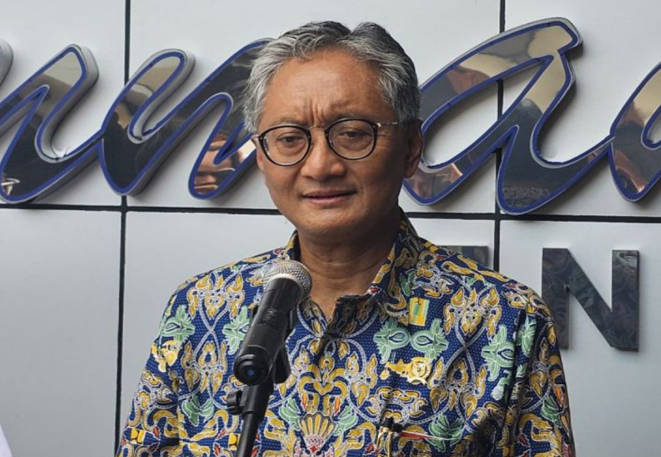
Indonesia's Public Works Ministry finds itself mired in controversy following the public release of an internal travel document that has exposed tensions within the sprawling bureaucracy and triggered speculation about ministerial restructuring. The leak centred on plans for Minister Dody Hanggodo to lead a delegation to New York between July 13 and 19 to participate in a United Nations-organised meeting, with the controversial detail that his wife Irma Hermawati and daughter Aurellia Tsabitha Meidirama were listed as official delegates. The document, signed by ministry secretary-general Apri Artoto on June 29 and detailing eight total participants, rapidly circulated across social media platforms early this month, prompting immediate public backlash over perceived misuse of government resources and protocol violations.
The inclusion of family members in an official state delegation proved deeply damaging to the minister's credibility, drawing sharp criticism from civil society observers and prompting inquiries into whether taxpayer funds were being diverted for personal benefit. Though Apri subsequently attempted damage control by explaining that the family members' names appeared merely to facilitate visa processing through the Foreign Ministry, and insisting no state budget would fund their actual participation, the justification rang hollow to many observers. The controversy ultimately proved sufficient to derail the entire trip, which was cancelled before departure dates arrived. Within days of the document going viral, social media platforms buzzed with reports claiming Dody had orchestrated a wave of staff reassignments as punishment targeting officials suspected of leaking the sensitive material.
When confronted by journalists on Wednesday, Dody acknowledged the personnel transfers but categorically denied they represented retaliation for the leaked document. His defensive posture suggested irritation at the questioning, with the minister pointing to his massive workforce as justification for regular administrative movement. "I have 38,600 employees, why shouldn't I be allowed to reassign them?" Dody told reporters, according to Kompas.com. The comment revealed underlying frustration with perceived attempts to constrain his managerial authority, yet did little to dispel suspicions that the timing of the transfers coincided suspiciously with the document leak. Multiple reports indicated that affected officials had been posted to regional offices predominantly situated outside Java, geographically distancing them from the ministry's power centre in Jakarta.
The current crisis represents merely the latest episode in Dody's tumultuous tenure as minister, a position he has held since October 2024. The 60-year-old engineer-turned-politician, who possesses business connections to South Kalimantan entrepreneur Andi "Haji Isam" Syamsuddin Arsyad, has distinguished himself through an aggressive approach to personnel management that has left the ministry's workforce in a state of perpetual anxiety. Social media compilations have documented the reassignment of more than 100 employees during his stewardship, spanning hierarchical levels from director generals down to junior civil servants. This pattern of constant organisational turbulence reflects either a deliberate strategy to consolidate control or a concerning lack of institutional stability, depending on one's assessment of the minister's governance philosophy.
The May reshuffle proved particularly significant, as Dody installed Apri Artoto as secretary-general, effectively the ministry's top administrative officer, replacing Wida Nurfaida who had occupied the position for less than a year. That previous changeover itself had followed another major restructuring in July 2025, suggesting a recurring cycle of institutional instability. The relentless personnel churn has begun attracting critical attention from parliamentary oversight bodies charged with monitoring infrastructure sector management. During a June session, Yasto Soepredjo Mokoagow, a House of Representatives Commission V member overseeing infrastructure portfolios, expressed serious concern about the psychological impact on ministry staff.
The PDI-P lawmaker specifically highlighted how disciplinary measures, including demotions of senior directors to non-structural positions, had generated widespread apprehension throughout the organisation. Yasto warned that employees now feared initiating programmes or projects, concerned that any deviation or failure might trigger punitive action. During the June 11 meeting, he articulated deep anxiety that such a climate of fear and caution would inevitably degrade the ministry's capacity to execute complex infrastructure initiatives effectively. His comments captured a broader institutional concern that Dody's management style, regardless of its motivations, was creating paralysis rather than enhanced accountability.
Dody himself has repeatedly invoked the concept of a "deep state" operating within his ministry, employing metaphorical language comparing entrenched bureaucratic resistance to termites silently destroying an institution from within. This framing appears to justify his aggressive restructuring agenda as necessary defensive action against internal sabotage or obstruction. Yet this narrative, however sincerely held by the minister, does little to explain why multiple senior officials have become embroiled in serious corruption investigations unrelated to any alleged institutional resistance. The Jakarta High Prosecutor's Office named several suspects in June related to water resources projects, including Dwi Purwantoro, the ministry's former water resources director general, and Yosiandi Radi Wicaksono, who previously served as acting irrigation and swamp director.
When confronted with the corruption investigations ensnaring his subordinates, Dody adopted a cooperative posture, pledging his full support for law enforcement efforts and denying any intention to shield wrongdoers from accountability. The distinction between genuine support for anti-corruption work and performative compliance remains difficult to assess, particularly given the perception among ministry staff that Dody's personnel decisions operate according to opaque and unpredictable criteria. The minister's public stance emphasises his commitment to institutional cleanliness, yet his aggressive restructuring has complicated the narrative by suggesting that institutional cleansing might extend beyond addressing corruption to eliminating bureaucratic obstacles to his agenda.
Further complicating Dody's public image, video footage has begun circulating on social media documenting his interactions with subordinates, revealing a leadership style that many would characterise as harsh and demoralising. One particularly damaging clip captured the minister during an April visit to a school construction site in East Java, where he was recorded pointing his finger at an employee while castigating him for making "dumb excuses" regarding project issues. Such displays, however justified the minister might consider them in response to genuine negligence, reinforce perceptions that his management approach relies on public humiliation and intimidation rather than constructive coaching or institutional development.
For Malaysian observers monitoring Indonesian governance, the Public Works Ministry turbulence illuminates broader questions about ministerial accountability and bureaucratic stability in a major regional economy. Infrastructure development represents a cornerstone of Indonesia's development agenda, directly affecting economic competitiveness and connectivity across Southeast Asia, including trade relationships with Malaysia. When a ministry overseeing such critical functions experiences prolonged internal instability, the implications extend beyond mere domestic personnel management to potentially affect project timelines, quality control, and bilateral collaboration on regional infrastructure initiatives. The unresolved tensions between aggressive ministerial reform and institutional paralysis suggest that Indonesian infrastructure development may face efficiency headwinds regardless of which faction ultimately prevails in this bureaucratic struggle.

