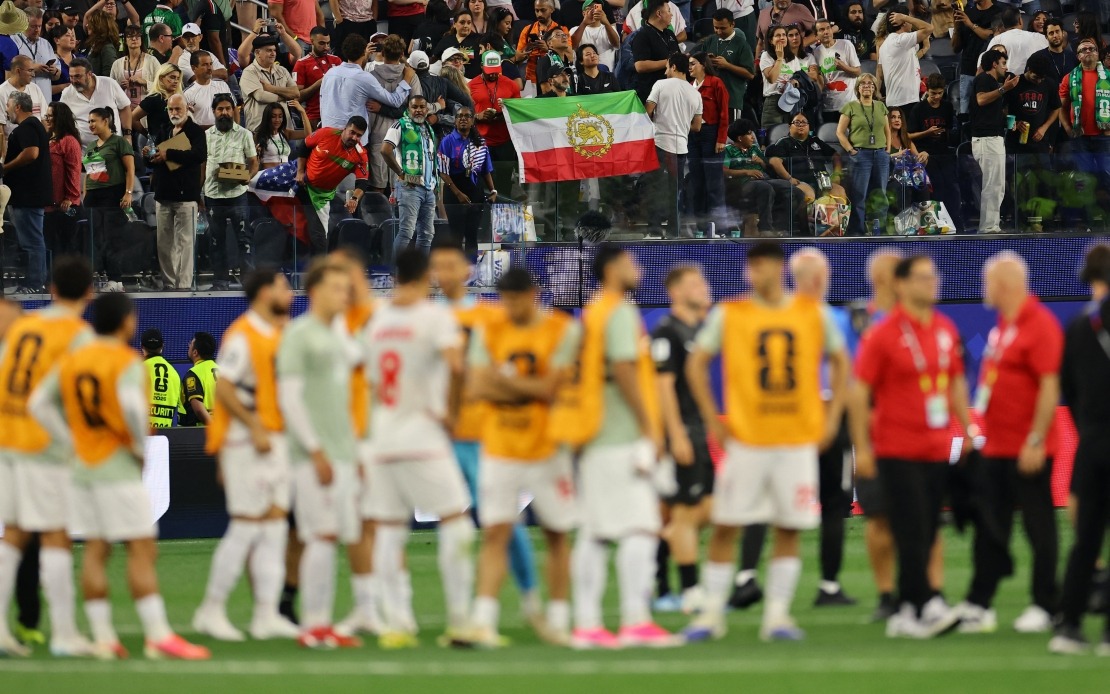
Iranian football manager Amir Ghalenoei has characterised his national squad as the "most repressed team in the whole World Cup," alleging that authorities ordered the group to vacate Los Angeles for their training base in Mexico shortly after their Monday night opening fixture against New Zealand. The extraordinary accusation highlights the extraordinary pressures facing the Iranian contingent as geopolitical tensions intersect with international sports competition.
Ghalenoei explained that the team had anticipated remaining in the California city overnight to undertake a recovery programme the following day, a standard practice for international football teams managing fatigue across long-distance travel and competition. Instead, he stated, officials mandated immediate departure once the final whistle sounded. The logistical disruption adds significant strain to a squad already dealing with the demands of World Cup football at the highest level.
The Iranian coach articulated his frustration in remarks to ESPN, emphasizing how the extended air travel necessitated by the forced relocation prevented his players from obtaining adequate recuperation. "We spent so much time in the air commuting, they didn't even give us time to recover," Ghalenoei said through an interpreter, underscoring the physical toll of constant movement rather than focused preparation between matches.
While Ghalenoei did not explicitly identify who initiated the directive to depart Monday evening, Iranian captain Mehdi Taremi provided a significant clue by revealing that FIFA President Gianni Infantino had visited the squad's locker room following the conclusion of play. The nature and content of Infantino's visit remained undisclosed, but Taremi's subsequent comments suggested deeper implications beyond standard administrative matters.
Taremi's remarks carried unmistakable reference to the longstanding diplomatic antagonism between the United States and Iran, even as both nations negotiated towards a peace accord anticipated to conclude within the week, ending a conflict spanning more than 100 days. "For sure, he wants to try to help us, but it's about other things, too. Everyone knows it," the captain stated enigmatically, hinting at pressures extending beyond conventional sports management. His deliberate non-specificity—"I don't need to mention that because you know where we are"—pointed to the geopolitical complications that swirl around the Iranian delegation's participation.
The Iranian national team's World Cup preparation had already been complicated by substantial logistical obstacles. Initially designated to establish their base camp in Tucson, Arizona, the squad relocated to Tijuana, Mexico, in late May after encountering both procedural visa complications and broader logistical difficulties. This earlier relocation had already disrupted their preparation schedule, and the sudden forced departure from Los Angeles represented a fresh upheaval.
For Malaysian and Southeast Asian observers, the situation illuminates how international sports tournaments operate within contested geopolitical spaces. The World Cup, theoretically a realm where competition transcends national borders and political difference, remains deeply influenced by international relations and governmental pressure. The apparent coordination between FIFA officials and the American government—whether explicit or implicit—raises questions about how host nations leverage sporting events to project influence.
The treatment of the Iranian contingent also contrasts sharply with the ordinary courtesy extended to competing delegations. Standard World Cup protocols typically permit teams adequate recovery periods between matches, recognise the importance of stable training environments, and facilitate operational continuity. That Iran allegedly received different treatment suggests either exceptional administrative dysfunction or deliberate policy designed to disadvantage their preparation.
For a region like Southeast Asia, with its own complex relationships with major powers, the Iranian experience carries instructive implications. Nations hosting major sporting events wield significant discretionary power over team accommodations, logistical support, and operational conditions. The capacity to impose sudden disruptions—such as forcing relocation, denying recovery time, or complicating visa arrangements—represents a subtle but potent form of competitive disadvantage that operates outside formal rules yet profoundly impacts performance.
The broader narrative also reflects how diplomatic tensions persistently penetrate international sports despite the aspirational rhetoric surrounding such competitions. While FIFA and World Cup organisers frequently emphasise universal values of fairness and equal opportunity, the experiences of nations in geopolitical conflict with the host power reveal significant gaps between these ideals and operational reality. Iran's difficulties in securing adequate preparation conditions exemplify how hosting capacity can become a strategic asset in ways that sporting bodies struggle to neutralise or regulate.
Ghalenoei's willingness to publicly characterise his team as exceptionally constrained suggests confidence that the allegations would resonate internationally and attract scrutiny that might moderate future treatment. The visibility of such complaints, however, also serves a diplomatic function, establishing a record of alleged inequitable treatment that Iran can reference in future forums and negotiations. Whether such pressure prompts substantive changes to operational procedures remains uncertain.

