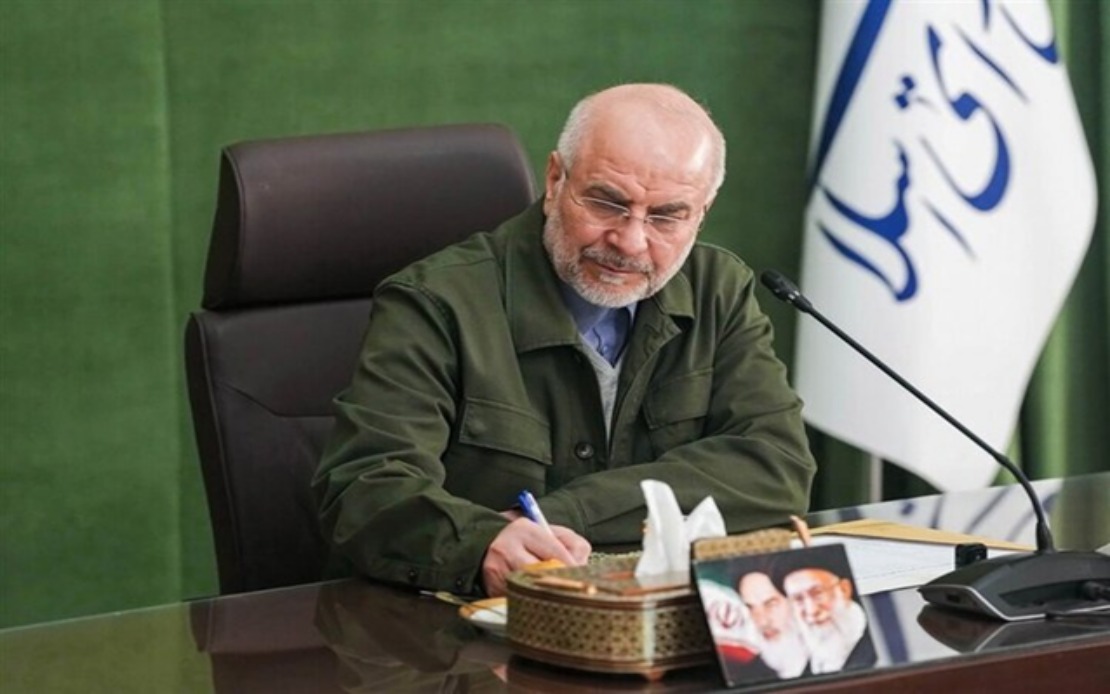
Iran's Parliament Speaker Mohammad Bagher Ghalibaf has firmly rejected assertions from Washington that Tehran's unfrozen assets would be channelled toward purchasing United States agricultural commodities, marking the latest flashpoint in the countries' fraught negotiations. The Iranian legislator, who also serves as a leading negotiator in talks with the US, dismissed the American position as fundamentally misguided, using pointed language on social media to underscore Tehran's resistance to external restrictions on how the released funds should be deployed. His public rejection signals deepening disagreement between the two nations over the terms and conditions attached to the sanctions relief deal, even as both sides formally pursue nuclear diplomacy under a framework agreed just over a week ago.
Ghalibaf's intervention came directly in response to recent statements by senior American officials attempting to shape expectations around the use of Iran's unfrozen capital. Vice President JD Vance had publicly suggested on Monday that the released funds could and should be used to acquire American agricultural staples including soybeans, corn, and wheat. President Donald Trump subsequently escalated the claim on Tuesday, asserting that the assets would be held in a US-controlled escrow account with the explicit restriction that they be spent exclusively on food and medical supplies sourced from American producers. These pronouncements effectively sought to convert sanctions relief into an economic stimulus package favouring American exporters, a framing that Tehran has found both objectionable and politically untenable.
The Iranian Parliament Speaker's public statement on social media platform X carried unmistakable historical weight. He argued that America was operating from a foundation of decades-long mistrust between the nations, framing the American agricultural pitch as the latest iteration of unreasonable external pressure. By suggesting that the only crop Iran was harvesting was what the US had planted—a metaphor for the consequences of prolonged hostility—Ghalibaf captured the deep reservoir of suspicion that continues to characterise relations even during official negotiations. His remarks reflected broader Iranian frustration with what officials view as an attempt to impose unilateral conditions on the deployment of assets that Tehran considers rightfully its own.
Other members of Iran's negotiating team and government apparatus moved swiftly to reinforce Ghalibaf's position and provide more detailed technical responses. On Tuesday, Iranian Foreign Ministry spokesperson Esmaeil Baghaei delivered a formal statement emphasising that Tehran would utilise the unfrozen assets in accordance with national strategic interests and without any externally imposed restrictions. Baghaei further specified that Iranian purchasing decisions would be governed by conventional market principles, namely the competitiveness of pricing and the quality of available products. This formulation effectively signalled that while Iran would not categorically exclude American goods from future procurement, such purchases would occur only if they represented genuine value for money compared to alternatives available from other trading partners.
Iran's Central Bank Governor Abdolnaser Hemmati adopted a similarly calibrated but firm stance on the matter. He explicitly stated that Iran possessed no contractual or moral obligation to purchase American agricultural products, directly contradicting the position articulated by Washington's leadership. However, Hemmati added an important qualifier, noting that Iran would not reflexively reject US goods should American suppliers offer competitively advantageous terms. This rhetorical approach effectively maintained Iranian flexibility and independence while avoiding the appearance of blanket protectionism, thereby preserving Tehran's negotiating room whilst signalling determination to act as an autonomous economic actor.
The disagreement over how released assets should be deployed has exposed fundamental tensions within the broader diplomatic framework that both nations ostensibly committed to following the June 18 signing of a peace memorandum of understanding. That agreement, which created space for sixty days of intensive negotiations focused on Iran's nuclear programme and comprehensive sanctions removal, was intended to establish a foundation for more productive engagement. However, the rapid emergence of disputes over the practical use of unfrozen funds demonstrates how quickly fundamental incompatibilities in perspective can resurface, particularly when one party attempts to attach conditions that the other perceives as infringing its sovereignty.
From the Iranian perspective, the American insistence that released assets be used to purchase US agricultural products represents precisely the kind of external economic coercion that Tehran views as fundamentally illegitimate. After years of unilateral American sanctions imposed through extraterritorial application of US financial power, the notion that sanctions relief would come with instructions on how to spend the recovered assets strikes Iranian officials as a continuation of economic bullying by other means. The fact that American officials are openly discussing these restrictions in public forums, rather than confining such discussions to confidential negotiations, further rankles Tehran by suggesting that Washington is attempting to claim victory by extracting economic concessions beyond the formal scope of the agreement.
The negotiations that produced the June 18 memorandum of understanding were themselves conducted under considerable time pressure and international scrutiny. Recent discussions held in Switzerland on Sunday and Monday represented the first substantive engagement following the framework agreement. The quick emergence of public disputes over asset deployment raises questions about whether the underlying understandings between the parties are genuinely durable or merely represent tactical pauses in deeper structural disagreements. For observers in Malaysia and across Southeast Asia, the Iranian pushback signals that Tehran remains determined to protect its negotiating position and unwilling to accept subordinate economic status in exchange for sanctions relief.
The broader context involves recognition that Iran's frozen assets, accumulated through decades of sanctions, represent genuinely substantial capital that will influence regional economic dynamics once released. Malaysia and other regional economies have substantial trading relationships at stake in the outcome of Iran negotiations, given the potential reopening of Iranian markets and restoration of normal commercial relations. The disputes over how unfrozen assets are deployed carry implications extending far beyond direct bilateral US-Iran relations, potentially affecting the international commercial environment more broadly. For Malaysian policymakers and business leaders, understanding Iran's determination to maintain independence in fund deployment helps clarify the likely trajectory of regional engagement if sanctions relief proceeds.
The public disagreement also underscores how thoroughly polarised the political environment remains in both capitals. In Washington, the Trump administration appears committed to extracting maximum economic advantage from sanctions relief negotiations. In Tehran, political leaders across the factional spectrum share determination to prevent any agreement that could be portrayed domestically as compromising national sovereignty or accepting external dictation of economic policy. This alignment of nationalist sentiment in Iran, despite deep internal political divisions, creates a genuinely constraining environment for negotiators attempting to broker compromise on contentious practical matters like the deployment of unfrozen assets.

