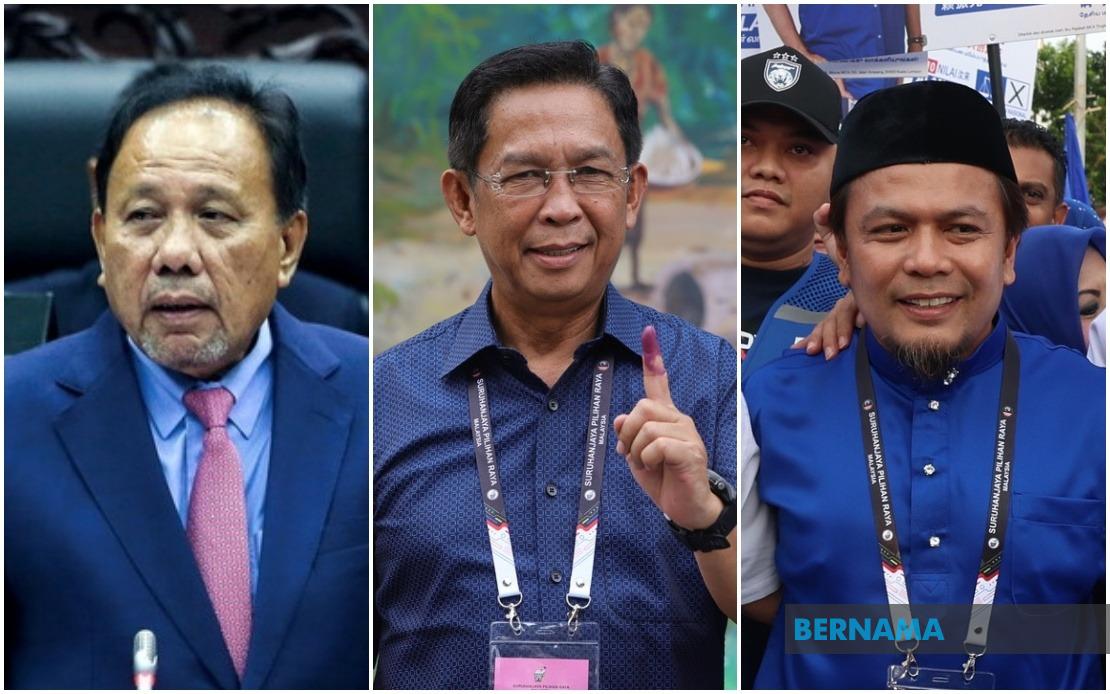
The political landscape in Negeri Sembilan has shifted decisively with the appointment of a new Menteri Besar expected to take place within hours of the state election results. Kuala Pilah UMNO chief Datuk Ismail Lasim, a 67-year-old veteran with significant standing within his party, has emerged as a leading candidate for the position, following his successful retention of the Juasseh state constituency in the recently-concluded 16th Negeri Sembilan state election. The oath-taking ceremony is scheduled to occur at Istana Besar Seri Menanti in Kuala Pilah, with arrangements to be completed by late morning. Ismail's candidacy reflects his considerable credentials within UMNO, including his membership on the party's Supreme Council, positioning him as a figure with influence beyond his state-level operations.
Two other personalities have been mentioned alongside Ismail in consideration for the chief minister role. Datuk Seri Jalaluddin Alias, a 62-year-old who chairs UMNO's efforts in Negeri Sembilan and represents Jelebu in Parliament, successfully defended his Pertang state seat in the election. The third contender is Datuk Mohd Asna Amin, a younger figure at 47 years old who previously served as the state assembly's deputy speaker and captured the Lenggeng constituency. The presence of three candidates reflects the competitive dynamics within the coalition and suggests that the selection process involved careful consideration of factors including seniority, electoral performance, and factional representation within both UMNO and the broader Barisan Nasional framework.
The appointment comes on the heels of Barisan Nasional's strong electoral showing in a state that had previously moved away from traditional coalition control. In the latest election, BN claimed 18 out of 36 state seats, while its coalition partner Perikatan Nasional secured 11 seats, collectively delivering a commanding two-thirds majority in the 36-member State Legislative Assembly. This represents a significant reversal of fortune compared to the previous electoral cycle, when Pakatan Harapan dominated with 17 seats against BN's 14 and PN's modest five representatives. The current alignment allows both coalitions to govern comfortably without depending on independent support, providing the incoming Menteri Besar with substantial legislative authority and room for policy implementation.
The path to this election reflected considerable political turbulence within the state administration. The assembly had been dissolved on June 5 following the withdrawal of support by Negeri Sembilan's BN component from sitting Menteri Besar Datuk Seri Aminuddin Harun on April 27. This tactical withdrawal precipitated the state election and fundamentally reshaped the political complexion of the administration. The decision by BN to withdraw support indicated internal disagreements or political calculations that led party leadership to believe their prospects would improve with a fresh electoral mandate, a gambit that has proven successful given their enhanced seat count relative to the previous assembly composition.
BN chairman Datuk Seri Dr Ahmad Zahid Hamidi undertook the formal process of presenting the three shortlisted candidates to Tuanku Muhriz, the Yang di-Pertuan Negeri, at Istana Hinggap in Seremban during the evening following the election results. This consultation with the ruler represents the constitutional requirement that the sovereign ensure the new chief minister commands the confidence of the legislative majority, a safeguard embedded in Malaysia's parliamentary tradition. The presentation of three names suggests that the appointment decision remained genuinely open until the final consultation, though procedural conventions would have guided the ruler toward selecting a candidate capable of commanding assembly support, a criterion all three candidates demonstrably satisfy given their electoral victories.
The electoral contest itself had drawn broad participation across the state, with 103 candidates competing for the 36 available seats. This level of competition reflects the significance Negeri Sembilan holds within the broader Malaysian political context and the determination of multiple political forces to secure representation within the state administration. The voter engagement, measured across all 36 constituencies, would provide the new administration with a clear mandate, even as the two-thirds majority ensures that the incoming government possesses substantial flexibility in pursuing its legislative agenda without requiring cross-coalition support on routine matters.
For Malaysia's political observers, the Negeri Sembilan result carries implications extending beyond state boundaries. The state has served as a weathervane for broader coalitional dynamics, with recent elections demonstrating swings between Pakatan Harapan and Barisan Nasional. The current outcome reinforces BN's revival at the state level, a trajectory evident in several recent state elections where the traditional coalition has recovered ground lost during the 2018 federal election upheaval. The strength of PN's performance in Negeri Sembilan, securing 11 seats and positioning itself as the senior coalition partner in terms of electoral gains, also merits attention as an indicator of the party's consolidation efforts in peninsular Malaysia beyond its Malay-heartland strongholds.
The incoming Menteri Besar will inherit a state economy and administration that require attention to development priorities established across multiple previous administrations. Negeri Sembilan's economy, traditionally dependent on agriculture, tin mining heritage, and manufacturing, faces pressures from broader economic transformation trends affecting the region. The new chief minister will need to balance coalition demands with effective governance delivery, particularly regarding infrastructure, education, healthcare accessibility, and efforts to attract higher-value economic activities to compete with more developed neighboring states. The two-thirds majority provides latitude for pursuing ambitious initiatives without negotiating support across coalition boundaries on most policy matters.
The composition of the three candidates also reflects generational and demographic considerations within UMNO's leadership pipeline. Ismail Lasim represents the old guard with extensive experience and institutional credibility, Jalaluddin Alias bridges established seniority with parliamentary-level responsibility, while Mohd Asna Amin embodies a younger generation capable of bringing fresh perspectives to executive administration. The choice between these three candidates would signal which direction UMNO in Negeri Sembilan intends to travel, whether reinforcing experienced leadership or enabling generational transition within state-level politics.
The timing of the ceremony, scheduled for the morning following the election results announcement, reflects the urgency of establishing governmental continuity and clarity in administration. Malaysian constitutional practice typically requires new Menteri Besars to take their oaths promptly following a transition, both to demonstrate smooth transfer of authority and to initiate the appointment of state executive councillors and other official positions dependent upon the chief minister's designation. By noon on the day following elections, the state administration will have its new leadership in place, allowing for immediate attention to cabinet formation and departmental continuity.

