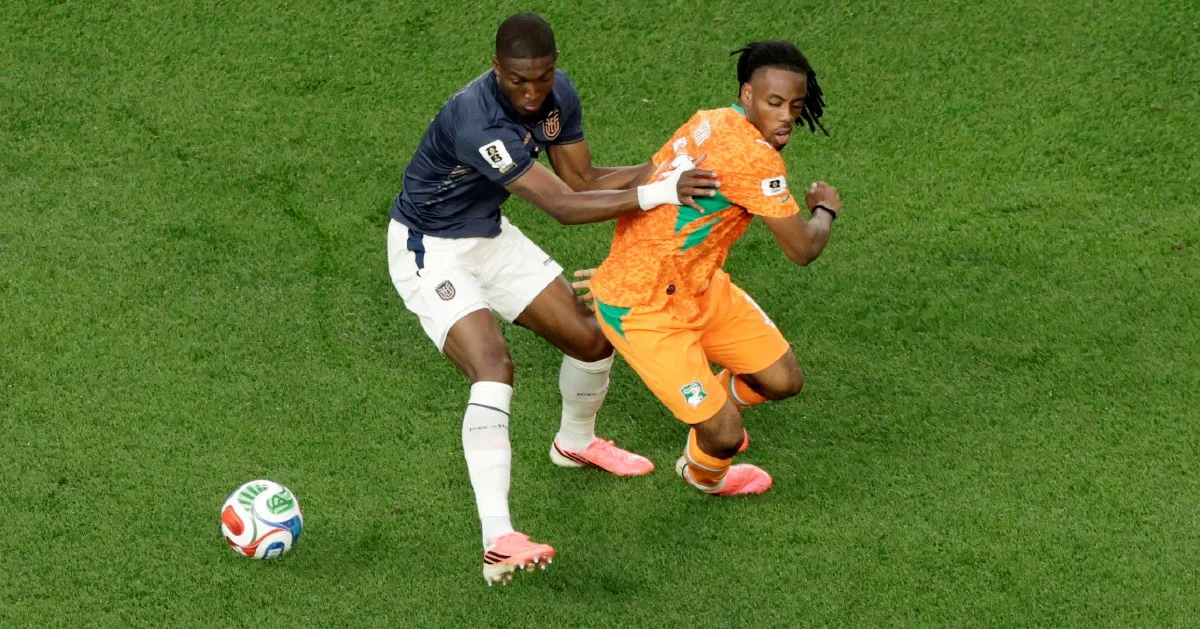
Ivory Coast has removed forward Elye Wahi from its squad travelling to Canada for this weekend's World Cup encounter with Germany, the Ivorian Football Federation announced Thursday. The decision came just one day after the player became entangled in a growing investigation into alleged sports corruption within France's top professional league, creating fresh turbulence in international football's integrity framework.
The timing of the suspension reflects the severity with which African football's governing bodies now treat potential match-fixing allegations. Rather than allowing Wahi to participate while the investigation proceeds separately, the Ivorian Football Federation chose immediate action to protect the reputation of both the national team and the tournament itself. This preventive approach mirrors increasingly stringent protocols adopted across global sport when athletes face credible corruption allegations.
Wahi's involvement in the Ligue 1 investigation underscores how match-fixing conspiracies extend beyond isolated incidents to implicate players operating at the highest competitive levels. The European league's corruption probe suggests a network of questionable activity that transcends club boundaries, raising uncomfortable questions about the depth and sophistication of sports manipulation schemes now operating within professional football. French authorities and league officials have intensified scrutiny on suspicious betting patterns and player conduct surrounding specific matches.
The World Cup represents sport's most prestigious platform, making the federation's decision particularly significant. Removing a squad member during tournament play sends an unmistakable message that no player, regardless of talent or stature, stands above institutional standards. For Malaysian and Southeast Asian observers, the incident illustrates how integrity violations in distant European leagues create immediate consequences for players and federations across the globe, demonstrating football's interconnected nature.
Ivory Coast faces a challenging fixture against Germany, a traditional powerhouse of international football. Losing Wahi removes an attacking option from the squad, potentially affecting tactical flexibility and goal-scoring capacity during a crucial group-stage encounter. The forward's absence could force manager adjustments that reshape team dynamics at a critical juncture in the tournament.
Match-fixing investigations have become increasingly common across European football, reflecting both enhanced detection capabilities and possibly the growing sophistication of corruption attempts. France's Ligue 1 operates under intense scrutiny from both domestic authorities and international sports integrity bodies. When players from competing nations face investigation, the fallout extends well beyond individual clubs or leagues, affecting national team compositions and tournament dynamics.
The correlation between European league corruption and international competition eligibility creates complex situations for national team managers. Coaches must balance competitive requirements against ethical obligations to maintain squad integrity. Wahi's suspension demonstrates that football federations worldwide now prioritize institutional credibility over short-term tournament performance advantages.
For African football specifically, the suspension reflects the continent's commitment to international sporting standards. Rather than dismissing European investigations or protecting home-nation players, the Ivorian Football Federation demonstrated alignment with global anti-corruption norms. This positioning strengthens African football's standing within international governance structures and counters outdated perceptions of continental disengagement from integrity protocols.
The broader implications for Southeast Asian football remain noteworthy. Regional leagues increasingly attract European-based talent and operate within networks monitored by international compliance bodies. Players and clubs across Southeast Asia face similar pressures to maintain transparent operations and cooperate with investigations that may span multiple jurisdictions. Incidents like Wahi's suspension reinforce that participation in football's highest echelons demands absolute adherence to integrity standards.
Match-fixing carries profound consequences for sport's fundamental legitimacy. When competitive outcomes become compromised by corruption rather than determined by athletic excellence, fan engagement and commercial investment both suffer irreversible damage. Wahi's case illustrates how individual decisions to participate in corrupt schemes create cascading consequences affecting teammates, national federations, and international reputation.
The investigation into Ligue 1 activity continues independently of the World Cup proceedings. Even if Wahi eventually receives exoneration, his squad removal demonstrates the precautionary principle now governing sports administration. Federations no longer wait for formal verdicts; instead, they implement preventive measures when credible allegations emerge, prioritizing institutional protection over presumptions of innocence.
Looking forward, Ivory Coast must navigate the Germany match without Wahi while the player's case develops through judicial and sporting channels. The federation's decisive action establishes clear institutional boundaries, signalling that national team selection remains conditional upon maintaining the highest ethical standards. This precedent will likely influence how other national federations respond to future corruption allegations affecting their players.

