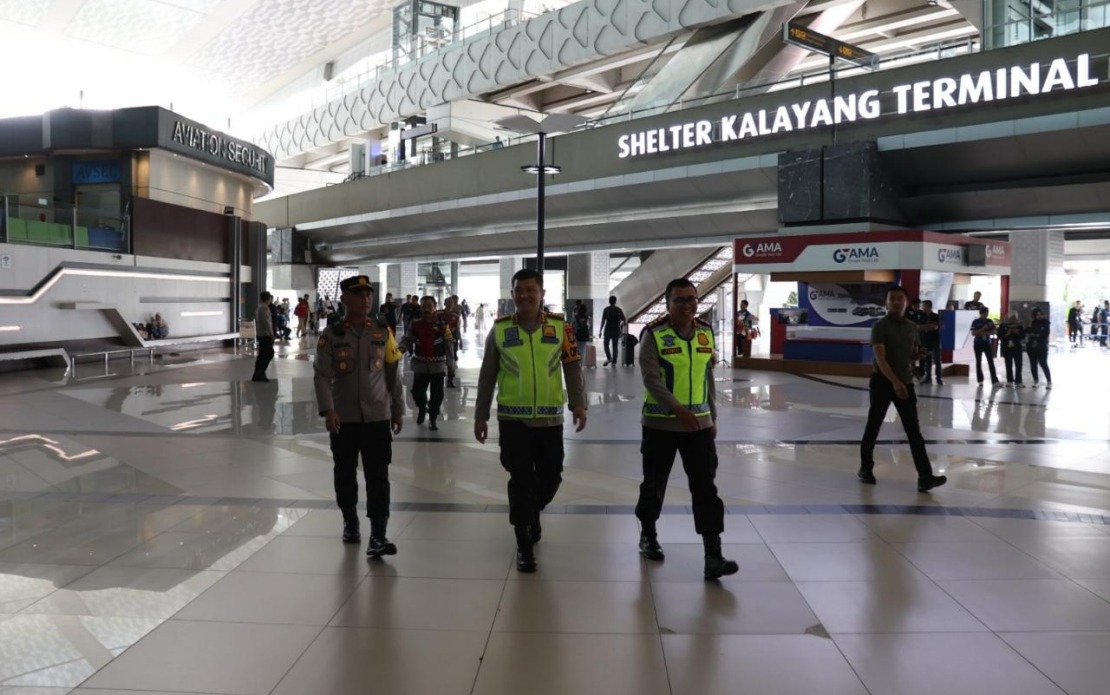
Indonesia's customs enforcement agencies have moved to strengthen security protocols at Soekarno-Hatta International Airport in response to a significant drug smuggling incident involving a Malaysian aviation professional. The decision to enhance screening procedures reflects growing concern about vulnerabilities in the airport's crew handling systems, which have long been designed to streamline passenger processing but may have inadvertently created blind spots in narcotics interdiction.
The catalyst for these security upgrades was the July 29 arrest of a 39-year-old Malaysian pilot accused of attempting to import approximately 25 kilogrammes of ecstasy into Indonesia. According to Indonesian authorities, the contraband had an estimated street value of around Rp60 billion, equivalent to approximately RM13.51 million. The scale of the operation and the sophistication of the smuggling method have alarmed officials responsible for managing one of Southeast Asia's busiest aviation hubs, raising questions about how such a large quantity of narcotics could reach an advanced stage of importation.
Hengky Tomuan Parlindungan Aritonang, who heads the main customs and excise office at Soekarno-Hatta, announced the enhanced measures on Saturday and acknowledged the delicate balance between facilitating crew movements and maintaining rigorous security standards. While the airport maintains a dedicated crew baggage lane—a convenience recognised as essential for efficient airport operations—officials have determined that this streamlined process requires more rigorous oversight. The new approach centres on unpredictable and frequent random inspections targeting pilots and flight attendants working for both international and domestic carriers, creating a deterrent effect against would-be smugglers who might otherwise exploit predictable procedures.
The suspect's alleged methodology has proven particularly troubling to airport authorities. Investigators determined that the accused pilot concealed the ecstasy beneath clothing items inside a suitcase that bore a crew claim tag, deliberately exploiting the separate handling system that distinguishes crew baggage from passenger luggage. This approach represents a calculated attempt to circumvent standard security protocols by moving contraband through channels that, by design, receive less intensive scrutiny than regular passenger baggage flows. The incident has prompted a comprehensive reassessment of whether current crew lane procedures adequately balance operational efficiency with security imperatives.
Further investigation has revealed concerning details about the suspect's background and involvement in narcotics trafficking. Drug screening conducted after the arrest allegedly showed the presence of MDMA, methamphetamine, and cocaine in the individual's system, suggesting personal drug use in addition to the smuggling allegations. More troubling for law enforcement authorities is the indication that this was not an isolated incident; preliminary evidence suggests the accused had previously smuggled narcotics into Indonesia, indicating possible involvement in an established trafficking network rather than a one-off opportunistic crime.
The financial arrangements surrounding the alleged smuggling attempt underscore the economic incentives driving such operations. The suspect was reportedly promised RM50,000—approximately Rp220 million—for transporting the contraband into Indonesia. While this sum represents a significant payment at first glance, it actually illustrates the enormous profit margins in international drug trafficking; the promised compensation represents less than 0.4 per cent of the estimated street value of the seized ecstasy. This disparity highlights how trafficking syndicates can afford to pay substantial sums to individual couriers while retaining extraordinary profits, creating powerful financial motivation for insiders with access to secure transportation systems.
Indonesian authorities have emphasised that their investigation into the smuggling network remains ongoing, with particular focus on identifying and apprehending the alleged mastermind or organisational leaders behind the operation. The arrest of the courier represents only one layer of what investigators believe is a more complex and coordinated smuggling enterprise. This investigative approach reflects international best practices in drug enforcement, which increasingly prioritise dismantling trafficking organisations and supply chains rather than merely processing individual arrests.
Arionang's statement that enhanced measures would focus on baggage screening rather than drug testing represents a deliberate policy choice with significant implications for crew management. Drug testing of aviation personnel, while potentially effective from a security standpoint, raises complex issues regarding employment rights, union considerations, and international labour standards that govern civil aviation. The decision to emphasise baggage screening instead reflects a preference for enhanced detection systems and inspection protocols—approaches that target suspicious cargo movement rather than human physiology.
For Malaysian aviation professionals and the broader regional aviation community, the incident carries important cautionary implications. The case demonstrates that airport security enhancements can occur swiftly in response to individual incidents, potentially affecting crew operations and increasing processing times at major hubs. Airlines operating across Southeast Asia may need to brief crew members about evolving security requirements at major airports, particularly regarding baggage protocols and screening procedures. The incident also underscores the vulnerability that privileged access systems—including dedicated crew lanes—represent in comprehensive security architecture, a lesson resonating across multiple aviation sectors and border control operations.
The broader context for Malaysia and the region involves Indonesia's ongoing efforts to combat narcotics trafficking, which remains a serious public health and security concern throughout Southeast Asia. The country has maintained some of the world's strictest drug laws, with severe penalties including capital punishment for trafficking in large quantities. The involvement of a Malaysian pilot in an alleged smuggling operation involving hundreds of millions of ringgit in contraband illustrates how transnational criminal networks exploit transportation professionals and aviation infrastructure to move drugs across borders, and why cooperation between neighbouring countries' enforcement agencies remains essential to disrupting such networks.
The incident also raises questions about pre-employment screening and ongoing vetting procedures for aviation personnel across the region. If the arrested pilot had indeed smuggled narcotics previously, questions arise regarding how this background might have been identified through standard aviation security clearances. Enhanced international information sharing between civil aviation authorities and law enforcement agencies could potentially prevent individuals with smuggling histories from retaining flight crew credentials, though such measures must be implemented carefully to respect due process and employment rights.
Going forward, the enhanced screening regime at Soekarno-Hatta will likely serve as a model for other major Southeast Asian airports reassessing their crew handling protocols. The case demonstrates that convenience and security require constant negotiation, and that even well-designed systems serving legitimate operational needs can be exploited by criminal enterprises. The Indonesian authorities' decision to maintain dedicated crew lanes while simultaneously implementing unpredictable random inspections represents a pragmatic compromise, preserving efficient operations while substantially raising the risks and uncertainties confronting would-be smugglers attempting to exploit aviation sector vulnerabilities.

