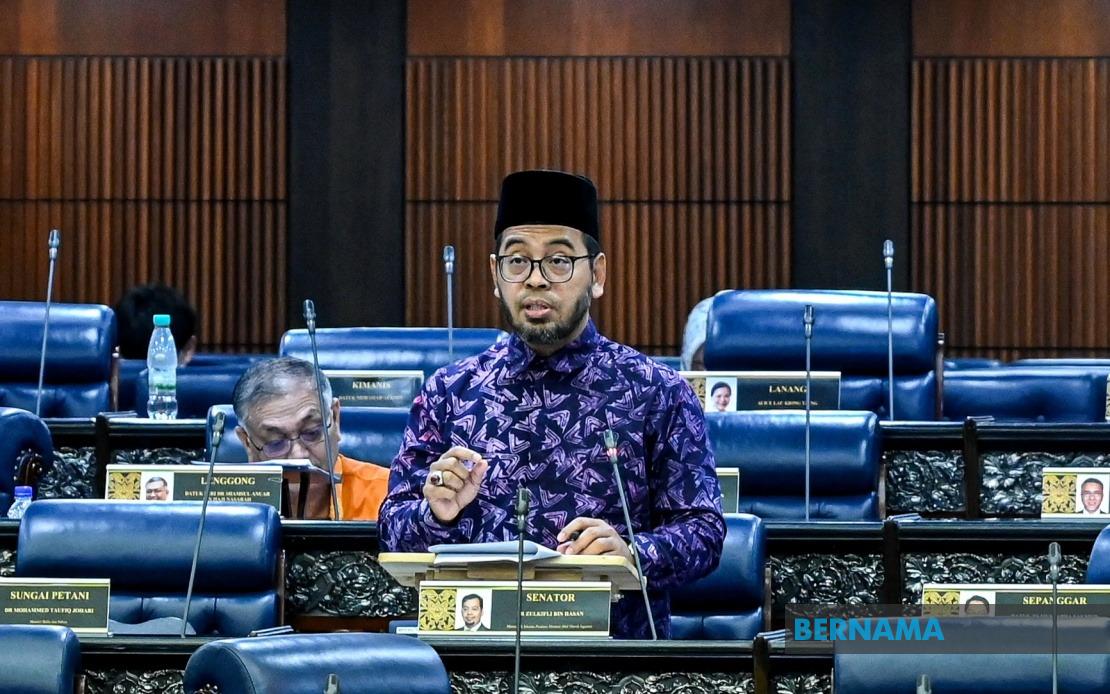
The Malaysian government is mobilising its institutional apparatus to combat the proliferation of Islamic teachings deemed outside mainstream orthodoxy, which have increasingly migrated to digital channels and cross-border communication networks. Minister in the Prime Minister's Department (Religious Affairs) Dr Zulkifli Hasan outlined a comprehensive strategy during parliamentary proceedings, emphasising that what once manifested as localised study circles has transformed into a sophisticated ecosystem exploiting social media, encrypted messaging applications, and online platforms to reach and influence adherents across geographical boundaries.
The shift in how unconventional Islamic movements operate presents novel enforcement challenges for Malaysian authorities. Rather than operating in conspicuous physical locations susceptible to traditional surveillance, these groups now embed their messaging within seemingly innocuous contexts such as personal development workshops, wellness initiatives, and informal religious instruction. This deliberate obfuscation complicates identification and intervention, as the true doctrinal content remains veiled beneath layers of motivational rhetoric, self-help narratives, and therapeutic language. Dr Zulkifli specifically flagged the deployment of psychological manipulation techniques, conspiracy frameworks, and celebrity influencers as methodologies through which deviation from Ahli Sunnah Wal Jamaah doctrine spreads among vulnerable populations, particularly young people navigating religious identity in an interconnected digital age.
The Department of Islamic Development Malaysia (JAKIM) functions as the primary enforcement apparatus within this multi-agency construct. Working alongside state-level Islamic religious departments, the agency maintains ongoing surveillance mechanisms and intelligence gathering to detect emergent heterodox movements. However, this represents merely the investigative foundation. The coordination extends across an expansive institutional network encompassing the Royal Malaysian Police, the Malaysian Communications and Multimedia Commission, the National Security Council, local government authorities, the Immigration Department, and the National Registration Department. This orchestrated approach acknowledges that religious heterodoxy cannot be addressed through Islamic institutional mechanisms alone; it demands integration with security apparatus, digital infrastructure regulators, and immigration infrastructure.
Recent enforcement actions illustrate the scale and tempo of operations. In May, authorities detained 288 individuals identified as Ahmadiyya Qadiani adherents in Sabah, representing one of the larger coordinated operations against a specific movement. Separately, a raid targeting a Syiah centre in Petaling Jaya resulted in the detention of 226 foreign nationals, underscoring how such movements often transcend local communities and incorporate international participation. These operations signal governmental determination to restrict physical congregational activities, though the underlying doctrinal appeal persists within digital spaces less amenable to traditional law enforcement methods.
Beyond enforcement actions, the government pursues complementary intervention strategies designed to restore affected individuals to mainstream religious understanding. Targeted counselling sessions address both rank-and-file members and identified leaders within heterodox movements, attempting to deconstruct the theological justifications that sustained their alternative orientation. Where counselling proves insufficient, the Syariah court system possesses authority to mandate placement within state-operated faith rehabilitation centres, where intensive religious instruction and psychological support are provided. These rehabilitation facilities operate under Islamic authority supervision, aiming to reorient individuals' religious convictions toward accepted orthodoxy while addressing underlying vulnerabilities that rendered them susceptible to heterodox appeals.
The government has established the National Steering Committee to Address Threats to Faith as an institutional mechanism for coordinating preventive measures targeting youth populations. This committee integrates representation from the Ministry of Education, the Ministry of Higher Education, the Ministry of Home Affairs, and JAKIM, creating inter-ministerial frameworks for addressing religious vulnerability across educational environments. The pedagogical dimension proves particularly significant given that educational institutions represent primary sites where young Malaysians encounter religious instruction and develop foundational theological understanding. If mainstream institutions fail to provide convincing and compelling religious education, parallel movements offering alternative frameworks encounter receptive audiences.
Contemporary initiatives under this committee's purview include programmes administered by Institut Pemantapan dan Perkaderan Akidah Malaysia (IPHAM), focusing specifically on doctrinal reinforcement and resilience building. The My Insaniah Programme and Rakan Masjid Programme operate through collaboration with the Ministry of Youth and Sports, positioning mosque-centred activities and youth engagement as counterweights to online heterodox influence. Simultaneously, the government has undertaken curriculum enhancement through KAFA 2.0, reformulating Quranic and foundational Islamic principles instruction to develop stronger religious identity and doctrinal resilience among adolescents. These pedagogical investments reflect recognition that enforcement and rehabilitation address manifestations rather than underlying vulnerabilities; preventing heterodox appeal necessitates more compelling mainstream religious education.
The scope and sophistication of this governmental response reflects mounting official concern regarding heterodox Islamic movements' expansion. Malaysia's plural religious landscape and the constitutional entrenchment of Islamic affairs within state jurisdiction creates particular pressures for federal-level coordination when movements transcend state boundaries or employ digital infrastructure. The emergence of foreign nationals within detention operations, as evidenced by the Petaling Jaya incident, additionally complicates enforcement by introducing immigration, security, and diplomatic dimensions to what might otherwise constitute purely domestic religious matters.
For Malaysian society more broadly, these developments raise substantive questions regarding religious authority, doctrinal pluralism, and the boundaries of acceptable Islamic thought within a Muslim-majority constitutional democracy. The government's framing of targeted movements as "deviant" rather than merely "different" establishes clear theological hierarchy, positioning Ahli Sunnah Wal Jamaah as state-preferred orthodoxy and alternative frameworks as threats requiring counter-action. While this reflects Malaysia's constitutional tradition of state guardianship over Islamic affairs, the increasing sophistication of enforcement mechanisms and the investment in rehabilitative infrastructure signal that heterodox appeal has achieved sufficient scale to warrant institutional priority comparable to security threats.
The escalation in digital surveillance and cross-agency coordination also carries implications for religious freedom discourse within Malaysia. As authorities develop technological and organisational capacity to monitor religious content circulation, messaging, and adherent networks online, the boundary between legitimate religious expression and prohibited heterodoxy becomes increasingly subject to governmental discretion exercised through technical infrastructure. Malaysian internet users engaging with religious content must now navigate regulatory frameworks administered by multiple agencies possessing overlapping mandates and varying doctrinal expertise, creating a complex compliance landscape where the permissibility of religious expression remains contingent on governmental assessment of doctrinal authenticity.

