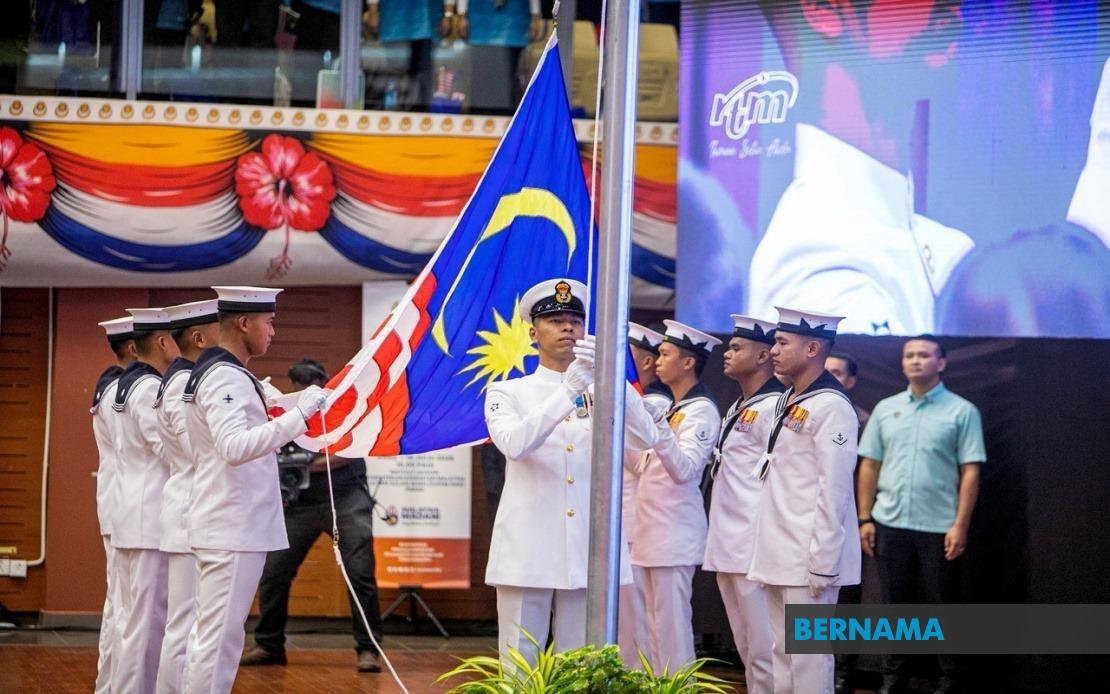
The Jalur Gemilang raising ceremony has made a symbolic comeback in Ipoh, marking the formal inauguration of the 2026 National Month and Fly the Jalur Gemilang campaign. Prime Minister Datuk Seri Anwar Ibrahim officiated the revived patriotic ceremony at the Sultan Azlan Shah Ministry of Health Training Institute in Tanjung Rambutan, bringing back a tradition that had been absent for two years. The resumption of this ceremonial practice underscores the government's commitment to reinvigorating national pride and collective identity as Malaysia approaches its dual celebrations of National Day on August 31 and Malaysia Day on September 16.
The centrepiece of the launch involved the formal handover of a specially prepared Jalur Gemilang to a nine-member contingent from the Royal Malaysian Navy's Lumut Base, led by Chief Petty Officer Mohamad Razif Aliff Md Yusof. This symbolic gesture represents the commencement of a nationwide initiative encouraging citizens across the country to display the national flag prominently throughout the month-long celebration period. The flag itself, measuring 1.82 metres by 3.65 metres, was subsequently hoisted by the naval team as the national anthem Negaraku resonated through the venue, creating a moment intended to galvanise patriotic sentiment among attendees and, by extension, the broader Malaysian public.
The ceremony incorporated several elements designed to reinforce national consciousness and civic responsibility. ILKKM SAS trainee Muhammad Ammar Mohd Asri recited the Rukun Negara pledge, while assembled guests demonstrated their respect and commitment through singing the national anthem in unison. This structured approach to the ceremony reflects a deliberate strategy to embed national values and constitutional principles into the consciousness of participants, particularly younger Malaysians who represent the nation's future leadership and stewardship.
A significant cultural component of the launch involved the unveiling of "Aku Berjanji", a specially commissioned original composition by singer-songwriter Faizal Tahir, designated as the official theme song for the 2026 National Month celebrations. The track became immediately accessible to the public through the Merdeka360 portal from 12.30 pm on the day of the launch, enabling widespread distribution and encouraging popular participation in the festive season. Music has long served as a powerful vehicle for national identity formation and emotional connection to patriotic ideals, and this deliberate inclusion acknowledges the role of contemporary cultural expression in maintaining relevance among diverse demographic audiences.
The Fly the Jalur Gemilang campaign itself represents an annual institutional effort to translate abstract notions of national unity into tangible, visible expressions of civic pride. By encouraging Malaysians to display their national flag, the initiative transforms private spaces and public spheres into landscapes of visual patriotism, creating a unified aesthetic that reinforces collective belonging. This democratisation of flag display—moving beyond official ceremonies to include residential homes, vehicles, and commercial establishments—serves to normalise expressions of national identity across socioeconomic and geographical divides.
For Malaysian readers, the restoration of this ceremony carries particular significance given the nation's ongoing efforts to strengthen social cohesion amid a diverse multi-ethnic and multi-religious population. National Month celebrations provide an institutionalised opportunity to emphasise shared constitutional values and common national aspirations that transcend community, religious, or political differences. The ceremonial framework established through events such as this flag-raising serves to create shared cultural touchstones that can foster mutual understanding and collective purpose.
The broader context of these celebrations extends beyond symbolic gestures. The National Month festivities throughout August and September encompass numerous patriotic programmes and activities distributed across the country, reaching into communities at national, state, and local levels. This tiered approach ensures that celebration and commemoration are not confined to major urban centres but permeate Malaysian society more comprehensively. Prime Minister Anwar Ibrahim's personal participation in the launch ceremony signals high-level governmental commitment to the initiative and potentially enhances its perceived importance within the political and social landscape.
From a regional perspective, Malaysia's conscious reinvestment in national ceremonial practices reflects broader Southeast Asian patterns of nation-building and identity consolidation. Throughout the region, governments have employed flag-raising ceremonies, national anthems, and patriotic campaigns as mechanisms for forging national consciousness among populations with diverse historical experiences, linguistic backgrounds, and cultural traditions. The two-year hiatus in Malaysia's Jalur Gemilang ceremony, followed by its deliberate revival, suggests a strategic recalibration of national priorities following periods of political and social uncertainty.
The timing of this revival, occurring well in advance of the August and September celebrations, allows for maximum promotional impact and public awareness. By launching the campaign in mid-July, organisers provide a two-month window for promotional messaging, education initiatives, and grassroots mobilisation. This extended timeline contrasts with last-minute campaign launches and reflects sophisticated understanding of communication strategy and community engagement. The early start also accommodates the practical considerations of flag procurement and preparation at household and institutional levels across the nation's diverse geographical and demographic landscape.
Looking forward, the success of the 2026 National Month celebrations will likely be measured not merely through attendance figures or ceremonial attendance, but through the extent of public participation in flag displays, cultural programmes, and community-based festivities. The combination of official state sponsorship, contemporary cultural elements such as Faizal Tahir's theme song, and grassroots community engagement suggests a multifaceted approach designed to achieve broad demographic participation. For Malaysians seeking tangible opportunities to express national belonging, the returning Jalur Gemilang ceremony and accompanying campaign activities provide structured yet accessible venues for civic expression and patriotic participation.

