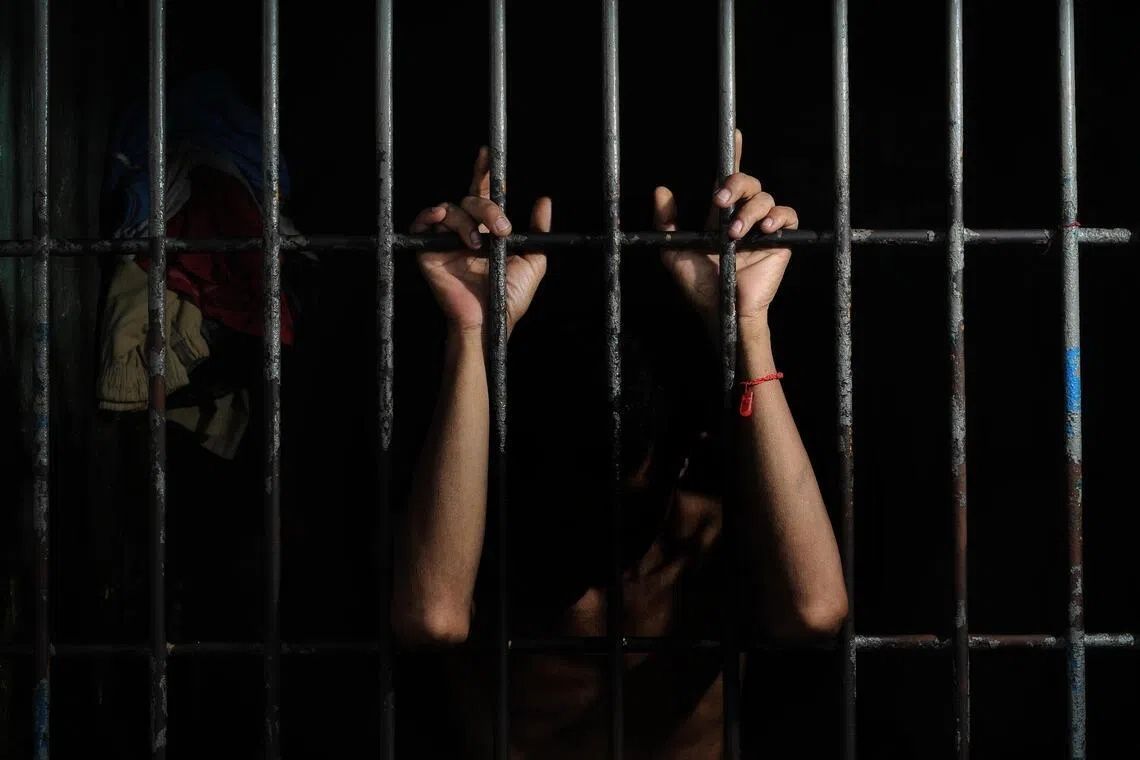
A mother in Japan has initiated legal proceedings against the state seeking 100 million yen in compensation following the death of her 16-year-old daughter, whose health catastrophically deteriorated after being held in custody and subjected to aggressive interrogation tactics. The lawsuit, lodged at the Kobe district court in western Japan on June 17, represents the latest challenge to what critics describe as Japan's "hostage justice" system—a framework that prioritises securing confessions over presuming innocence. The girl, identified by the pseudonym Runa in court documents, weighed merely 20 kilograms when she died in December, five months after her release from an 18-day detention that her mother says rendered her completely unrecognisable.
Runa was arrested in June of the previous year while employed at a disability care facility in Hyogo region, facing allegations of assaulting a patient during a Valentine's Day gathering. The complaint contends that her actions were entirely innocent—she was attempting to prevent the patient from biting another person by gently pressing her hand against the patient's chin. Despite maintaining her innocence consistently throughout her ordeal, authorities took 18 days to determine that charges should be dropped entirely. During this period, Runa was kept isolated from her family, permitted only to communicate with her legal representatives, and repeatedly pressured to confess to the alleged assault.
Japan's criminal justice architecture has long drawn international scrutiny for its mechanisms that effectively incentivise confession. The system operates on the premise that suspects who cooperate by admitting guilt—even when innocent—can expect more favourable outcomes regarding bail and eventual sentencing. Conversely, those who exercise their right to silence or maintain their innocence frequently face prolonged pre-trial detention that can stretch into weeks or months. This structural imbalance creates what campaigners characterise as a "hostage" dynamic, where detention itself functions as pressure to secure confession rather than serving the traditionally understood purpose of preventing flight or evidence tampering. For vulnerable populations, including teenagers, this dynamic proves particularly devastating.
During her confinement, Runa experienced systematic psychological pressure from interrogators. According to Masahiro Sasaki, the lawyer representing her mother, investigators employed tactics including threatening her with reformatory placement and suggesting she would lose contact with her mother unless she confessed. Diary entries Runa kept while detained documented investigators repeatedly asserting "You did it, didn't you? Just tell the truth," despite the absence of credible evidence supporting the charges. The psychological toll manifested in acute stress disorder, eating disorders, and post-traumatic stress disorder diagnoses that would plague Runa through her final months.
Sasaki has challenged the fundamental justification for her arrest and detention on multiple grounds. Given that Runa possessed no criminal history, lived under parental supervision, and the alleged assault involved only trivial contact, there existed no reasonable basis to suspect she would flee or destroy evidence. Japanese law theoretically requires that detention of minors should occur only when absolutely necessary, yet prosecutors twice requested extensions of her custody while simultaneously blocking her lawyer's petitions to a judge for her release. The system's procedural protections, designed to shield vulnerable youths, proved ineffective in practice.
It was only after Runa suffered a medical emergency—vomiting and collapse requiring hospital treatment—that authorities abruptly released her without prosecution the following day. By this point, psychological and physical damage was already severe. The decision to prosecute had apparently rested on such uncertain ground that it could be abandoned entirely without explanation, raising profound questions about why such extraordinary measures had been necessary in the first place.
The Kobe District Public Prosecutors Office has declined to provide substantive comment on the case, stating they have not yet formally received a complaint. This bureaucratic response does little to address the underlying structural failures that enabled a teenager to be detained, psychologically tormented, and ultimately broken by a system predicated on coercive confession-gathering rather than rigorous evidence evaluation.
For Malaysia and other Southeast Asian nations observing Japan's struggles with criminal justice reform, the Runa case offers cautionary perspective. While each country maintains distinct legal traditions, the universal tension between investigative efficiency and individual rights protection remains relevant. The case demonstrates how institutional incentive structures—in this instance, performance metrics tied to confession rates and successful prosecutions—can gradually erode procedural protections designed to shield vulnerable persons from abuse.
International human rights organisations have repeatedly condemned the "hostage justice" phenomenon. The most prominent example remains Iwao Hakamada, who spent decades on death row before his convictions were quashed in 2024. Japan's Supreme Court determined that confessions underlying his conviction had been extracted through what the court explicitly characterised as "inhumane" interrogations. Hakamada's eventual exoneration, achieved only after enormous legal effort and international advocacy, underscores how thoroughly the confession-focused system can pervert justice when applied to economically vulnerable or socially marginalised defendants.
Runa's case differs in tragic outcome—she did not survive the system to witness potential vindication. Her death transforms this from an accountability issue into a fundamental failure of state duty to protect the vulnerable. The 100 million yen compensation her mother seeks represents not merely financial redress but a demand that Japan's legal establishment acknowledge systematic failure and implement structural protections preventing similar tragedies.
The lawsuit carries significance extending beyond Runa's individual case. It challenges a criminal justice philosophy that has persisted in Japan for decades, gradually coming under increasing domestic and international pressure for reform. As Southeast Asian nations develop and refine their own criminal justice institutions, observing how Japan addresses these systemic deficiencies—or fails to do so—provides important lessons regarding the dangers of confession-dependent frameworks that subordinate suspect rights to prosecutorial convenience.