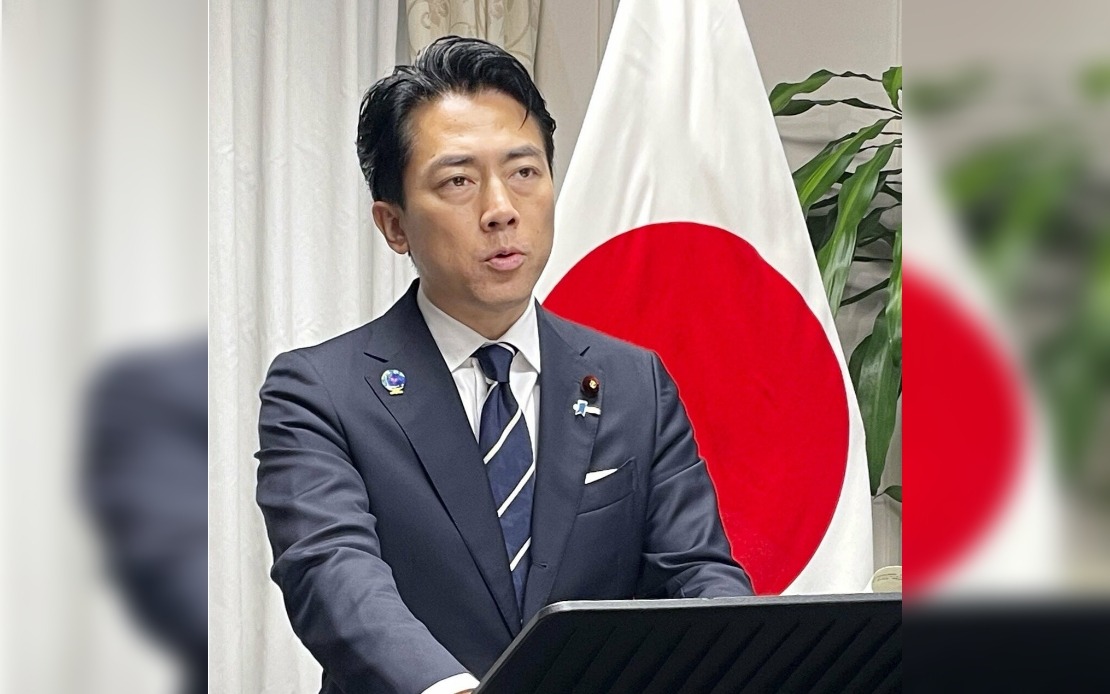
Japan's Defence Minister Shinjiro Koizumi has opened the door to a potentially transformative debate on his country's nuclear posture, arguing that Japan cannot indefinitely avoid discussing weapons that have been taboo in Japanese politics for nearly eight decades. Speaking in an online programme released on Friday, Koizumi suggested that as neighbouring powers grow more assertive and traditional security partners strengthen their nuclear arsenals, Japan must reconsider which topics remain beyond the pale of public discourse. His intervention comes as Tokyo prepares to revise three key national security policy documents by year's end—a process that has already generated significant controversy and will likely intensify following his remarks.
The Defence Minister pointed to precedents in Europe as the primary driver for reconsidering Japan's position. Finland's parliament recently passed legislation permitting nuclear weapons to be deployed on its territory, a dramatic shift for a nation long committed to non-alignment. Similarly, French President Emmanuel Macron announced in March that France would expand its nuclear warhead stockpile, signalling that even established nuclear powers view atomic deterrence as an essential tool in the current geopolitical environment. These developments, Koizumi suggested, demonstrate that serious democracies are actively strengthening their nuclear capabilities, not diminishing them. For Japan to remain a relevant actor in regional security matters, he implied, such strategic instruments cannot be dismissed through reflexive adherence to historical principles.
Yet Japan occupies a peculiar position in global nuclear affairs. As the sole nation to experience nuclear devastation—the 1945 atomic bombings of Hiroshima and Nagasaki killed over 200,000 people—Japan has maintained an unwavering commitment to three non-nuclear principles: never producing, possessing, or permitting nuclear weapons on its soil. This policy has defined Japan's postwar identity and commanded broad public support across generations. The government has relied instead on the American nuclear umbrella, a security arrangement codified in the US-Japan alliance that has underpinned regional stability for over seven decades. That arrangement, however, faces mounting questions about reliability as American strategic priorities increasingly pivot toward the Indo-Pacific competition with China.
Koizumi's call for debate reflects deeper anxieties about Japan's long-term security prospects. The Defence Minister explicitly cited Japan's worsening strategic environment, where China's military modernisation accelerates, North Korea conducts regular missile tests, and Russia's aggression in Ukraine demonstrates that major powers still resort to military force despite modern expectations. Against this backdrop, maintaining rigid taboos around certain policy discussions strikes Koizumi as counterproductive. He advocated instead for a culture shift in which contentious security questions can be examined rigorously without triggering automatic condemnation. This framing suggests not necessarily that Japan will acquire nuclear weapons, but that honest analytical consideration of deterrence options should be permissible.
The domestic political context makes this moment particularly significant. In December of last year, an unnamed official involved in crafting security policy under Prime Minister Sanae Takaichi's government openly stated that Japan should possess nuclear weapons, generating fierce backlash from opposition parties and diplomatic protests from neighbouring countries. The incident revealed existing tensions within Japan's security establishment between traditionalists committed to the non-nuclear path and strategists who question whether that position remains tenable. Former Defence Minister Itsunori Onodera similarly advocated for serious discussion of Japan's non-nuclear principles late last year, indicating that scepticism toward current policy extends beyond a single official.
For regional observers, particularly Malaysian analysts tracking Northeast Asian security dynamics, Koizumi's intervention carries significant implications. A Japanese transition away from non-nuclear principles would represent perhaps the most consequential shift in post-war Asian security architecture. Such a development would trigger cascading effects: South Korea might pursue its own nuclear capability, the non-proliferation regime would suffer institutional damage, and China's security calculations would shift fundamentally. The entire architecture of regional stability, already fragile, could unravel. Malaysia and other Southeast Asian nations, which have invested considerable diplomatic capital in promoting non-proliferation and nuclear-free zones through mechanisms like the Treaty of Southeast Asia Nuclear Weapon-Free Zone, would face a fundamentally altered security landscape.
Yet Koizumi's remarks, however significant, do not represent government policy or commitment to nuclear weapons development. Rather, they signal an evolution in how Japan's security establishment approaches strategic planning. The Defence Minister has made space for serious analytical discussion that was previously foreclosed by political taboo. This distinction matters: Japan may determine, after genuine debate, that non-nuclear status remains optimal despite changed circumstances. Conversely, the conversation itself—occurring within official circles and broadening to public discourse—could generate new consensus around strengthening conventional deterrence, enhancing US security commitments, or developing advanced missile defence systems rather than acquiring nuclear weapons.
The timing of these remarks relative to the security document revisions suggests that nuclear weapons discussions will form part of Japan's comprehensive strategic reassessment. Those revisions will clarify whether Tokyo intends merely to debate the issue or to move toward substantive policy changes. The distinction will prove crucial for understanding Japan's future trajectory and its implications for alliance relationships, non-proliferation commitments, and regional stability more broadly. Southeast Asian governments, watching closely, must prepare for multiple scenarios while continuing to advocate through established diplomatic channels for adherence to non-proliferation principles.

