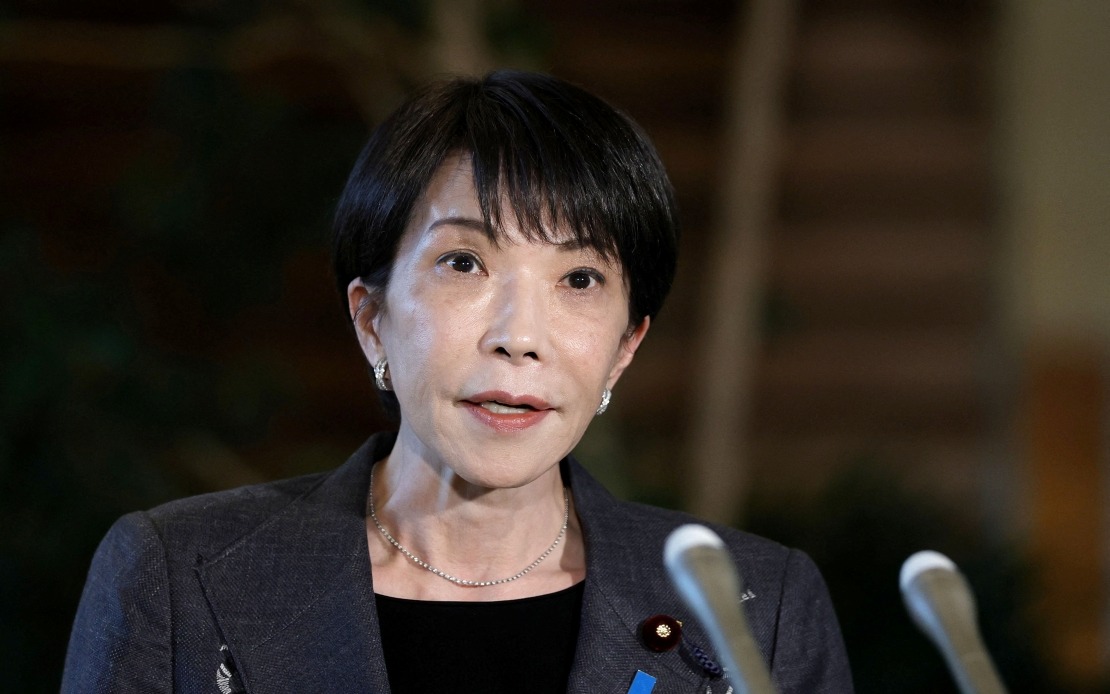
Prime Minister Sanae Takaichi has given an explicit undertaking that Japan will restore its consumption tax on food to the standard 8 per cent rate following a scheduled two-year reduction beginning in April 2027. The declaration, made during parliamentary testimony before the House of Representatives committee on Monday, represents a significant refinement of campaign pledges that had promised a complete elimination of the levy on food and beverages. The commitment reflects mounting pressure on Japan's deteriorating fiscal position and persistent inflationary pressures that have constrained household budgets across the nation.
The ruling Liberal Democratic Party unveiled the revised proposal last week, marking a departure from its February election campaign commitment to zero the consumption tax on food entirely. Under the new framework, the tax would instead be lowered to just 1 per cent for the two-year implementation period. Lawmakers from the opposition Democratic Party for the People have questioned whether such reductions could realistically be reversed once implemented, noting that restoring any tax rate typically invites public outcry and accusations of hidden tax increases. This political vulnerability lies at the heart of Takaichi's unprecedented pledge to clearly signal the temporary nature of the measure from the outset.
The LDP's proposal emerged through deliberations at a cross-party national council examining taxation and social security policy. This framework had been established following months of discussions aimed at developing a comprehensive interim report expected to be finalised later in June. Takaichi has indicated her desire to accelerate implementation of the tax reduction, potentially moving ahead once the national council formalises its recommendations. The urgency reflects both electoral commitments and recognition that households continue to grapple with inflation-driven cost pressures.
Practical considerations have shaped the decision to settle on a 1 per cent rate rather than complete elimination. Retailers across Japan would require substantial time and expense to recalibrate point-of-sale systems to accommodate a zero rate, making the administrative challenge of immediate full implementation impractical. By adopting the 1 per cent approach, the government maintains the appearance of delivering on campaign promises while acknowledging real-world constraints facing the retail sector. This compromise reflects the LDP's effort to balance political commitments with operational feasibility.
To effectively neutralise the revenue impact and deliver meaningful relief to households, the LDP has simultaneously proposed annual cash disbursements totalling approximately 600 billion yen, equivalent to roughly US$3.7 billion. These payments would compensate for the foregone tax revenue generated by the 1 per cent reduction on food products. By coupling tax cuts with direct fiscal transfers rather than permanent tax reductions, the government aims to achieve relief objectives while maintaining clearer control over fiscal outcomes and demonstrating the temporary, targeted nature of the intervention.
Japan's fiscal circumstances have grown considerably more precarious, with government bond yields recently reaching their highest levels in decades while the yen continues to depreciate against major currencies. The Group of Seven's worst-performing fiscal position creates a genuine dilemma for policymakers attempting to address cost-of-living pressures without further undermining investor confidence in Japanese public finances. Bond market volatility and currency weakness have signalled growing concerns about the nation's ability to service its substantial debt burden, particularly as demographic decline reduces the working-age population base that generates tax revenue.
The consumption tax itself has become an increasingly contentious element of Japan's fiscal architecture. First introduced in 1989 at 3 per cent and subsequently raised to 5 per cent and then 8 per cent, each increase has faced public resistance despite its necessity for addressing structural budget deficits. The current proposal to temporarily reduce the rate to 1 per cent represents a reversal of the recent trend toward higher taxation, though the deliberate commitment to restore the standard rate acknowledges fiscal sustainability imperatives that electoral campaigns necessarily downplay.
For Southeast Asian observers, Japan's predicament offers instructive lessons regarding the long-term consequences of sustained fiscal imbalance and demographic stagnation. Nations across the region wrestling with inflation management and social spending pressures can examine how Japan navigates the tension between immediate household relief and structural fiscal health. The experience demonstrates that temporary tax relief measures, when coupled with explicit sunset provisions and accompanying transfers rather than permanent rate reductions, may offer policymakers greater flexibility in managing competing political and economic objectives.
The coalition government comprising the LDP and its junior partner, the Japan Innovation Party, had jointly pledged food tax elimination during February's lower house election campaign. Opposition parties similarly adopted comparable promises as a means of signalling responsiveness to household economic anxieties. The shift toward a 1 per cent rate with compensatory cash transfers rather than permanent elimination reflects a maturing understanding that electoral promises must ultimately accommodate fiscal reality and administrative capability. Takaichi's explicit commitment to sunset the reduction after two years attempts to establish credibility for the measure's temporary status, though observers remain sceptical whether any Japanese government would realistically reimpose the standard 8 per cent rate without triggering significant political backlash.

