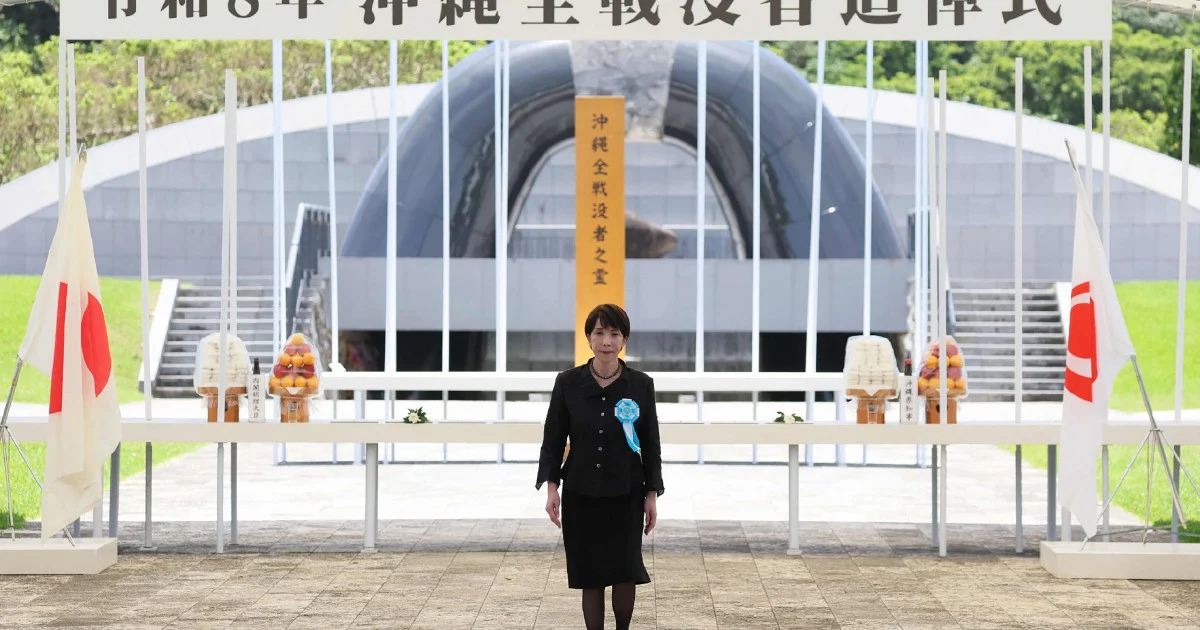
Prime Minister Sanae Takaichi encountered vocal opposition while attending a World War II memorial service in Tokyo, with demonstrators expressing deep concerns about Japan's evolving defence policy and its departure from the pacifist principles that have defined the nation's international relations since 1945. Television coverage documented the disruption, reflecting ongoing tensions between government security priorities and citizens who remain committed to Japan's historical commitment to avoiding military conflict.
The heckling incident underscores a widening generational and ideological divide within Japan over how the country should position itself militarily in an increasingly uncertain geopolitical landscape. Protesters at the memorial gathering articulated their opposition to what they view as a concerning militarisation agenda that contradicts the constitutional and philosophical foundations upon which post-war Japan was rebuilt. For many Japanese citizens, particularly older generations who lived through the aftermath of World War II, the prospect of greater military engagement represents a troubling departure from values embedded in national consciousness for nearly eight decades.
Japan's security doctrine has undergone significant transformation in recent years, driven by escalating tensions in East Asia, China's military expansion, and North Korea's advancing weapons capabilities. The government has progressively elevated defence spending, expanded the capabilities of the Self-Defence Forces, and strengthened security partnerships, most notably with the United States. These developments, while resonating with those who prioritise national security in a volatile region, have provoked anxiety among those who fear they herald a return to the militarism that devastated Asia during the 1930s and 1940s.
The timing of the interruption at a WWII memorial ceremony carries particular symbolic weight, as such occasions traditionally serve as moments for national reflection on the costs of military conflict and the importance of peaceful coexistence. Protesters chose this solemn setting to amplify their message that honouring wartime victims should inspire commitment to preventing future wars, not preparing for them. Their intervention challenged the narrative that increased military capabilities necessarily translate to enhanced security, instead questioning whether such moves ultimately diminish Japan's historical identity as a peace-oriented society.
Takaichi's leadership has been characterised by a more assertive foreign policy stance compared to some of her predecessors. Her administration has pursued closer defence cooperation with allied nations and articulated stronger responses to regional security threats. However, these initiatives have generated substantial domestic resistance from peace activists, academic circles, and opposition politicians who contend that diplomatic engagement and international law provide more sustainable paths to stability than military buildups. The memorial incident demonstrates that this debate remains very much alive in Japanese public discourse.
For regional observers, particularly in Southeast Asia, Japan's military trajectory carries significant implications. Nations in ASEAN maintain complex relationships with Tokyo, valuing its economic contributions and democratic governance while simultaneously monitoring its security posture carefully. Southeast Asian countries navigating between great power competition have expressed interest in Japan contributing to regional stability, yet some harbour historical sensitivities about Japanese military activity. Japan's internal debates about its defence role thus ripple across the broader Asia-Pacific region.
Constitutional constraints have historically limited Japan's military options, with Article 9 of the postwar constitution renouncing war and prohibiting armed forces. While successive governments have interpreted these provisions flexibly, allowing the Self-Defence Forces to exist and operate, the fundamental text continues to define national identity for many Japanese. Recent discussions about potentially revising these constitutional provisions have amplified peace movement concerns that fundamental changes to Japan's foundational principles are under consideration.
The generational dimension of this dispute warrants attention. Younger Japanese citizens, born well after the war ended, may perceive regional security challenges differently than their grandparents, potentially viewing military modernisation as pragmatic necessity rather than dangerous militarism. This generational split complicates consensus-building around defence policy and suggests that these debates will persist as demographics shift and new cohorts come of age with different historical perspectives.
Domestic political opposition to military expansion extends beyond street protests to parliamentary proceedings, where opposition parties regularly challenge government defence initiatives. Civil society organisations, including long-established peace groups with roots in postwar activism, continue mobilising citizens and generating public discourse designed to preserve what they characterise as Japan's pacifist legacy. These actors view themselves as custodians of a moral tradition worth defending against what they perceive as incremental erosion.
The confrontation at the WWII memorial also reflects international dimensions of Japan's defence debate. Allied nations, particularly the United States, have encouraged Japan to assume greater regional security responsibilities, creating external pressure that complements internal arguments for military enhancement. Balancing these international expectations against domestic political sentiment represents an ongoing challenge for Japanese leadership as it navigates between alliance obligations and national constitutional traditions.
Looking forward, the memorial incident suggests that Japanese society remains unsettled about its security direction, with substantial portions of the population unconvinced that military expansion serves national interests. Whether the government can successfully build broader consensus around its defence policies, or whether such disagreements will continue characterising domestic political discourse, remains an open question with profound implications for Japan's role in regional security architecture and the broader Asia-Pacific balance of power.

