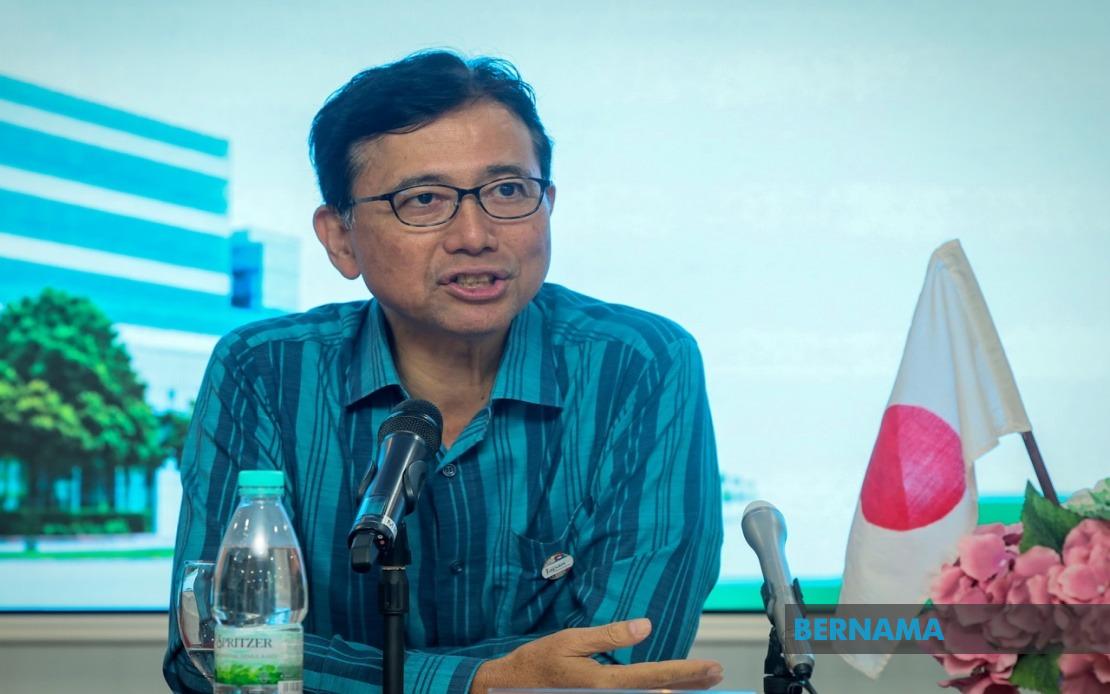
Japan's revised Free and Open Indo-Pacific (FOIP) strategy represents a significant boost for Malaysia's long-standing ambition to emerge as Southeast Asia's premier digital and technology hub, Japanese Ambassador to Malaysia Noriyuki Shikata said this week. The updated framework, unveiled by Prime Minister Sanae Takaichi in May, marks a notable shift in Japan's regional economic and strategic positioning, moving beyond its original 2016 articulation to emphasise concrete cooperation in emerging technology sectors. For Malaysian policymakers and business leaders, the alignment between Tokyo's recalibrated Indo-Pacific vision and Kuala Lumpur's own technology development goals presents a compelling opportunity to accelerate the nation's industrial transformation.
When former Prime Minister Shinzo Abe introduced the FOIP concept nearly a decade ago, the framework centred on broader themes of regional peace and stability. The updated iteration, however, demonstrates a pragmatic reorientation towards tangible economic security and industrial resilience. Takaichi's version distinctly emphasises capacity building and joint development in frontier technologies including artificial intelligence, secure data exchange, undersea cable infrastructure and satellite communications systems. These specific sectoral priorities directly mirror areas where Malaysia has positioned itself for growth and where foreign direct investment from Japan could catalyse significant advancement.
The financial muscle behind Japan's refreshed approach should not be underestimated. The POWERR Asia initiative, backed by a US$10 billion commitment, specifically targets ASEAN member states with support for energy procurement, strategic fuel reserves and critical materials sourcing. This economic dimension transforms the FOIP from a conceptual framework into a mechanism with real capital deployment capability. For Malaysia, which faces its own energy security challenges and has ambitions in semiconductor manufacturing, such funding mechanisms can substantially de-risk investments in next-generation technology infrastructure and supply chain development.
Shikata's characterisation of the updated FOIP as aligned with ASEAN's own Indo-Pacific Outlook (AOIP) reveals deliberate coordination between Tokyo and Southeast Asia's regional bloc. Rather than imposing a unilateral vision, Japan's refined approach acknowledges and incorporates ASEAN's collective priorities, creating a more consensual framework for regional cooperation. This diplomatic calibration matters significantly for Malaysia, which balances multiple great power relationships and seeks partners who respect ASEAN's centrality in regional architecture. The explicit recognition of this alignment signals that Japan's technological partnership offers does not come with demands that compromise the region's strategic autonomy.
For the Japanese business community operating within Malaysia, Shikata indicated that the framework creates a more stable operational foundation. Japanese corporations, particularly those in advanced manufacturing, semiconductors and digital infrastructure, stand to benefit from clearer policy signals regarding investment protection and technology cooperation. The ambassador specifically highlighted Japan's recognition of Malaysia's semiconductor capabilities and the opportunities for Japanese firms to expand beyond traditional manufacturing into sophisticated packaging technologies, artificial intelligence infrastructure and cloud computing services. This sectoral specificity suggests that investment conversations between Japanese and Malaysian counterparts will increasingly focus on high-value, knowledge-intensive activities rather than conventional cost arbitrage manufacturing.
The Comprehensive Strategic Partnership (CSP) established between Japan and Malaysia in December 2023 provides institutional scaffolding for deepening the technology relationship. Shikata characterised this bilateral arrangement as moving beyond the legacy Look East Policy and traditional manufacturing frameworks into territory defined by innovation and strategic co-creation. The CSP essentially converts diplomatic goodwill into concrete mechanisms for technology transfer, joint research initiatives and coordinated industrial policy. For Malaysia's government and its technology-focused enterprises, this partnership structure enables more ambitious collaboration than traditional foreign direct investment channels alone.
Datuk Seri Anwar Ibrahim's recent engagement with major Japanese industrial conglomerates during a visit to Japan has apparently crystallised Malaysia's technological direction. Discussions with Mitsubishi Corporation, ENEOS, DENSO, IBM and Marubeni reflect Malaysia's intent to engage Japan's largest and most technologically advanced corporations in co-development rather than assembly relationships. These particular companies represent different industrial sectors—energy, automotive components, information technology—indicating Malaysia's multi-domain approach to technological advancement. The fact that a sitting Malaysian Prime Minister conducted such high-level industrial diplomacy underscores the strategic importance assigned to the technology partnership.
The anticipated collaboration in artificial intelligence and quantum computing particularly merits attention for Malaysia's regional standing. These are not yesterday's technologies but rather frontier domains where competitive advantage remains fluid. By positioning itself as a partner for Japanese innovators in AI and quantum computing development, Malaysia creates opportunities to leapfrog conventional technological hierarchies. Rather than purchasing finished solutions, joint development arrangements enable Malaysian firms and researchers to build indigenous technological capability while accessing Japanese expertise and capital. For a nation seeking to transition from production-dependent growth models to innovation-driven advancement, such partnerships address a fundamental national priority.
Critical infrastructure and supply chain protection represents another dimension of the emerging partnership. Shikata explicitly noted that joint initiatives will focus on securing supply chains and protecting critical infrastructure against global strategic uncertainties. Given the heightened geopolitical tensions affecting semiconductor and advanced materials supply chains, this commitment carries tangible significance. Malaysia, as a significant node in regional semiconductor ecosystems and an important energy transit zone, faces particular vulnerabilities. Japanese-Malaysian cooperation on supply chain resilience and infrastructure protection directly addresses these vulnerabilities while positioning Malaysia as a more strategically important and secure investment destination.
The implications for Malaysia's technology ecosystem extend beyond government-to-government arrangements or bilateral corporate partnerships. A reinforced Japan-Malaysia technology relationship signals to global technology companies that Malaysia offers not merely a production location but a genuine innovation hub with access to cutting-edge expertise and capital. Venture investors, research institutions and technology startups within Malaysia benefit from credibility enhancement when major Japanese corporations commit to technology co-development. The ambassador's emphasis on partnership with Malaysia's existing tech ecosystem, rather than creating parallel investment structures, suggests recognition of domestic capability that requires strengthening rather than replacement.
Looking forward, the success of this updated partnership framework depends on several factors. Malaysian institutions must demonstrate capacity to absorb and utilise technological knowledge transfer effectively. Government policies must facilitate the regulatory flexibility required for cutting-edge technology development, particularly in sensitive sectors like artificial intelligence and quantum computing. Most critically, Malaysian firms must transition from supplier relationships to genuine co-development partnerships, requiring investment in research capability and human capital development. The framework Shikata describes is enablement; actualising it requires sustained commitment from Malaysian stakeholders.
For Southeast Asia more broadly, Japan's recalibrated FOIP and specific focus on Malaysia's technology potential reflects acknowledgment that the region's economic future depends on technological sophistication rather than low-cost labour advantages. As major technological powers compete for influence and investment partnerships, Japan's explicit support for Malaysia's digital hub aspirations provides meaningful competitive advantage. The approach also offers a model of technology partnership—emphasising cooperation over dominance, capacity building over dependency—that may resonate across the region as other ASEAN nations pursue similar development trajectories.

