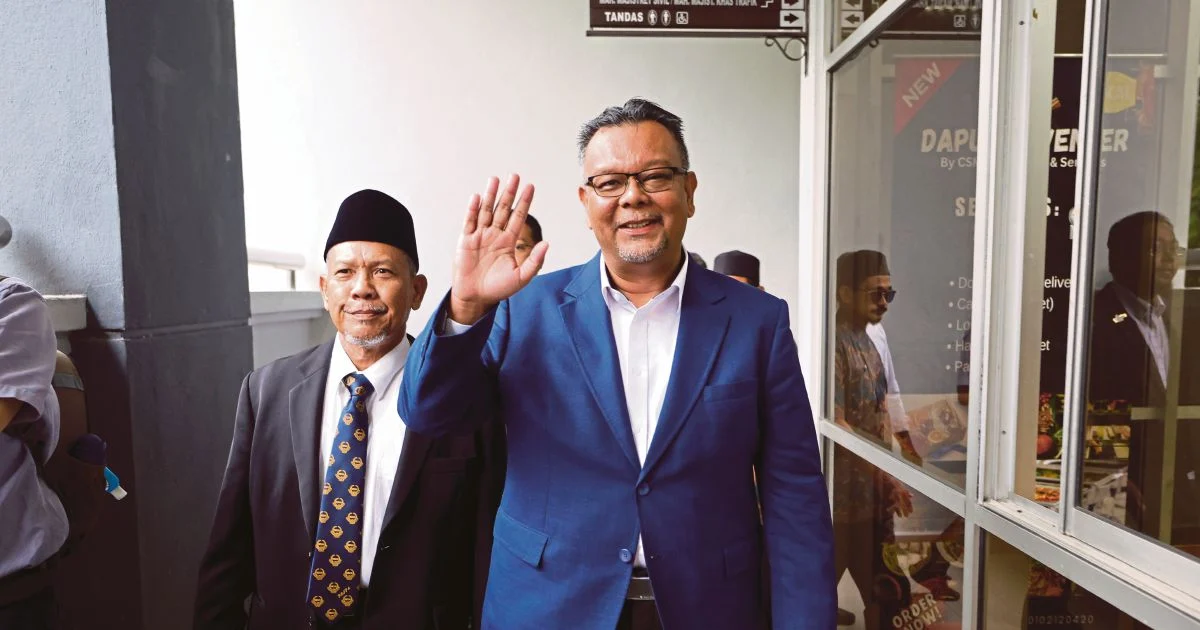
Dr Haim Hilman Abdullah, the elected assemblyman representing Jitra, appeared before the magistrate's court in Seremban today and formally entered a plea of not guilty against an allegation that he made statements with the potential to create public alarm or disturbance.
The charges against the Kedah state legislator fall under laws designed to prevent inflammatory speech that could destabilize public order or trigger widespread anxiety among the population. Such prosecutions have become increasingly visible in Malaysia's political landscape, reflecting heightened scrutiny of public figures' utterances and their potential societal impact. The move suggests authorities regard the matter seriously enough to pursue formal legal proceedings through the magistrate system.
The specific nature of the statements at issue has not yet been detailed in public filings, though cases of this category typically involve remarks made through political speeches, social media platforms, or public addresses that authorities determine cross the threshold from legitimate political commentary into territory that jeopardizes community stability. In Malaysia's context, such distinctions remain subject to considerable debate between civil rights advocates and government representatives regarding where the line should appropriately be drawn.
Appearing in Seremban rather than Kedah reflects the jurisdictional structure governing where particular cases may be heard, with the specific location often determined by where the alleged offense occurred or where the complaint was registered. Magistrate's courts handle less serious criminal matters and serve as the entry point for the judicial process in Malaysia's hierarchical court system. The preliminary hearing stage allows the court to assess whether there is sufficient basis to proceed and permits both the prosecution and defense to present initial arguments regarding the charge's merits.
For Dr Haim Hilman, the not guilty plea sets the foundation for what could become a more protracted legal battle. The decision to contest the charges rather than accept them signals his intention to mount a substantive defense, potentially arguing that his statements fell within protected political expression or that they did not meet the threshold for causing genuine alarm. This stance may also carry political implications for his standing within his constituency and broader political circles.
The case arrives amid a broader Malaysian context where politicians and public figures have faced increasing legal pressure over their statements. Such prosecutions occasionally become flashpoints for debates about freedom of expression, the scope of permissible political criticism, and whether judicial mechanisms are being employed proportionately or whether they reflect political motivations. Civil society organizations and opposition parties often scrutinize such cases closely, viewing them as indicators of the health of Malaysia's democratic institutions.
Malaysia's sedition laws and statutes targeting public alarm date from colonial-era legislation that has been retained and evolved through the nation's post-independence legal development. While intended as safeguards against genuinely destabilizing speech, critics contend these provisions occasionally blur important distinctions between dangerous inflammatory rhetoric and vigorous political debate that democratic systems should accommodate. The courts have grappled with establishing appropriate standards, though interpretations have sometimes appeared inconsistent across cases.
The jurisdictional question of how such matters are handled at state versus federal levels adds another layer to Malaysia's governance landscape. As a state assemblyman, Dr Haim Hilman operates within Kedah's political structure while answering to national legal frameworks that apply uniformly across the federation. This interplay between state and federal authority shapes both the charges he faces and the political consequences he may experience within his home state.
The proceedings in Seremban will likely involve preliminary discussions regarding evidence, disclosure of the prosecution's case materials, and scheduling of substantive hearings where witnesses and arguments will be presented. The duration of the judicial process remains uncertain at this stage, though such cases can extend for months or even years depending on complexity and the trial court's availability.
For observers in Kedah and more broadly across Southeast Asia, the case exemplifies ongoing tensions between security and liberty that affect multiple nations in the region. Malaysia's experience navigating these questions through its legal system offers lessons for understanding how different societies calibrate protections for public order against safeguards for political expression. The outcome may influence how similarly-situated charges are interpreted in future cases, potentially establishing precedents that guide judicial approaches for years to come.

