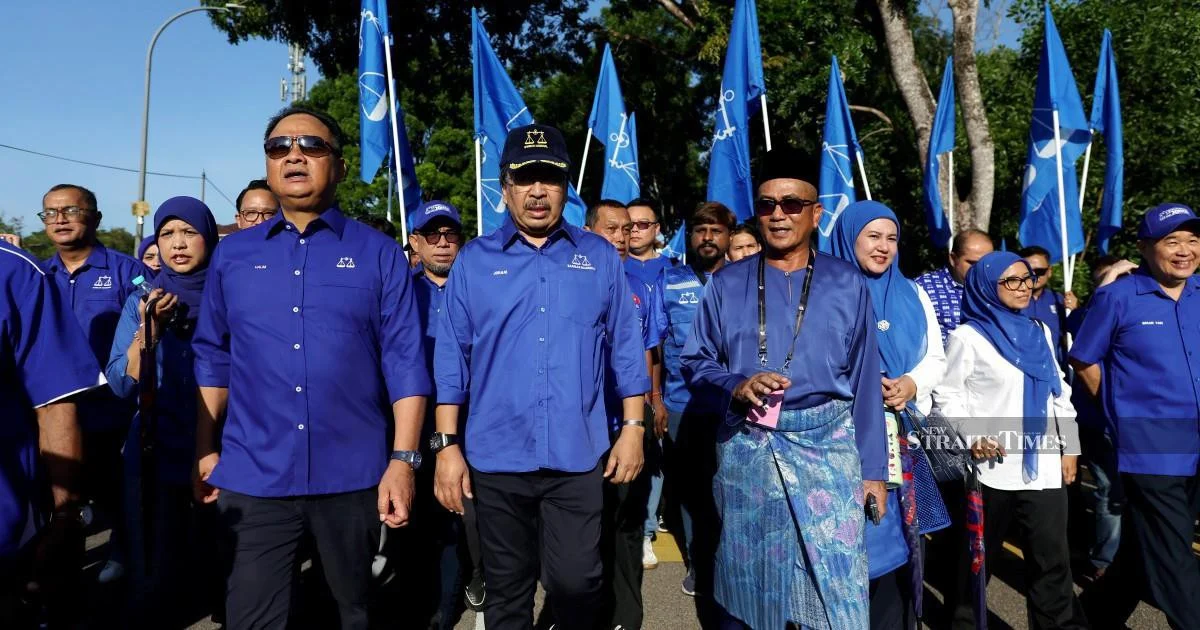
Senior Umno leadership has intensified its presence on the ground in Johor, with vice-president Datuk Seri Johari Abdul Ghani making a high-profile appearance at Taman Pelangi Indah community hall to bolster the Barisan Nasional campaign effort for the Tiram seat. The move reflects the coalition's strategic prioritisation of marginal constituencies where voter sentiment remains malleable ahead of polling day.
Tiram represents one of Johor's competitive electoral battlegrounds, where the outcome could pivot on ground-level campaigning and the momentum generated by senior party figures. The deployment of a high-ranking Umno office-holder such as Johari signals that the coalition views this constituency as winnable and worth the investment of senior resources. Such visible support from party leadership often carries symbolic weight with voters, particularly in constituencies where registration, canvassing operations, and community engagement determine electoral margins.
Johari's presence at the grassroots gathering underscores Umno's evolving campaign strategy, which increasingly emphasises direct engagement with community leaders and activists rather than relying solely on top-down messaging. The Taman Pelangi Indah event provided a platform for the vice-president to communicate party priorities directly to local stakeholders, reinforce the BN candidate's credentials, and mobilise the party machinery across the division. Such venues allow senior politicians to take the pulse of voter concerns while demonstrating commitment to constituencies that may feel neglected by the political establishment.
The Johor state election carries national implications for Barisan Nasional's recovery trajectory. The coalition suffered significant losses in recent electoral contests, and reclaiming ground in Malaysia's southern economic heartland would provide crucial psychological momentum for the broader party machinery. Johor's political complexion has shifted considerably over the past decade, with younger voters, urban professionals, and migrant communities creating a more fragmented electorate than existed in earlier eras. Winning back trust in seats like Tiram requires sustained engagement and credible messaging about economic management and development.
Umno's organisational strength remains concentrated in secondary and tertiary cities, where community networks and traditional party structures retain influence. Johari's campaign visit taps into these institutional relationships, energising ground-level operatives and providing them with talking points derived from senior party figures. The vice-president's participation also sends a signal to internal party factions that leadership takes this race seriously, which can translate into higher volunteer turnout and more robust electoral machinery activation.
For Malaysian voters in Johor, the heightened campaign tempo reflects broader competition within the ruling coalition itself. Umno faces pressure from both internal rivals within Barisan and external challengers from opposition parties seeking to capitalise on any perceived weakness in traditional Malay-Muslim constituencies. The party's decision to deploy senior figures in strategic locations demonstrates awareness that complacency could result in further erosion of its electoral base, particularly in constituencies with mixed demographics and younger voter populations.
The timing of such campaign activities invariably corresponds with internal Barisan calculations about resource allocation and seat viability. Johor contains constituencies ranging from ultra-safe to highly marginal, and the party must optimise deployment to maximise overall seat gains. By visible investing in Tiram, Barisan's leadership signals confidence in both the seat's winnability and the BN candidate's capacity to mobilise local support structures. Such confidence, however, depends on sustained effort beyond single campaign visits.
Community halls such as Taman Pelangi Indah serve as crucial nodes in the party's grassroots architecture, hosting gatherings that generate news coverage, provide networking opportunities for local operatives, and allow senior politicians to deliver prepared remarks to sympathetic audiences. These events also function as data-gathering exercises, permitting party strategists to assess local sentiment, identify emerging issues, and refine messaging for subsequent campaign phases. The attendee composition and engagement level at such gatherings inform broader strategic thinking about seat-level viability.
For Umno specifically, reclaiming lost ground in Johor remains central to party regeneration. The state's strategic and economic importance means that electoral setbacks there reverberate across national party morale and governance capacity. Johari's involvement in Tiram signifies that senior party leadership remains personally invested in reversing recent electoral trends, even as broader organisational challenges persist. The vice-president's presence thus carries dual significance: substantive campaign support and symbolic affirmation of party determination to contest every marginal seat competitively.
The constituency-level dynamics at play in Tiram reflect wider patterns visible across Malaysian politics, where traditional ethnic-based voting coalitions have fractured and new constituencies have become increasingly heterogeneous. Barisan's challenge involves reassembling broad enough coalitions in individual seats while maintaining overall electoral viability. Johari's campaign visit represents a tactical response to this challenge, attempting to energise machines and voters in specific locations where results remain contested.

