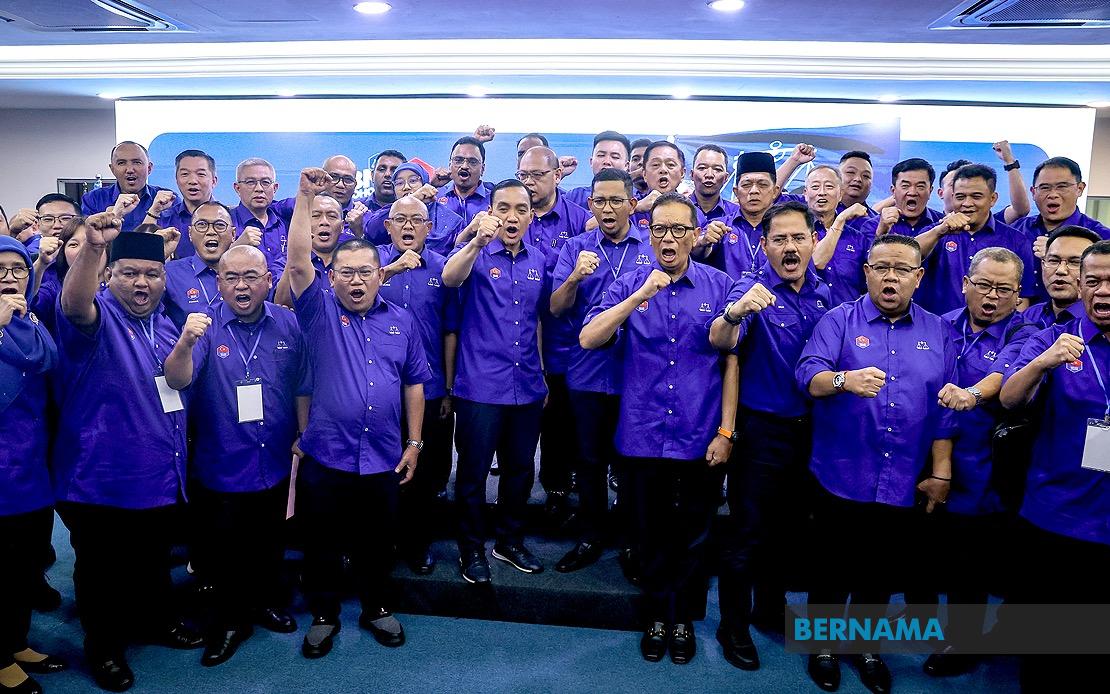
The Johor Barisan Nasional coalition unveiled its complete roster of candidates for the 16th state election on June 24, with party leadership emphasizing experience and integrity as the central pillars of their campaign strategy. Johor BN chairman Datuk Onn Hafiz Ghazi presented the slate of 56 candidates across all state seats at a formal ceremony in Johor Bahru, signalling the coalition's readiness for a competitive contest in one of Malaysia's most politically significant states.
The candidate distribution reflects the traditional power-sharing arrangement within the BN framework, with UMNO dominating proceedings by fielding 37 candidates, followed by MCA with 15 nominations and MIC contributing four aspirants. This composition underscores UMNO's leading role within the coalition while maintaining the multi-ethnic balance that has historically characterized BN's approach to electoral politics in Johor. The selection process received formal endorsement from BN's national chairman Datuk Seri Dr Ahmad Zahid Hamidi, lending additional weight to the coalition's organizational legitimacy heading into the campaign.
Onn Hafiz, serving concurrently as Menteri Besar, will personally defend the Machap constituency in this election cycle, a seat he successfully captured in 2022. His decision to contest reflects both personal confidence and the coalition's strategy to field experienced state-level leaders in key constituencies. As both the chief minister and a candidate, Onn Hafiz carries significant responsibility for translating the BN campaign into tangible electoral performance, making his individual outcome a bellwether for broader coalition prospects.
Among the most noteworthy inclusions in the candidate line-up is Datuk Seri Dr Adham Baba, the former federal health minister who previously held the Tenggara parliamentary seat across two separate terms spanning 2004 to 2022. Adham has been fielded in Pasir Raja, a state seat he represented for two consecutive terms from 2008 to 2018 before shifting focus to national politics. His reappearance in state-level competition signals a strategic effort by BN to leverage his ministerial experience and political profile in a constituency where he maintains established electoral credentials.
The line-up demonstrates the coalition's commitment to retaining experienced incumbents, with nine of ten former Johor executive councillors who participated in the 2022 state election retained as candidates for the upcoming contest. This high retention rate suggests confidence in the track records of sitting state assemblymen and the belief that continuity in state administration provides electoral advantage. However, the decision to step aside former Menteri Besar Datuk Seri Hasni Mohammad in Benut marks a notable departure, with UMNO working secretary Datuk Mohd Sumali Reduan nominated instead, indicating potential shifts in the coalition's assessment of competitive constituencies.
The exclusion of Khairin-Nisa Ismail @ Md On from renomination in Serom represents the only significant departure from the pattern of retaining female executive councillors. As the former State Women, Family and Community Development Committee chairman, her non-selection contrasts with the broader strategy of fielding experienced state administrators, raising questions about the specific calculations behind seat allocation decisions in particular areas.
In his address at the candidate announcement, Onn Hafiz delivered messaging intended to frame candidacy as a civic duty rather than personal privilege or political reward. This rhetorical positioning attempts to recalibrate expectations around elected office in a context where public skepticism toward political motivations has grown. The Menteri Besar explicitly reminded nominees that their selection carried responsibility for upholding integrity and conducting campaigns in accordance with what he termed the values of Johor's electorate, suggesting an effort to establish ethical parameters for the coalition's campaign conduct.
The emphasis on courteous and respectful campaigning reflects broader concerns within Malaysian political circles about maintaining democratic civility amid increasingly competitive electoral environments. By articulating these standards at the outset, BN leadership attempted to preempt potential criticisms of campaign tactics and establish a framework against which subsequent conduct could be evaluated. This positioning carries particular significance in Johor, where the coalition has historically maintained strong organizational capacity and the upcoming election represents an important consolidation point for BN's peninsular structure.
For Malaysian voters and political observers, the composition of Johor's BN slate offers insights into coalition priorities and leadership calculations. The heavy reliance on UMNO candidates reflects the party's organizational dominance within the state, while the retention of executive councillors suggests confidence in administrative performance. The reintroduction of Adham Baba into state-level competition, combined with Onn Hafiz's direct engagement as Menteri Besar-candidate, indicates that BN is deploying its most recognizable figures in strategically important constituencies, anticipating a competitive electoral environment.
The 16th Johor state election carries significance extending beyond state boundaries. As one of Malaysia's largest states by population and electoral weight, Johor outcomes influence broader peninsular political dynamics and the national BN coalition's trajectory. The candidate line-up revealed on June 24 therefore represents not merely local selection decisions but components of a larger strategic calculation about the coalition's capacity to maintain political dominance in an era of more assertive opposition challenges and evolving voter preferences. How effectively BN translates its experienced roster into electoral success will offer important indicators about the coalition's adaptation capacity and the sustainability of its traditional political model.

