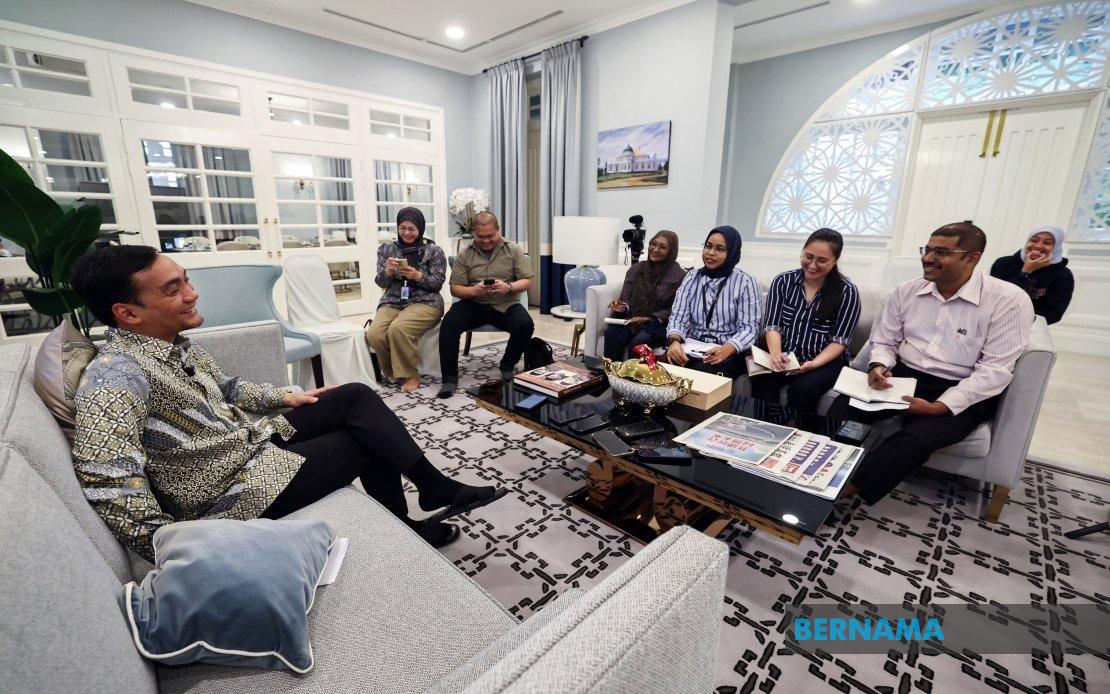
Johor Menteri Besar Datuk Onn Hafiz Ghazi has called on party members who missed out on candidate selection for the upcoming state election to maintain their dedication to Barisan Nasional's broader mission. Speaking at his official residence in Saujana, the Machap assemblyman acknowledged that disappointment over non-selection is natural, but stressed that such setbacks do not signify the end of a political career or contribution to the coalition.
Onn Hafiz framed the selection process as an inevitable constraint of electoral mathematics rather than a judgment of individual worth. With a finite number of state assembly seats available, he explained, the BN coalition must make difficult choices about who represents the party at the ballot box. Those not selected need not view themselves as sidelined from political engagement, as alternative avenues for service exist within the broader party structure and through parliamentary representation at the federal level. His message was calibrated to ease potential friction within BN ranks during a sensitive period when internal competition for candidacy can strain party unity.
The candidate selection procedure remains incomplete at approximately 80 per cent completion, Onn Hafiz disclosed, meaning fluidity persists in the final lineup. He cautioned that nothing becomes definitive until candidates formally receive their watikah, the official letters of appointment from party leadership. Historical precedent, he noted, includes instances where previously issued appointment letters have been rescinded, underscoring the provisional nature of earlier arrangements. This disclosure suggests that some individuals remain in contention and that the selection landscape could shift before the official announcement.
The criteria guiding candidate selection reflect a deliberate attempt to broaden the party's appeal and representational base. Rather than adhering to rigid parameters, Onn Hafiz emphasized that BN sought individuals with diverse professional credentials who enjoyed genuine standing within their constituencies. Age emerged as a notably flexible criterion, with the Johor leadership rejecting any notion that youth automatically qualified candidates or that seniority disqualified them. Instead, the overriding metric centered on demonstrable capacity to serve constituents effectively, regardless of generational background. This approach aligns with BN president Datuk Seri Dr Ahmad Zahid Hamidi's previously articulated WALI framework—candidates must be winnable, acceptable, and likeable within their communities.
Local rootedness constitutes a cornerstone of the selection rationale. Onn Hafiz stressed that chosen candidates must maintain genuine connections to their state constituencies and enjoy broad community acceptance. This localist emphasis reflects growing recognition within Malaysian politics that parachuting external figures into contests often proves counterproductive, particularly in contexts where voters expect representatives to possess authentic knowledge of regional challenges and aspirations. The insistence on community acceptability suggests that BN's selection teams conducted grassroots soundings to gauge potential support, rather than relying solely on elite judgments.
Decisions regarding candidate selection involve institutional consensus rather than unilateral determination by any single leader. Onn Hafiz emphasized that final approval requires endorsement from BN chairman and UMNO president Datuk Seri Dr Ahmad Zahid Hamidi alongside consultations with senior party figures. This multilayered decision-making architecture serves to distribute responsibility and enhance legitimacy across BN's leadership echelon. The arrangement also creates accountability mechanisms, as no individual can shoulder blame for unpopular choices, and collective endorsement theoretically increases buy-in from party organs and grassroots members.
Young and first-time voters represent a demographic fulcrum in determining Johor's electoral outcome, according to Onn Hafiz's assessment. Voters aged below 40 constitute between 20 and 40 per cent of Johor's population, a substantial bloc whose preferences could prove decisive in competitive contests. Recognizing this reality, BN's elected representatives have intensified engagement with younger voters, attempting to demonstrate that the coalition understands and addresses their concerns and aspirations. Onn Hafiz's acknowledgment of this demographic dependency signals that BN strategists view the youth vote as neither guaranteed nor easily moveable, necessitating active cultivation and responsiveness.
The Johor Menteri Besar directed his appeal for electoral participation at all eligible voters, explicitly including those Johoreans employed in Singapore who retain voting rights. Maximizing turnout serves democratic legitimacy, Onn Hafiz contended, as higher participation rates translate into more representative mandates and stronger public endorsement of government authority. The election is scheduled for July 11, with nomination day falling on June 27 and early voting available on July 7, providing multiple opportunities for participation. This staggered timeline accommodates voters with scheduling constraints and enables working individuals to fulfill their civic obligations.
Onn Hafiz framed his administration's track record as the foundation for securing another electoral mandate. Under his stewardship, the Johor state government has implemented policies and programs designed to improve residents' quality of life and economic prospects. Continuity of governance, he suggested, would enable deepening of these initiatives and building upon institutional progress already underway. The implicit contrast positioned the incumbent BN administration as a proven quantity against the alternative of untested opposition governance, a familiar argument in Malaysian electoral competition.
The broader political context surrounding Johor's July 11 election extends beyond state-level considerations. The outcome will influence perceptions of BN's electoral viability nationally and could impact momentum heading toward potential federal elections. A decisive BN victory in Johor would reinforce narratives of coalition resurgence following its 2018 federal defeat, while losses would suggest ongoing vulnerability in a key stronghold. For opposition parties, Johor represents both an aspirational target and a symbolic prize that could reshape national political calculations. The state's position as economically significant and geographically proximate to Singapore adds weight to its electoral result.
Onn Hafiz's framing of candidate selection disappointment as a temporary setback rather than definitive rejection reflects sophisticated political messaging aimed at maintaining party cohesion. By offering assurances about alternative pathways to contribution and service, the Johor leadership attempted to prevent demoralization and potential defection among unsuccessful aspirants. Such preventative communication is crucial in multiethnic coalition politics where multiple parties compete for the same vote banks and where disaffected members might defect to rivals. The narrative that party service transcends candidacy itself, and that not being selected does not equate to marginalization, serves to retain organizational loyalty even among disappointed activists.

