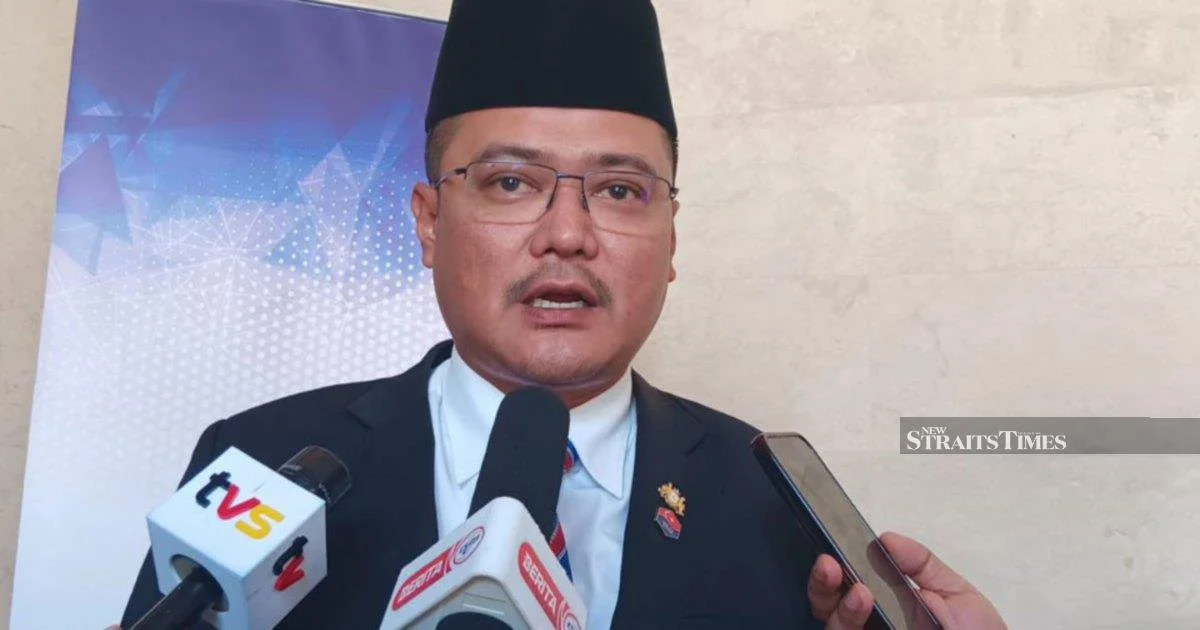
The Johor chapter of Barisan Nasional has launched a forceful rebuttal against former state assembly speaker Datuk Dr Mohd Puad Zarkashi, with party leadership characterizing his recent statements as serious allegations devoid of factual grounding. The remarks represent the latest escalation in a political confrontation that has drawn in institutional questions about the role of palace officials in decision-making at the state level.
Puad, who previously held the position of speaker in the Johor state legislative assembly, has made claims that implicate the palace in political processes—assertions that BN officials view as both damaging to institutional credibility and strategically motivated. Party representatives have moved swiftly to distance the coalition from any association with such narratives, emphasizing that the allegations lack substantive evidence and represent an attack on the integrity of traditional institutions.
The intensity of Johor BN's response reflects broader sensitivities surrounding the monarchy's role in Malaysia's political system. The palace, as constitutional head of state, operates within defined parameters, yet accusations of political interference carry considerable weight in public discourse and can undermine public confidence in institutional independence. By characterizing Puad's claims as irresponsible, BN leaders are signalling that such allegations cross lines of acceptable political debate.
Umno Youth, the party's youth wing, has widened the scope of the controversy by claiming that hundreds of individuals have filed police reports in connection with Puad's statements. This assertion adds a dimension of popular mobilization to what might otherwise remain an elite-level political dispute. The scale of alleged complaints, if substantiated, would indicate that the matter has resonated beyond political circles and touched broader public concern.
The involvement of Umno Youth underscores how younger party members are increasingly vocal in defending party interests and institutional prerogatives. As custodians of the party's future, they appear committed to countering narratives they view as corrosive to institutional trust. The mobilization of police reports—whether initiated independently or encouraged—represents a formal mechanism for documenting grievances and creating an evidentiary record of public concern.
For Malaysian observers, this dispute highlights enduring tensions within the political ecosystem regarding transparency and institutional roles. While Puad's background as a former assembly speaker grants him credibility in matters affecting state governance, his willingness to make palace-related allegations has proven controversial within establishment circles. The question of how extensively officials involved with the palace participate in political decision-making remains pertinent to understanding how Malaysian politics actually functions.
The timing of this controversy is significant within Johor's political calendar and broader BN positioning ahead of potential electoral contests. Any narrative suggesting institutional irregularities or questionable political practices can influence voter perception and party legitimacy. BN's aggressive response indicates that party leadership considers the damage potential of Puad's claims substantial enough to warrant swift and emphatic denial.
Puad's status as a former legislative speaker means his accusations carry weight that cannot be entirely dismissed as marginal commentary. Speakers typically possess detailed knowledge of assembly proceedings, institutional interactions, and behind-the-scenes political dynamics. His decision to publicly articulate concerns suggests either a principled stand on governance issues or a strategic political manoeuvre—interpretations that remain contested.
The police reports referenced by Umno Youth create a documentary trail that moves the dispute from rhetorical exchange into formal legal and administrative processes. Whether these reports lead to any formal investigation or charges remains unclear, but their existence signals that supporters of BN view Puad's statements as sufficiently problematic to warrant official attention. This tactic also serves to amplify BN's counter-narrative by demonstrating apparent grassroots concern.
For Malaysian readers following state-level politics, this confrontation reveals how institutional relationships and constitutional roles remain subjects of political contestation and interpretation. The palace's formal position in Malaysian governance is constitutionally defined, yet grey areas persist regarding the extent of advisory influence and informal engagement with elected officials. Disputes about such matters inevitably become proxies for broader questions about how power actually distributes across institutions.
The controversy also reflects generational and ideological divides within Umno itself, with Puad representing certain critiques of party direction that resonate with some constituencies while alarming establishment figures. His willingness to challenge party narratives, even on sensitive institutional matters, suggests a degree of independence that complicates BN's efforts to present a unified front.
Looking forward, the intensity of this dispute may influence how state-level governance operates in Johor, particularly regarding palace-executive coordination and communication protocols. If perceptions of institutional interference become widespread, pressure may mount for clearer demarcation of roles. Conversely, if BN's counter-offensive proves effective, it may discourage future public airing of such allegations.
The broader significance of this controversy extends beyond Johor, offering insight into how Malaysian political figures navigate institutional sensitivities and the strategies employed when elite-level disputes become public. The mobilization of youth wings, police reports, and public rebuttal represents a comprehensive response designed to delegitimize competing narratives and reinforce BN's claim to institutional guardianship.

