With nomination day looming, Malaysia's Election Commission has recorded modest but steady interest from prospective candidates in the Johor state election. As of this morning, 593 nomination forms have been distributed to candidates intending to contest the 56 available seats across the state, though only 133 have translated that initial commitment into concrete participation by paying the mandatory deposit. This gap between form sales and confirmed candidates underscores the uncertainty that often characterises the final hours before nomination opens, as political parties complete their internal deliberations and candidates make last-minute decisions about contesting.
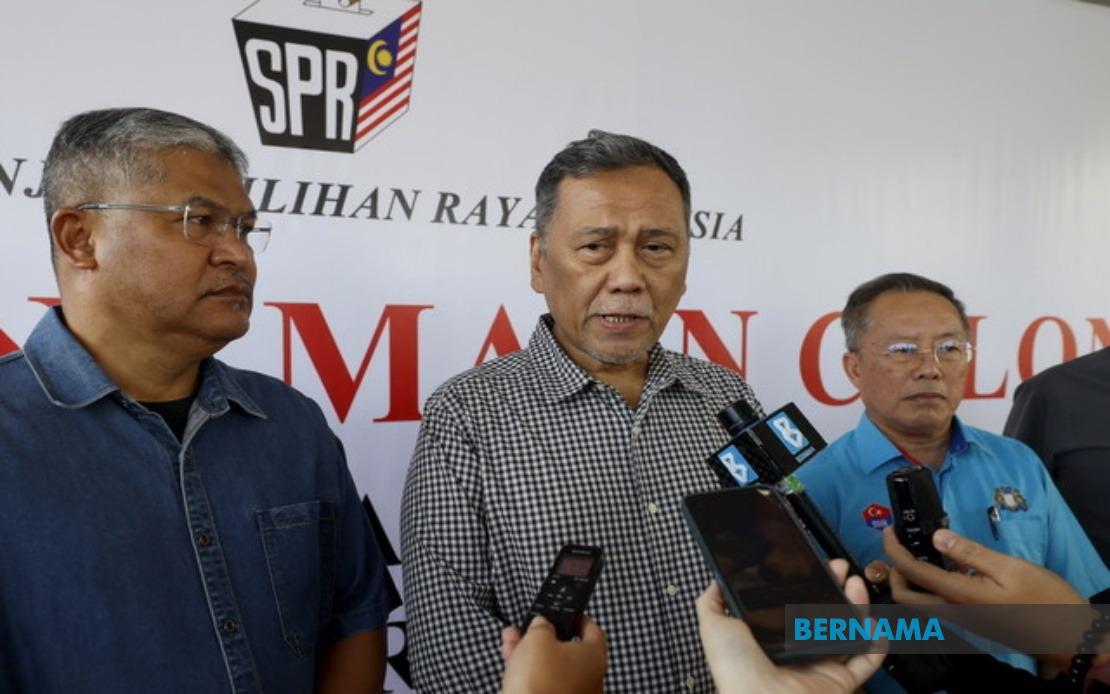
Election Commission chairman Datuk Seri Ramlan Harun indicated that officials expect further movement before the nomination window closes tomorrow morning. He emphasised the importance of candidates completing their formalities early to streamline the nomination process, which will unfold across 56 purpose-designated centres throughout Johor. The time pressure is deliberate: by requiring candidates to formalise their candidacy within a compressed timeframe, election authorities create a clearer picture of the actual field that will compete for voter support. This mechanism also prevents last-minute surprises that could complicate the electoral administration or undermine public confidence in the process's orderliness.
Logistical readiness has been thoroughly tested ahead of the contest. The Election Commission conducted two consecutive days of trial runs at nomination centres statewide, and Ramlan provided assurance that all venues are fully prepared to receive candidates tomorrow. This level of preparation reflects lessons learned from previous state and federal elections in Malaysia, where procedural glitches or inadequate facilities have occasionally marred nomination days. The Maharani constituency nomination centre at the Muar District Office, which the chairman inspected, exemplifies the standardised setup being replicated across the state. Such meticulous preparation aims to prevent congestion, reduce administrative errors, and project institutional competence to candidates and observers alike.
Security and crowd management have been emphasised as critical concerns. Zainal Eran, the returning officer for Maharani, outlined strict protocols designed to minimise friction during what can be a tense and emotionally charged day. Only candidates, their proposers, and one designated supporter will be permitted inside nomination centres, while other party supporters will be confined to designated outdoor areas separated by physical barriers. This segregation strategy reflects recognition that nomination days can attract large numbers of party loyalists, and without clear spatial boundaries, confrontations between rival groups occasionally occur. By physically separating supporters and restricting centre access, authorities aim to preserve the solemnity of the nomination process while maintaining public order.
All major political coalitions have committed to contesting the full slate of 56 seats, signalling their determination to contest every available constituency rather than ceding ground through uncontested races. Pakatan Harapan will present candidates across all 56 seats, with PKR contributing 20 candidates, Amanah 19, and DAP 17. This broad-based approach reflects Pakatan's confidence and its strategy to maximise seat gains in what is a crucial state for national politics. Barisan Nasional similarly contests all 56 seats through its component parties: UMNO will field 36 candidates, MCA 16, and MIC four. This comprehensive participation represents Barisan's commitment to defending its traditional stronghold in Johor, a state where it has held dominant sway for decades.
Perikatan Nasional's lineup demonstrates the coalition's internal complexity. PAS will contest 11 seats, Bersatu 16, the Malaysian Indian People's Party five, and Pejuang one. This distribution reflects negotiations among coalition partners about seat allocations, with Bersatu receiving the largest share—a significant fact given its pivot towards aligning with Perikatan in recent months. The Malaysian United Democratic Alliance will contest four seats independently, while Parti Sosialis Malaysia fields a solitary candidate, both representing non-mainstream voices in this election. Notably, Parti Bersama Malaysia marks its electoral debut by contesting 15 state seats, adding a new dimension to Johor's competitive landscape.
The electoral calendar has been firmly established following the dissolution of the Johor State Legislative Assembly on June 1. Tomorrow's nomination day will be followed by early voting on July 7, with the main polling day set for July 11. This compressed timeline—less than two weeks from nomination to polling—limits candidates' time for campaigning and voter engagement, a constraint that typically advantages better-resourced parties with established grassroots machinery. Smaller parties and independent candidates face heightened logistical challenges under such a compressed schedule, potentially affecting the quality and breadth of campaigning across the state.
The Johor state election carries weight beyond the state's borders. As Malaysia's second-largest state by population and a traditional economic powerhouse, Johor's political trajectory influences national political calculations. The results will signal voter sentiment towards the ruling coalition and test the coherence of the Perikatan Nasional alliance, which has faced internal strains. For Pakatan Harapan, strong performance in Johor would validate its recovery after electoral losses in recent months and strengthen its hand in national negotiations. The contest thus functions as a barometer of broader political sentiment, making the nomination process and subsequent campaign period subjects of intense scrutiny from observers across Malaysia and neighbouring Singapore, which has historical ties and ongoing economic relationships with Johor.
The nomination process itself will reveal how political parties have resolved internal selection disputes and settled candidate allocations. In Malaysian electoral history, nomination periods sometimes witness last-minute changes as parties adjust their lineups in response to local dynamics or unforeseen circumstances. The pace at which deposit payments accumulate tomorrow will provide early signals about candidate confidence and party-level unity. Candidates who fail to file nominations will effectively remove themselves from contention, a decision that occasionally reflects either party discipline—where senior figures convince junior aspirants to step aside—or personal assessment of electoral viability. By midday tomorrow, the actual contest will be crystallised into a definitive field of competitors.
For Malaysian voters and political analysts, the weeks ahead will prove consequential. The Johor election will test whether Pakatan's recent recovery in public esteem translates into ground-level support, whether Barisan Nasional can maintain dominance in a state it has historically controlled with relative ease, and whether Perikatan Nasional can consolidate as a genuine alternative power centre. Each nomination that proceeds beyond tomorrow's deadline represents a commitment to compete, a financial stake in electoral fortunes, and a personal risk for candidates facing public scrutiny. As candidates gather across Johor's 56 nomination centres tomorrow, they will set in motion a contest that extends far beyond state boundaries, influencing the calculus of Malaysia's fractious and dynamically shifting political landscape.

