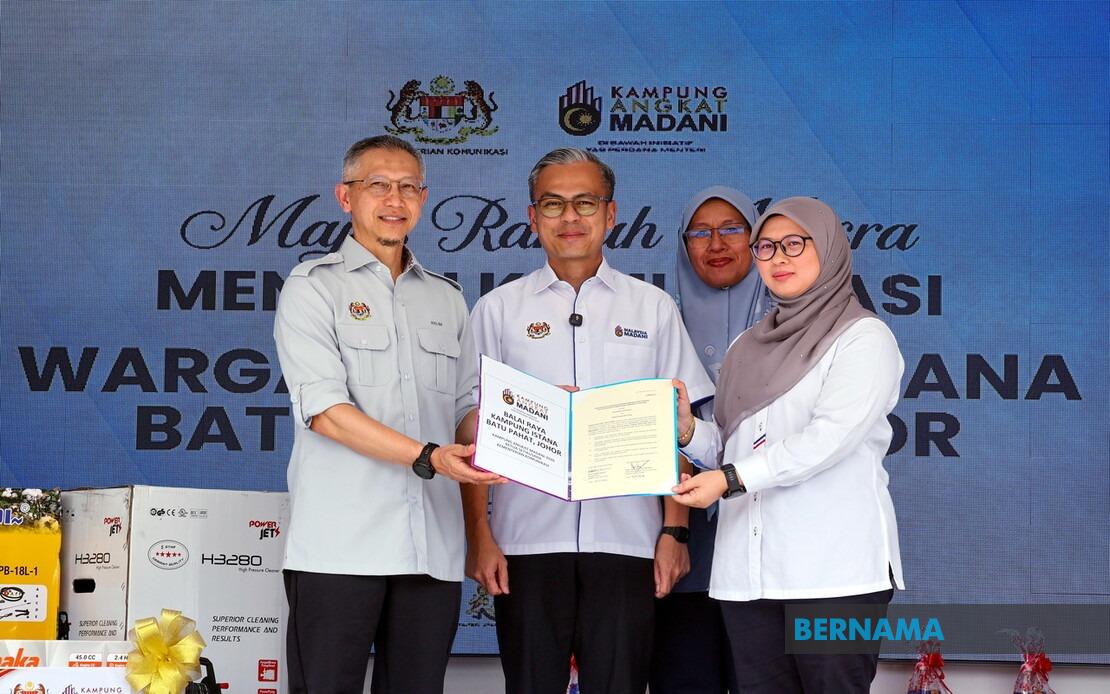
Pakatan Harapan's Communications Director Datuk Fahmi Fadzil has pushed back against narratives framing the upcoming Johor state election around individual personalities, positioning the July 11 poll instead as a pivotal moment for voters to select leaders committed to advancing the state's development and prosperity. Speaking during a campaign engagement in Batu Pahat, Fahmi expressed concern over suggestions that a Barisan Nasional victory would signal public endorsement for a former prime minister's pardon, characterising such interpretations as attempts to distract from substantive policy debates.
The distinction Fahmi drew carries significant weight in Malaysian electoral politics, where leadership personalities have historically dominated campaign messaging. By reframing the contest as fundamentally about governance and future trajectory rather than individual vindication, Pakatan Harapan appears intent on shifting voter attention toward institutional performance and policy platforms. This rhetorical strategy reflects broader coalition concerns that opposition messaging centred on personalities rather than programmes could alienate swing voters seeking clarity on economic recovery, public services, and infrastructure development.
Fahmi's comments directly addressed remarks attributed to Datuk Nazifuddin Mohd Najib, who suggested a BN victory would constitute public backing for his father Datuk Seri Najib Razak to receive clemency. Such statements, Fahmi argued, should serve as cautionary signals to voters about what genuinely matters in elections. He contended that Malaysian voters understand the implications of their ballot choices and resist being mobilised around personal grievances rather than collective welfare. The framing attempts to position Pakatan Harapan as the coalition concerned with substantive governance while portraying BN as consumed by factional interests.
A notable dimension of Fahmi's remarks concerned the presumed reliability of voter blocs. He dismissed the concept that any demographic group represents a permanent "fixed deposit" of political support, arguing that all parties must continuously earn and maintain public confidence through performance and responsiveness. This observation holds particular relevance for Peninsular Malaysia's urban and semi-urban constituencies, where non-Malay voters have increasingly fragmented their support across competing coalitions based on issue-specific considerations rather than inherited party loyalty. The Communications Minister's emphasis on earning rather than presuming support implicitly acknowledges Pakatan Harapan's vulnerability among voters who might defect if the coalition fails to deliver tangible benefits.
Fahmi highlighted what he characterised as growing cross-party defections toward Pakatan Harapan candidates as evidence of the coalition's expanding appeal. He specifically cited former Rengit assemblyman Datuk Dr Mohd Puad Zarkashi's public endorsement of the PH candidate, suggesting that even figures long assumed to be firmly embedded within UMNO's institutional structures were reconsidering their political alignment. Such defections, Fahmi argued, undermined Barisan Nasional's historical presumption that Johor represented party stronghold territory where support could be taken for granted. The appearance of BN and Bersatu members backing opposition candidates, while perhaps not producing dramatic seat shifts, nonetheless signals internal coalition fracturing and voter willingness to cross traditional factional boundaries.
The Johor contest assumes particular importance for Malaysian politics beyond the state itself. As the nation's largest state by registered voter population and a consistent source of federal parliamentary seats, Johor's electoral trajectory influences national coalition mathematics and shapes perceptions of electoral momentum. A decisive Pakatan Harapan performance could strengthen Prime Minister Anwar Ibrahim's governing coalition and demonstrate voter confidence in economic recovery initiatives, while conversely, a strong Barisan Nasional showing would reinvigorate the opposition narrative. Fahmi's messaging strategy appears calibrated to mobilise voters around themes of national economic recovery, institutional stability, and future development rather than permitting the contest to become a referendum on individual political figures or historical grievances.
The 16th Johor State Election will see 172 candidates compete across 56 seats, with early voting occurring on July 7 and general polling on July 11. The scale of this electoral exercise and its prominence within Malaysia's political calendar reflect Johor's significance as both an economic engine and a traditionally competitive electoral battleground. Neither Pakatan Harapan nor Barisan Nasional can claim overwhelming structural advantages, making campaign messaging and voter engagement potentially decisive factors. Fahmi's insistence on issues-focused rather than personality-focused discourse may reflect internal coalition polling suggesting that Pakatan Harapan performs better when elections centre on governance records and development plans rather than on comparisons between individual leaders.
The broader implication of Fahmi's commentary concerns the maturation of Malaysian electoral discourse. His argument that voters should transcend personal allegiances and factional considerations to focus on institutional capacity and policy direction aligns with evolving voter sophistication, particularly among younger and urban constituencies. However, such messaging also risks appearing tone-deaf in contexts where historical injustices, corruption allegations, and questions of political accountability remain salient. Fahmi's framework assumes voters can comfortably separate questions of past misconduct from present governance capability, an assumption that opposition supporters may contest.
For Johor voters specifically, the election presents a choice between continuity under Barisan Nasional leadership and change under Pakatan Harapan direction. Fahmi's articulation of Pakatan Harapan's positioning emphasises that this choice should turn on competing visions for economic development, public service delivery, and state prosperity rather than on vindication or punishment of individual political figures. Whether this framing resonates with sufficient voters to produce meaningful electoral gains for the coalition remains uncertain, but the effort to elevate campaign discourse toward substantive policy terrain reflects recognition that Malaysian voters increasingly demand more than factional loyalty or personality-based politics.

