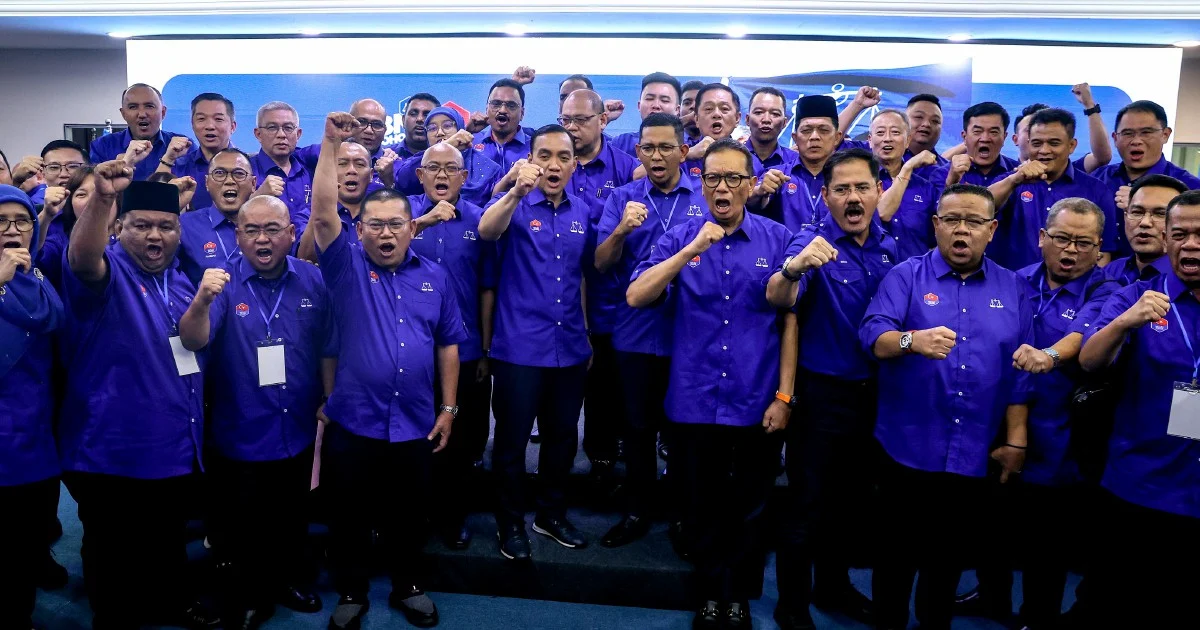
The Barisan Nasional coalition has closed the door on what had been mounting speculation about a possible electoral alliance with Parti Wawasan Negara and PAS in the Johor state election. When state BN leaders unveiled their full slate of candidates in Johor Baru today, not a single representative from Wawasan appeared on the list, definitively signalling that the broader coalition arrangement will not materialise.
The absence of Wawasan candidates from BN's official nomination marks a decisive end to weeks of political conjecture that had swirled around Johor politics. Prior to the formal announcement, observers had noted growing discussion of a potential three-cornered arrangement that would have brought together BN, PAS, and Wawasan in a coordinated effort across the state. Such an alliance would have represented a significant reconfiguration of the political landscape in Malaysia's southern industrial hub, where electoral dynamics have been in flux following recent national political shifts.
Wawasan, which has been positioning itself as a centrist political force in Malaysian politics, had appeared to be exploring various coalition options as smaller parties typically seek strategic alignment with larger blocs to maximise electoral prospects. The party's political positioning and recent statements had left open the possibility that it might pursue formal cooperation with either BN or other coalitions in state-level contests. The Johor election therefore represented a critical test of whether such partnerships would crystallise into concrete electoral arrangements.
The BN decision to proceed without Wawasan reflects the coalition's confidence in its independent strength within Johor, a state that has remained a traditional BN stronghold despite recent national political volatility. BN's dominant position in Johor state politics, rooted in decades of governance and deep community networks, means the coalition has less incentive to share seats with smaller parties compared to states where its electoral position is more precarious. This calculation appears to have prevailed in internal BN discussions about seat allocation and coalition architecture.
For PAS, the non-inclusion of Wawasan in the BN slate creates a clearer picture of the political battlefield. While BN has been the primary focus of analysis, PAS's own strategic positioning in Johor remains significant given the party's strong grassroots presence in certain constituencies. The absence of a broader three-way coalition simplifies the electoral contest somewhat, though it does not necessarily mean PAS and BN will face no mutual challenges in competitive seats where both parties contest separately.
The candidate announcement carries implications extending beyond the immediate Johor contest. It suggests that while inter-party conversations may have occurred at various levels, the senior leadership of BN determined that accepting Wawasan into a formal arrangement would either dilute BN's electoral advantage or prove internally divisive among the coalition's own component parties. Such calculations are routine in coalition politics, where potential partners must balance the benefits of expanded electoral reach against concerns about seat distribution and internal harmony.
Wawasan's experience in Johor mirrors the challenging position faced by medium-sized political parties in Malaysia's increasingly polarised electoral environment. These parties must navigate between larger coalitions that may not always be receptive to formal partnerships, particularly in contests where the senior partner feels sufficiently strong to contest independently. The party may now determine whether to contest Johor seats independently, align with opposition forces, or focus resources on constituencies where it perceives genuine electoral viability.
The timing of today's announcement provides clarity for voters and party machinery as the campaign period approaches. Candidates from BN component parties now have their nominations confirmed, allowing for focused campaign preparation and resource mobilisation in their respective constituencies. The crystallisation of the candidate lineup also permits media and observers to analyse seat contests with greater precision, moving beyond speculation into concrete analysis of actual electoral matchups.
For Malaysian politics more broadly, the BN approach to the Johor election reflects the coalition's current strategic orientation following the 2022 general election and subsequent developments. BN has gradually rebuilt its electoral credibility and has regained confidence in contesting major state elections without recourse to extensive coalition-sharing arrangements. This posture contrasts with periods when BN's weaker position necessitated more expansive partnerships, suggesting that the coalition perceives a strengthening rather than deteriorating electoral position.
The exclusion of Wawasan also provides insight into how Malaysian political coalitions operate pragmatically around seat allocation. Rather than encompassing all available partners, coalitions tend to contract to their core components when the dominant parties feel electorally secure. This dynamic may frustrate smaller parties seeking parliamentary representation, but it reflects the hard mathematics of electoral competition where limited seats must be distributed among competing interests.

