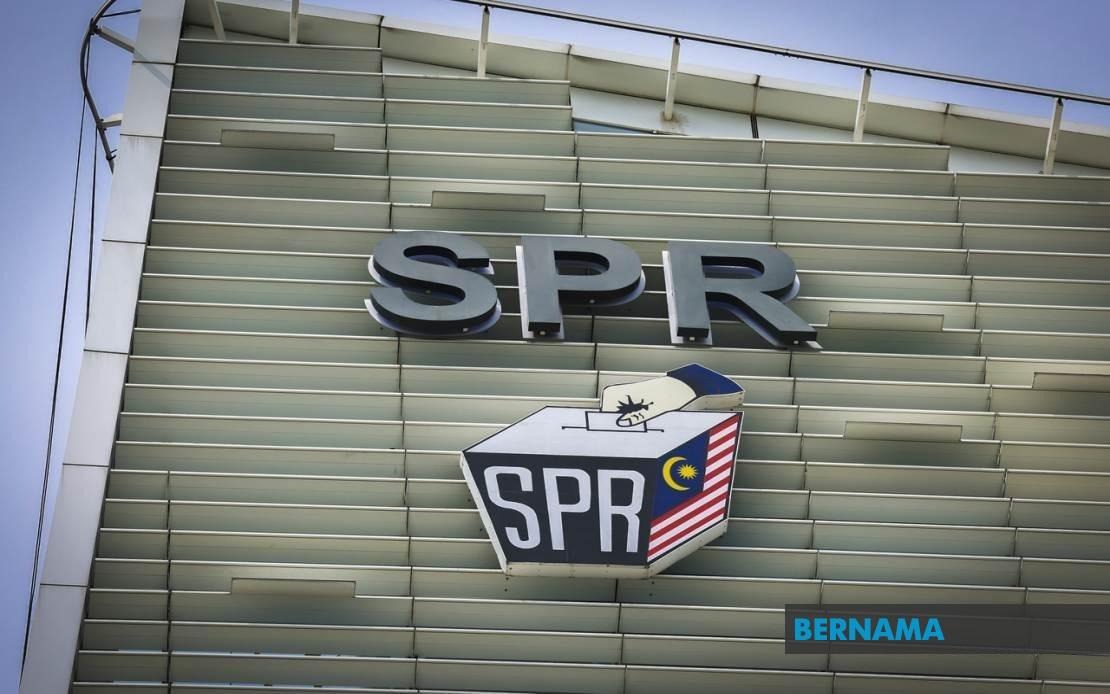
The Election Commission has documented 305 reports of campaign-related breaches during the ongoing Johor state election campaign, signalling significant enforcement activity as polling day approaches on July 11. The spike in complaints underscores the challenges electoral authorities face in managing a high-stakes state contest where 172 candidates are competing for 56 seats across disparate constituencies with varying enforcement environments.
Among the recorded violations, 140 cases involved campaign materials positioned in areas that local authorities had explicitly designated as off-limits. This represents the largest single category of breaches and reflects a persistent compliance problem even as political parties and candidates received clear directives on permissible placement zones. The concentration of infractions in this category suggests either widespread misunderstanding of regulations or deliberate circumvention of restrictions designed to maintain urban aesthetics and protect local amenities.
A secondary cluster of 90 complaints centred on campaign materials that obstructed driver sightlines or interfered with traffic flow, raising public safety concerns beyond purely electoral administration. These cases highlight the tension between political actors' desire for maximum visibility and the duty of authorities to prevent road hazards. The breadth of such complaints indicates that enforcement teams deployed to monitor campaign conduct have taken seriously their mandate to balance electoral expression with community welfare.
Twenty-seven additional breaches involved the placement of campaign materials within a 50-metre radius of polling centres, a restricted zone designed to ensure voter neutrality at points of balloting. This provision aims to protect voters from last-minute persuasion attempts and maintain the sanctity of the voting environment itself. The fact that such violations occurred suggests either inadequate awareness of the boundary restriction or insufficient on-ground coordination between candidates' campaign teams and enforcement personnel.
The remaining 48 complaints fell under miscellaneous offence categories, encompassing conduct that did not align with other defined breach types but nevertheless violated electoral law. This residual class likely includes irregularities related to campaign funding transparency, advertising practices, or conduct of campaign workers that fell outside the material placement framework. The distribution of complaints across diverse violation types indicates a comprehensive enforcement approach rather than selective targeting.
To manage the campaign period extending from the nomination day on June 27 through July 10, the Election Commission established 56 dedicated enforcement teams tasked with interpreting and applying electoral legislation. The deployment of one enforcement unit per contested seat reflects a granular approach designed to ensure localized oversight and rapid response to breaches. These teams operate under the Election Offences Act 1954, granting them statutory authority to investigate complaints and take remedial action.
The commission has emphasized that all reported violations received appropriate follow-up attention from the designated enforcement machinery, indicating a systematic rather than arbitrary approach to compliance management. This assertion is important for maintaining the credibility of the electoral process, as perceived selective enforcement could undermine faith in institutional neutrality. The commission's willingness to publicize complaint volumes also signals transparency in acknowledging the scale of the enforcement challenge.
Coordination among multiple agencies has strengthened the enforcement framework considerably. The Royal Malaysia Police provide general law enforcement support, while the Malaysian Anti-Corruption Commission brings expertise in detecting financially motivated electoral misconduct such as vote-buying. The Malaysian Communications and Multimedia Commission contributes oversight of digital campaign content, addressing a modern dimension of electoral regulation that traditional frameworks may not adequately cover. This multi-agency architecture reflects recognition that contemporary election management requires diverse competencies.
The commission has directed repeated appeals to candidates and political parties to observe electoral laws, codes of ethical conduct, and official directives. Such calls for voluntary compliance attempt to shift responsibility toward political stakeholders, though the volume of complaints suggests that exhortation alone has limited effect. The approach balances respect for political freedom of expression with the imperative to maintain orderly electoral processes that preserve public confidence in democratic institutions.
The Johor contest represents a significant political test given the state's economic importance and demographic complexity. With 172 candidates contesting 56 seats, competition remains intense, potentially motivating parties to push against regulatory boundaries. The early voting provision on July 7, preceding main polling on July 11, compounds the enforcement timeline by concentrating campaign activity and creating overlapping voting periods where campaign conduct and balloting procedures must coexist.
For Malaysian voters and observers, the reported complaint figures offer insight into the ground-level reality of electoral administration beyond headlines about candidate selection or political party positioning. The prevalence of material-placement violations suggests that campaign infrastructure management remains a persistent weak point in regulatory compliance. Whether future elections can reduce such breaches depends partly on whether underlying causes—such as inadequate resource allocation to candidates, unclear communication of rules, or insufficient penalties for violations—receive targeted remedial attention.
The election commission's commitment to conducting an efficient, fair, transparent and credible election depends substantially on effective campaign-period enforcement, as public perception of fairness is shaped by visible compliance. The documented breach complaints, while suggesting enforcement is active, also underscore the ongoing tension between political expression and regulatory restraint that characterizes all electoral systems attempting to balance democratic participation with institutional integrity.

