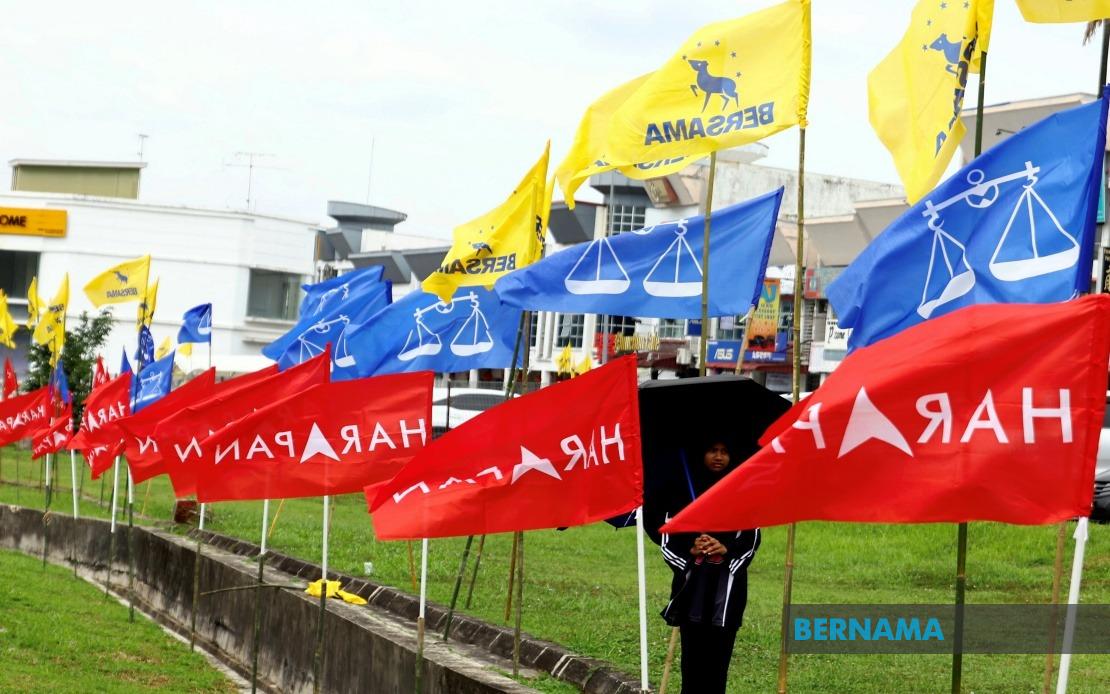
The campaign trail for Johor's 16th state election formally closes at 11.59 pm tonight, marking the end of an intensive fortnight of political activity across the state. From 8 am tomorrow, polling stations will open across 1,076 centres to receive votes from 2.7 million registered electors, who will determine not only which party or coalition governs Johor for the next five years but also which of the 172 candidates will occupy the 56 state assembly seats. This represents a notably reduced candidate field compared to the 239 who contested in the previous election, suggesting some consolidation within party structures.
Campaigning officially commenced on June 27, providing political parties with exactly two weeks to present their policy platforms and electoral strategies to the public. During this period, the major contenders—Barisan Nasional (BN), Pakatan Harapan (PH), and Perikatan Nasional—have articulated their visions through rallies, manifesto launches, and grassroots engagement. The concluding phase of campaigning witnessed high-profile participation, including Prime Minister Datuk Seri Anwar Ibrahim representing the PH coalition and Deputy Prime Minister Datuk Seri Dr Ahmad Zahid Hamidi leading BN's final push. The intensity of these closing hours underscores the competitive nature of this election and the stakes involved for Malaysia's largest state economy.
Voters with security force affiliations have already cast their ballots, with early voting conducted last Tuesday involving 20,607 personnel from the Malaysian Armed Forces (ATM), the Royal Malaysia Police (PDRM), and the General Operations Force (PGA), along with their spouses. This preliminary phase ensures that uniformed services personnel, whose duties may prevent them from voting on election day, have already participated in the democratic process. Such provisions reflect the Election Commission's commitment to maximising participation across all demographic segments of the electorate.
Election Commission officials anticipate that complete results will be available by 10 pm tomorrow evening, provided counting proceeds smoothly across all polling stations. This relatively swift turnaround—compared to elections in previous decades—reflects improvements in administrative efficiency and vote-counting procedures that have been implemented progressively across Malaysian elections.
Throughout the campaign period, the competing coalitions have maintained consistent messaging around several core issues resonating with ordinary Johoreans. The cost of living crisis, economic recovery strategies, employment opportunities, and public welfare programmes have dominated political discourse, reflecting genuine public concerns about household budgets and economic stability. These themes have provided the substantive backdrop against which voters have evaluated the competing claims and track records of the various political formations seeking their mandate.
Political analyst Dr Nazreena Mohammed Yasin from Universiti Tun Hussein Onn Malaysia emphasises that voter turnout will serve as the primary barometer for translating campaign momentum into actual electoral support. However, she cautions against oversimplifying turnout's predictive power, noting that its effects vary considerably by constituency and demographic composition. In certain areas, heightened participation may disproportionately benefit particular parties, while in others it may exert minimal influence on outcomes. Instead of viewing turnout as a straightforward predictor, analysts should regard it as a variable that could significantly sway contests in marginal seats where victory margins remain razor-thin. The previous Johor election in 2022 recorded a turnout of 54.92 per cent, providing a benchmark against which tomorrow's participation rates can be measured.
The organisational capacity of political parties will prove equally decisive in determining electoral outcomes. Nazreena highlights that the effectiveness of party machinery in mobilising supporters and executing efficient polling day operations will be especially critical in constituencies where races remain closely contested. Beyond party machinery, the category of undecided or "fence-sitter" voters could prove decisive in multiple constituencies. These voters, who delay their final choice until the last moment, often hold disproportionate influence in elections where opposing sides command relatively balanced support bases. Their eventual voting choices in marginal seats could determine several seats and thus potentially alter the overall composition of the state assembly.
Assessor of electoral dynamics must also examine shifts in victory margins from the previous election. Such changes provide insight into whether support for particular political formations has consolidated, eroded, or shifted between electoral cycles. Beyond the mechanical tallying of seats, elections offer windows into broader questions about voter confidence in government performance, the credibility and appeal of individual candidates, the stability or volatility of the political landscape, and the demonstrated capacity of parties to address substantive challenges like economic management and cost-of-living pressures.
Associate Professor Dr Mazlan Ali from Universiti Teknologi Malaysia observes that this election has witnessed both BN and PH emphasising political stability as their central campaign narrative. This strategic choice reflects the significance that both coalitions attach to their respective track records at federal and state levels and their positioning within the broader Unity Government framework. However, while parties have articulated various manifestos and made specific pledges, voter behaviour increasingly hinges on demonstrated performance in office rather than rhetorical commitments. The public's capacity to recall whether previous electoral promises have been fulfilled will substantially influence voting patterns tomorrow.
Mazlan also anticipates that heightened public interest in this election will translate into above-average voter participation, thereby amplifying the significance of every individual ballot cast. When turnout rises appreciably, marginal advantages become more consequential, and parties' organisational efficiency in reaching and mobilising their supporter bases becomes more determinative of outcomes.
The electoral contest itself presents an unusually fragmented landscape. While BN and PH each field 56 candidates across all 56 seats, Perikatan Nasional contests 33 seats, Parti Bersama Malaysia fields 15 candidates, the Malaysian United Democratic Alliance (MUDA) presents four, with smaller parties and independent candidates making up the remainder. Before dissolution on June 1, the previous assembly comprised BN with 40 seats, PH with 12, Perikatan Nasional with three, and MUDA with one. This distribution suggests that while BN enters the election as the incumbent with a substantial advantage, PH and its coalition partners are positioning themselves as a credible alternative government. The presence of other competitors, particularly Perikatan Nasional with 33 contested seats, adds further unpredictability to the outcome, especially in constituencies where these contenders might fragment the vote in ways that benefit either major coalition.

