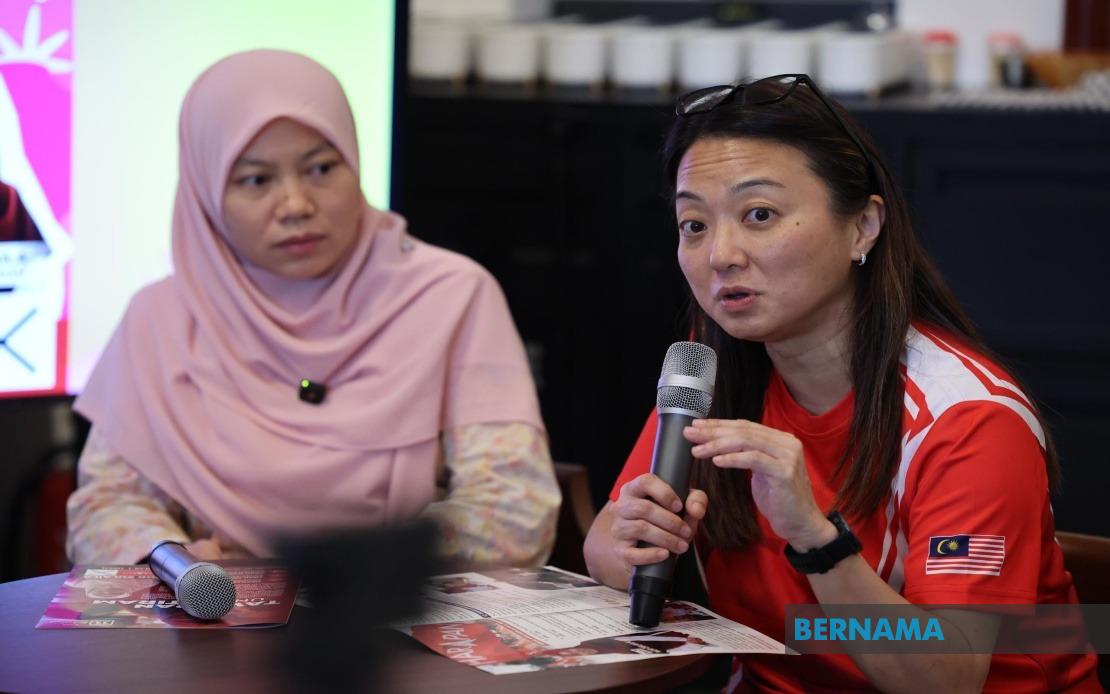
Accusations that political parties are simply recycling one another's campaign promises should not be viewed negatively, according to DAP deputy secretary-general Hannah Yeoh, who argues that substantive convergence on major platforms actually benefits voters in the upcoming Johor state election.
Speaking in Johor Bahru on July 4, Hannah, who serves as Minister in the Prime Minister's Department (Federal Territories), responded to claims circulating among political observers that Pakatan Harapan's manifesto for the 16th Johor state election bears suspicious resemblance to the Barisan Nasional platform. Rather than dismissing such criticism outright, she reframed the discussion by pointing to the legitimate source of these similarities: the authentic concerns that voters across the political spectrum have raised.
The fundamental issues driving voter sentiment remain consistent regardless of which party addresses them, Hannah explained. When multiple contesting parties commit to improving welfare systems, addressing the acute housing shortage that plagues Malaysian families, or tackling other pressing concerns, this reflects the reality that these grievances transcend partisan boundaries. The convergence occurs not because manifestos are hastily assembled from existing templates, she suggested, but because parties are responding to the same urgent problems their constituents face daily.
This argument carries particular weight in the Malaysian electoral context, where housing affordability and social safety nets have become defining issues across income levels and demographics. The fact that welfare provisions and housing solutions feature prominently in multiple manifestos could be interpreted as evidence that parties have genuinely listened to public feedback rather than manufactured artificially distinct agendas. Hannah's perspective invites voters to view policy overlap as validation that these issues genuinely matter, rather than as evidence of lazy campaign preparation.
Beyond defending manifesto content, Hannah highlighted DAP's commitment to gender representation as a tangible differentiator in the party's candidate selection process. The party is fielding eight female candidates among its total of seventeen nominees—a proportion that demonstrates deliberate effort to elevate women's participation in electoral politics at a time when many Malaysian political parties still struggle to move beyond tokenistic female representation. This initiative carries significance for a state where women's voices in governance remain underrepresented despite their substantial voter base.
Hannah emphasised that these women candidates possess genuine capacity to shape policy and hold senior ministerial positions, including the possibility of serving as Menteri Besar should their constituents grant them the mandate. This assertion goes beyond symbolic gestures, suggesting that DAP views female candidates as substantive political actors rather than decorative features designed to improve optics. The implication challenges long-standing assumptions within Malaysian politics that high-level executive roles remain naturally suited only to male politicians.
Nor Zulaila Abd Ghani, DAP's candidate for Tiram, exemplifies the calibre of women the party has recruited. With twelve years of cumulative administrative experience spanning local authorities, state government, and federal institutions, she brings demonstrable expertise in bureaucratic management and policy implementation. Such experience proves invaluable when translating campaign promises into actual governance outcomes—a distinction often lost in electoral discourse that focuses excessively on rhetoric rather than execution capacity.
Hannah further highlighted Nor Zulaila's multicultural background, noting that her mother is Malay and her father is Chinese, suggesting that candidates with such heritage can actively contribute to diffusing racial polarisation in Malaysian politics. This observation reflects broader recognition that demographic diversity within political leadership can help normalise cross-cultural cooperation and challenge entrenched communal divisions. In Johor, where inter-ethnic tensions occasionally surface, such representation may carry particular significance.
The Tiram contest itself illustrates the competitive intensity characterising the Johor election, with four candidates vying for the seat: DAP's Nor Zulaila, nominees from Barisan Nasional, Parti Bersama Malaysia, and Perikatan Nasional. This four-cornered battle reflects the fragmented opposition landscape in the state, where no single alternative coalition dominates anti-Barisan sentiment as clearly as in other regions.
Packatan Harapan is contesting all fifty-six seats in the state legislature, representing a comprehensive commitment to challenging Barisan Nasional's dominance. The polling date of July 11, with early voting scheduled for July 7, gives voters a fortnight to evaluate the competing visions articulated across these manifestos, regardless of whether they appear similar on surface inspection. Hannah's framing suggests that the meaningful question is not whether parties have copied from each other, but whether they have genuinely understood and committed to addressing the concrete difficulties affecting ordinary Johoreans.
The manifesto similarity debate reflects a broader challenge facing Malaysian electoral politics: the difficulty in distinguishing substantive policy differences from superficial distinctions when competing parties address fundamentally similar demographic needs. Hannah's response, by essentially accepting the similarities while recontextualising their meaning, offers voters a different lens through which to evaluate campaign promises—one focused less on originality and more on credibility and implementation capability.

