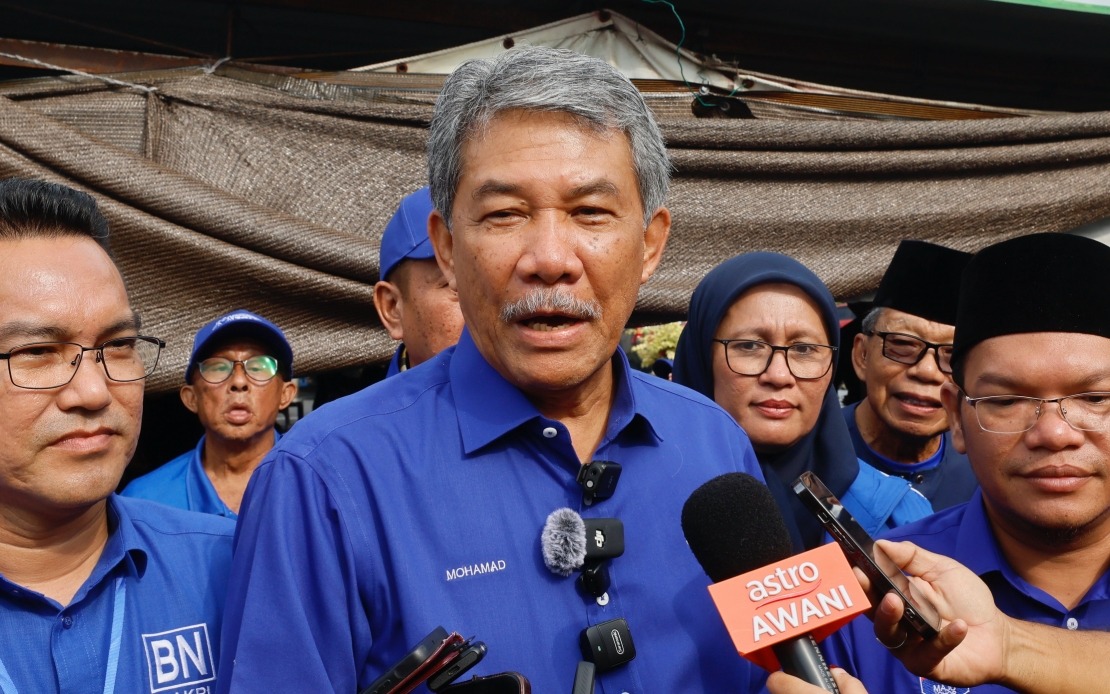
The Johor state election campaign should be characterised by maturity and civility, according to UMNO deputy president Datuk Seri Mohamad Hasan, who stressed the importance of keeping the contest focused on policy platforms rather than personal recriminations. Speaking during a voter engagement session in the Tiram state constituency here on July 6, the Foreign Minister cautioned that while competing parties have every right to present their visions to the electorate, the campaign process must not become a vehicle for undermining the delicate coalition arrangements that sustain the Federal Government. His remarks came as the state gears up for polling on July 11, with early voting commencing the following day across 56 state assembly seats contested by 172 candidates.
Mohamad Hasan's intervention reflects growing anxiety within the coalition apparatus about the potential for state-level campaigns to spill over into Federal political dynamics. The Unity Government, comprising UMNO, PKR, DAP, and other partners, represents a relatively new and still-consolidating political formation at the centre. Any serious rupture in state-level relations between coalition members could destabilise the careful calculations that hold this Federal arrangement together, particularly given Malaysia's experience of swift political realignments. By framing the campaign within a context of national responsibility, Mohamad sought to establish boundaries around acceptable contest behaviour without appearing to suppress legitimate democratic competition.
The distinction he drew between policy criticism and personal attacks carries particular significance in the Malaysian political context, where the line between the two frequently becomes blurred. Mohamad acknowledged that inter-party ribbing and rhetorical sparring are inevitable and even acceptable elements of electoral competition, noting that he himself regularly engages in such banter. However, he insisted that this lighthearted dimension should not escalate into attacks on character or integrity that could damage the broader institutional relationships required for effective governance at multiple levels of the federation. This calibrated approach attempts to permit genuine policy contestation while containing its scope and intensity.
A central concern underlying Mohamad's intervention appears to be the persistent allegation that the Johor state election is being called to engineer circumstances favourable to former Prime Minister Datuk Seri Najib Tun Razak, whose conviction and custodial sentence have become a defining issue in Malaysian politics. Opposition critics have suggested that a change in Johor state government could set conditions for his eventual release or pardon. Mohamad moved swiftly to dismiss such claims as baseless, arguing that state-level political outcomes cannot directly influence Federal decisions regarding presidential pardons, which remain the exclusive prerogative of the Yang di-Pertuan Agong under the constitutional framework. His emphasis on the supremacy of law and institutional independence suggests an attempt to forestall campaign narratives that conflate state elections with the Najib question.
The Foreign Minister's insistence that a Menteri Besar position carries no power to address Najib's legal situation reflects a deeper argument about constitutional limits and institutional integrity. Under Malaysia's federal system, custodial and clemency matters remain firmly within Federal jurisdiction, specifically under the Agong's constitutional authority. By stressing this separation of powers, Mohamad sought to redirect campaign discourse away from speculation about Najib and towards substantive policy differences between competing visions for Johor's development and governance. This rhetorical strategy aims to depoliticise what has become one of Malaysia's most charged questions.
The timing of these remarks, delivered days before polling, suggests awareness among UMNO leadership that campaign temperature in Johor requires active management. The state has historically been an UMNO stronghold, and internal coalition tensions or external opposition advances could signal broader shifts in the electoral landscape heading towards the next general election. Mohamad's call for restraint and maturity effectively places responsibility on all contesting parties to conduct themselves as agents of institutional stability rather than mere contestants seeking advantage. This framing elevates the campaign above pure electoral competition towards a narrative of collective national responsibility.
The Johor election occurs against a backdrop of shifting political dynamics in Southeast Asia's largest ASEAN economy. The Unity Government represents an attempt to move beyond the fractious partisan environment that characterised Malaysian politics during the final years of the Najib administration and the turbulent Muhyiddin and Ismail Sabri periods. Mohamad's emphasis on preserving Federal-level cooperation suggests awareness that state elections can serve as flashpoints for broader coalition ruptures if not carefully managed. Johor, as Malaysia's second-largest state and a crucial UMNO bastion, carries particular symbolic and practical weight in this context.
For Malaysian voters in the state and observers across the region, Mohamad's intervention offers a revealing glimpse into how contemporary Malaysian elites attempt to manage democratic competition within the constraints of complex coalition governance. The call for civility while maintaining robust policy debate reflects an understanding that electoral systems require both genuine contestation and sufficient consensus around institutional procedures to function effectively. Whether this appeal resonates with candidates and party workers on the ground remains to be seen as campaigning intensifies in the final stretch before polling day.
The broader implications of Mohamad's remarks extend beyond Johor itself. As state elections in Sabah, Sarawak, and potentially other territories approach, the question of how to balance legitimate political competition with the imperative to preserve Federal stability will recur. His articulation of these tensions suggests that maintaining the Unity Government's coherence represents a higher priority than maximising short-term electoral advantage in any single state contest. This calculus, if widely accepted within the coalition, could reshape how future elections are contested across Malaysia and influence the trajectory of national politics for years ahead.

