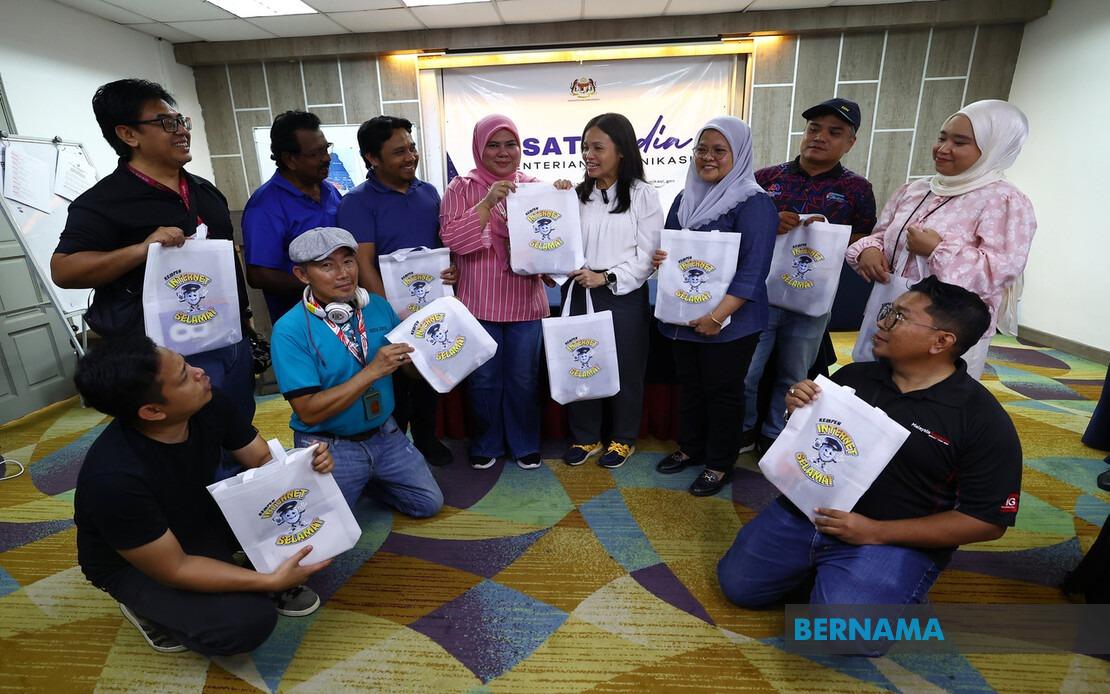
Ahead of Johor's 16th state election scheduled for July 11, the Communications Ministry and Information Department have mobilised substantial infrastructure to support media operations, deploying two centralised media centres and a network of 100 National Information Dissemination Centres (NADI) throughout the state. The strategic positioning of these facilities reflects government recognition that modern election coverage depends critically on reliable communications infrastructure, particularly as news organisations increasingly rely on digital transmission and real-time content distribution.
Deputy Communications Minister Teo Nie Ching outlined the deployment framework during a visit to the main media centre at Hotel Seri Malaysia in Johor Bahru on June 28. The two primary facilities, the second located at NADI Kampung Sawah Awok in Muar, will operate continuously from June 26 through polling day, maintaining services between 9 am and 9 pm. This extended operating window accommodates the demanding schedules of campaign coverage, allowing journalists to file stories throughout the day and early evening when political rallies and candidate events typically occur.
Internet connectivity represents the cornerstone of the infrastructure rollout, with the ministry guaranteeing minimum speeds of 100 Mbps at all designated media facilities. This threshold reflects contemporary demands for multimedia journalism, enabling correspondents to transmit high-definition video footage and photographs without bandwidth constraints that might otherwise compromise publication deadlines. The specification addresses a critical vulnerability in previous elections where inconsistent connectivity forced journalists to relocate or experience publishing delays, a particular concern given Johor's geographical spread across the southern peninsula.
Beyond internet access, the media centres provide comprehensive working facilities designed to accommodate the technical requirements of modern newsrooms. Desktop computers, laptops, photocopiers, and printers enable journalists to process materials on-site, reducing dependency on temporary office arrangements or reliance on hotel business centres. This standardised provision reflects lessons learned from previous electoral cycles where inadequate facilities created bottlenecks in content production and distribution.
The broader telecommunications environment during the campaign period will receive active monitoring through the Malaysian Communications and Multimedia Commission (MCMC), which has undertaken to ensure that commercial telecommunications providers maintain optimum service quality. This supervisory role extends beyond the dedicated media facilities to encompass general network performance across Johor, recognising that campaign disruptions affect not only news organisations but public communication more broadly. The MCMC's involvement signals coordination between government communications policy and electoral administration.
Teo introduced the MCMC Nexus application as a crowdsourced monitoring tool, inviting the public to report signal strength and connectivity issues in real time across specific locations. The application architecture separates personal data from technical parameters, with the MCMC sharing only location information and signal measurements with telecommunications companies rather than subscriber identities. This distinction attempts to balance transparency and public participation with individual privacy protections, though the voluntary nature of the scheme means coverage remains dependent on user adoption.
Election communication governance also encompasses content standards, with Teo emphasising the imperative for political actors to conduct campaigns within established ethical boundaries. The explicit reminder to avoid inflammatory discourse concerning race, religion, and royalty reflects Malaysia's constitutional provisions and social sensitivities surrounding these categories, demonstrating that election administration includes normative content regulation beyond purely logistical arrangements. The invocation of these principles at the operational level signals intent to maintain consistent messaging throughout the campaign period.
Social media monitoring constitutes an active component of this governance framework, with MCMC coordination with law enforcement to identify and remove content deemed to contain extreme provocation. The formulation acknowledges the challenge that rapid, decentralised digital communication creates for traditional content moderation approaches, necessitating real-time monitoring and expedited removal procedures. This dimension of election administration has become increasingly central as social media platforms facilitate both legitimate campaign discourse and potentially destabilising misinformation or incitement.
The Malaysian Media Council's establishment of a fact-checking platform represents a complementary institutional response to information integrity concerns, which Teo actively endorsed. The promotion of fact-checking as a habitual practice among information consumers shifts responsibility partially from regulatory agencies to the public themselves, reflecting recognition that institutional gatekeeping mechanisms cannot comprehensively address the volume and velocity of contemporary digital communication. This approach assumes that increased media literacy and verification practices can mitigate the spread of false or misleading claims during the campaign.
For Malaysian media organisations, the infrastructure deployment offers operational advantages that should facilitate comprehensive coverage of campaign activities across Johor's diverse constituencies. The guarantee of consistent internet speeds removes technical barriers that might otherwise concentrate coverage in urban centres or areas with superior commercial telecommunications infrastructure. The standardisation of media facilities across two locations also enables journalists from different outlets to work in proximity, potentially facilitating informal information sharing and peer verification of facts, processes that strengthen overall coverage quality.
The election calendar specifies early voting on July 7 and polling on July 11, compressing the timeline within which media must cover campaign culmination activities, candidate final statements, and administrative preparations. The media infrastructure must accommodate this accelerated schedule, with journalists working intensively during the final campaign week. The advance positioning of facilities and the extended operating hours reflect anticipation of this final-week intensity, ensuring that technical capacity does not constrain reporting during the period when public attention and electoral significance are highest.
Beyond Johor's immediate context, the communications infrastructure arrangement offers instructive elements for election administration more broadly across Malaysia and Southeast Asia. The integration of media logistics, telecommunications regulation, and content governance within a coordinated framework demonstrates how electoral administration extends beyond vote administration to encompass the informational environment within which voters make decisions. The explicit commitment to high-speed internet reflects recognition that contemporary electoral legitimacy depends partly on media access to reliable transmission facilities, a consideration that may inform future election preparations across the region.

