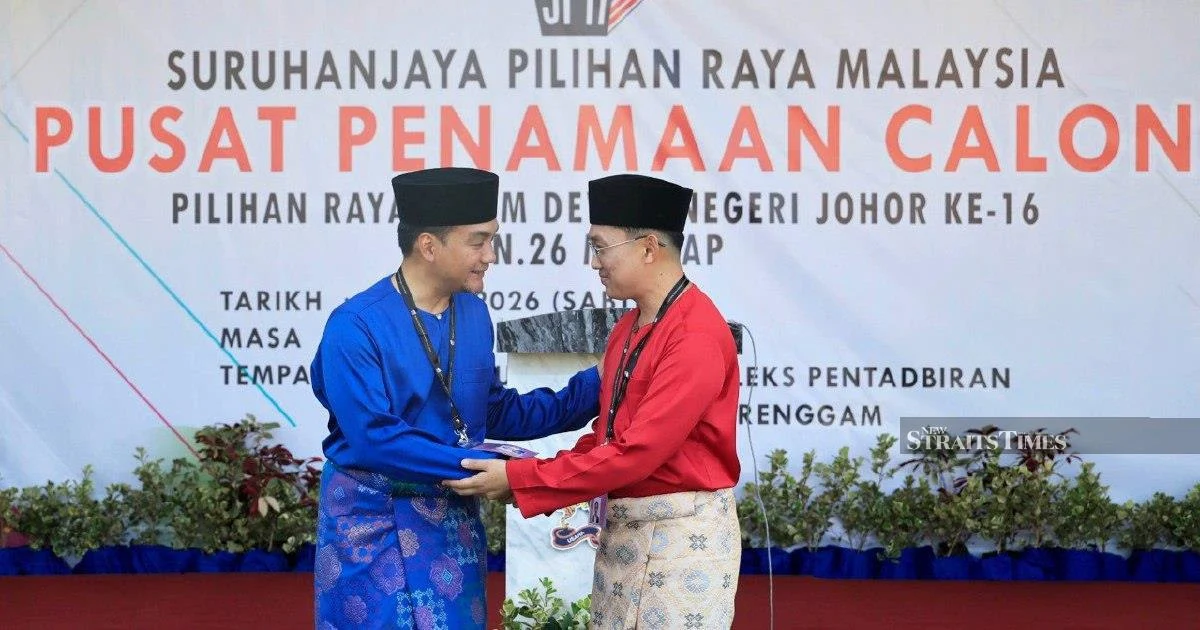
Caretaker Menteri Besar Datuk Onn Hafiz Ghazi is adopting a cautious stance as he campaigns to retain the Machap seat in the upcoming Johor state election scheduled for July 11, resisting any assumption that incumbency guarantees victory. Speaking in Simpang Renggam, he emphasised that political contests remain inherently volatile and that complacency could prove costly to his aspirations for a second consecutive term leading the state government.
The warning reflects a broader reality in Malaysian electoral politics: despite holding the considerable advantages of office, name recognition, and governmental resources, even established politicians cannot afford to underestimate challengers or overlook voter sentiment. Onn Hafiz's measured tone contrasts with the confidence often displayed by candidates seeking re-election, suggesting an understanding that the Johor electorate may be restless or divided on key issues.
Machap represents one of the state's more fiercely contested constituencies, where demographic shifts and shifting allegiances have historically made predictions unreliable. The seat has witnessed competitive battles in previous cycles, and opposition parties are likely to field credible candidates determined to exploit any weaknesses in the incumbent's support base. Onn Hafiz's acknowledgement of this reality underscores the competitive intensity within Johor politics, where traditional strongholds can occasionally yield surprising results.
The Johor state election itself carries considerable significance beyond the boundaries of the southern state. As one of Malaysia's most populous and economically significant regions, Johor's political direction influences national coalitions and governance at the federal level. A change in government or shifts in the composition of the state assembly could alter the balance of power within broader political structures, affecting which parties maintain influence in crucial policy areas and economic decisions.
Onn Hafiz's caution also reflects lessons learned from recent Malaysian elections, where voters have demonstrated a willingness to punish ruling governments perceived as arrogant or disconnected from local concerns. The 2022 federal election demonstrated that incumbency alone provides no guarantee of success; parties and candidates must actively engage with communities and address grievances to maintain support. This sentiment appears to be guiding Onn Hafiz's campaign strategy, encouraging focused attention on ground-level politics rather than reliance on institutional advantages.
The timing of the July 11 election places the campaign in the middle of Malaysia's monsoon season, potentially affecting voter turnout and campaign activities. Regional issues such as economic opportunities, infrastructure development, and cost-of-living pressures are likely to dominate discussions, particularly in constituencies like Machap where diverse communities hold varying expectations of their elected representatives. Onn Hafiz's emphasis on remaining alert suggests his campaign recognises these challenges and is preparing comprehensive outreach across different voter segments.
Within Johor's political ecosystem, the balance between Barisan Nasional, Pakatan Harapan, and other groups remains fluid. The state's legislative composition significantly influences how regional development funds are allocated and which projects receive government support. An election outcome that alters the assembly's composition could reshape policy priorities and shift patronage networks that have long defined Johor's political economy.
Onn Hafiz's previous tenure as Menteri Besar has established a track record that voters will evaluate against his opponents' platforms and proposed alternatives. Performance in office matters considerably in state-level contests, where results directly affect voters' daily lives through administration of healthcare, education, local services, and economic development. Credible challengers can effectively contrast their vision against the incumbent's record, particularly if government performance has disappointed key constituencies or if opposition parties present compelling alternative agendas.
The caretaker Menteri Besar's public statements also serve as signals to his own political machinery about the campaign's intensity level. By characterizing the contest as unpredictable, he emphasises the need for thorough ground operations, comprehensive voter outreach, and mobilisation of party resources. This messaging helps prevent overconfidence among supporters and volunteers who might otherwise assume victory is assured and reduce their campaign efforts accordingly.
For Malaysian voters in Johor, the July 11 election presents an opportunity to shape the state's direction for the next legislative term. The outcomes in individual seats like Machap, when aggregated across all constituencies, will determine which coalition controls the Johor state government and sets the agenda for the region's development over coming years. Onn Hafiz's acknowledgement that surprises remain possible reflects the genuine uncertainty characterising contemporary Malaysian politics, where established patterns increasingly give way to more volatile and unpredictable electoral behaviour.

