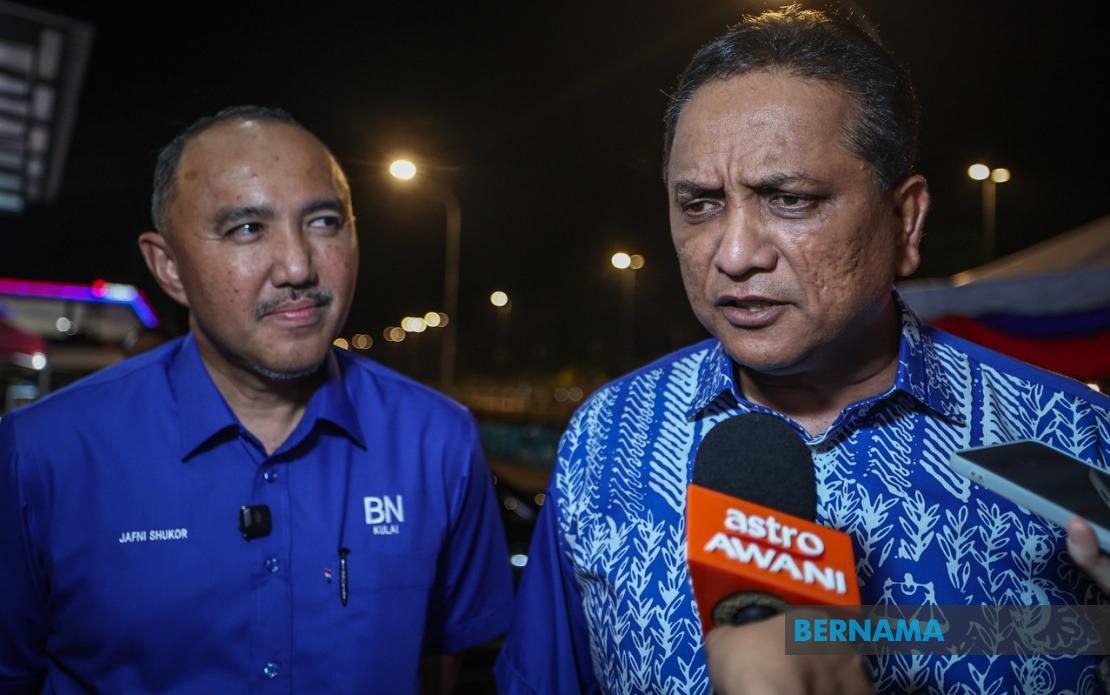
A senior UMNO official has moved to quash assertions that Johor's Regent, Tunku Mahkota Ismail, wields excessive control over the state government, describing the allegations as grossly inflated and lacking substantive foundation. Datuk Seri Reezal Merican Naina Merican, a member of UMNO's highest decision-making body, made the remarks in Johor Bahru after engaging with Barisan Nasional leadership in the Kulai constituency, signalling the party's readiness to counter what it views as inflammatory rhetoric in the lead-up to polling day.
The controversy erupted after Datuk Dr Mohd Puad Zarkashi, formerly Speaker of the Johor State Legislative Assembly, announced his departure from UMNO while levelling accusations that Menteri Besar Datuk Onn Hafiz Ghazi has become a tool of palace interests. This departure has injected an uncomfortable dimension into Johor's political landscape, forcing establishment figures to publicly defend both the state's governance structures and the role of the monarchy in administering state affairs.
Reezal Merican characterised the Regent's interventions as a legitimate expression of constitutional duties rather than overreach, emphasizing that such public statements reflect responsibility toward Johor's population. He contended that Tunku Mahkota Ismail's contributions to state development discourse should be viewed within the context of the Regent's formal obligations to oversee and guide governance in ways that serve public interest. This framing attempts to distinguish between active leadership and illegitimate interference, a crucial distinction in Malaysia's constitutional monarchy system where the ruler's role remains ceremonial yet symbolically significant.
Central to Reezal Merican's rebuttal is the concept of institutional checks and balances, a cornerstone of democratic governance. He articulated that the Regent functions as a countervailing force to the Menteri Besar and state secretariat, suggesting that such oversight mechanisms are healthy rather than concerning. This narrative aligns with conventional understandings of constitutional monarchy wherein royalty serves as a guardian institution standing above partisan politics, equipped to intervene when governance concerns arise.
The UMNO official's claim that he has encountered no suggestions within UMNO's highest echelons that Johor's party machinery operates under palace direction carries significant weight, implying consensus among party elders regarding the propriety of current governance arrangements. His assertion effectively frames Mohd Puad's allegations as departing from mainstream party thinking, potentially isolating the former Speaker politically and delegitimizing his departure as motivated by factional disputes rather than principled objections.
Mohd Puad's decision to invoke palace interference raises questions about his underlying motives, particularly given the timing relative to Johor's impending state election. Reezal Merican directly questioned whether the former Speaker sought to exploit royal institution symbolism to advance particular political agendas within an intensely competitive electoral environment. Such cynicism reflects broader anxieties about the monarchy being dragged into partisan struggles, an outcome viewed as potentially damaging to the institution's revered status across Malaysian society.
The election timeline adds urgency to these disputes. The Election Commission has designated June 27 as nomination day with July 11 established as polling day, compressing the campaign period during which such contentious claims gain particular traction among voters. Political actors recognize that allegations of undue palace influence can mobilize constituencies concerned about institutional independence, making the timing of Mohd Puad's departure strategically significant regardless of its substantive merit.
For Malaysian political observers, these tensions highlight enduring questions about power distribution in states governed by constitutional monarchies. Unlike federal structures where the Yang di-Pertuan Agong maintains largely ceremonial functions, state Regents exercise more tangible administrative responsibilities, creating potential friction points with elected executives. Johor's situation exemplifies how personalities and contemporary governance disagreements can crystallize into broader questions about constitutional roles and boundaries.
The dispute also carries implications for UMNO's cohesion heading into elections. Mohd Puad's departure, whether orchestrated independently or encouraged by rival factions, signals factional tensions within Johor's party apparatus. Reezal Merican's robust defense of state governance structures serves partly to project unified party confidence despite visible rifts, attempting to reassure party members and voters that institutional arrangements remain sound despite individual defections.
Regionally, Johor's governance dynamics matter beyond state boundaries given the state's economic importance and political significance within peninsular Malaysia. Any perception that state administration has become compromised by external influence, even palace influence, can affect business confidence and investment climate perceptions. Reezal Merican's intervention thus serves not merely to defend specific individuals but to protect broader economic and political confidence in Johor's institutional credibility.
The characterization of palace oversight as legitimate rather than illegitimate hinges on maintaining that constitutional boundaries remain respected. Should the Regent's interventions escalate beyond advisory or symbolic functions toward direct decision-making authority, legitimate concerns about power concentration would materialize. Reezal Merican's defense implicitly acknowledges these boundaries exist while asserting that current arrangements respect them, a calibrated position requiring continued restraint from all parties.
Moving toward July 11, these institutional disputes will likely resurface as opposition parties potentially adopt Mohd Puad's framing to mobilize voters skeptical of current power arrangements. The burden falls on UMNO and BN to demonstrate through governance outcomes that state administration remains both responsive and accountable, not merely the extension of palace preferences into policy-making. How successfully Johor's government navigates these perceptions will influence not only electoral outcomes but the template for state-palace relations across other Malayan states.

