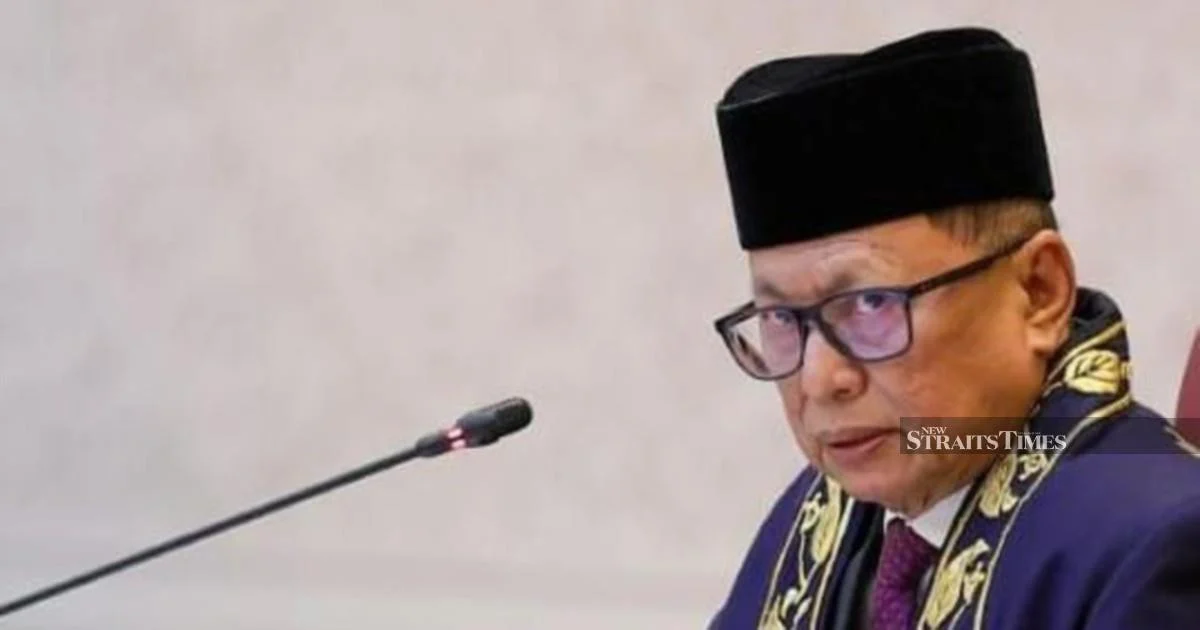
Johor's PKR chapter has thrown down the gauntlet to former Umno supreme council member Datuk Dr Mohd Puad Zarkashi, demanding he produce concrete evidence to back his assertions regarding alleged royal interference in state politics. The move, made at a gathering in Pontian, signals the party's determination to contest what it views as baseless allegations that could undermine confidence in Johor's institutional frameworks and taint the reputation of the sultanate.
The challenge represents a significant escalation in intra-Johor political discourse, where questions about the proper balance between royal institutions and democratic governance have grown increasingly contentious. By calling for substantiation, PKR has effectively placed Puad in a difficult position—either produce verifiable documentation of his claims or risk being seen as engaging in mere rhetoric without factual foundation. This tactical move also serves to protect the PKR's standing among constituencies that regard Johor's monarchy with reverence and regard accusations against the palace with considerable scepticism.
Puad's original statements, made without immediately accompanying evidence, had circulated within political circles and among certain media commentators, creating a narrative that required addressing. The former Umno official, who has been increasingly critical of his former party's direction following recent political realignments, has positioned himself as something of a truth-teller willing to expose alleged institutional problems. However, such claims carry significant weight and potential consequences, particularly in a state where the sultan maintains considerable symbolic importance and where many citizens view the monarchy as above partisan political contestation.
The Johor PKR's response reflects broader concerns within the party about how such allegations, if left unchallenged, could shape public perception and potentially delegitimise not only PKR's presence in Johor but also weaken broader efforts to establish democratic accountability within institutions. By demanding evidence rather than simply dismissing the claims outright, PKR adopts a position that appears reasonable to observers and positions itself as willing to engage with serious allegations if they are properly substantiated.
Understanding this exchange requires recognition of Johor's unique political dynamics. Unlike other Malaysian states, Johor's sultanate has historically maintained a more visible and active role in state affairs, and political actors must navigate carefully between acknowledging the institution's legitimate authority and guarding against any perception of overreach. The PKR's challenge implicitly argues that Puad has crossed a line by making serious institutional allegations without corresponding documentation that would satisfy democratic standards of proof.
Puad's background as a former Umno insider gives his claims potential credibility with certain audiences, particularly those inclined to view Umno's struggles through a lens of institutional dysfunction. However, former insiders making public accusations also attract scrutiny regarding their motivations and the timing of revelations. PKR's demand for substantiation effectively interrogates these questions while putting the onus on Puad to demonstrate that his concerns spring from genuine institutional reform impulses rather than personal or factional grievances.
The Pontian event where PKR made its challenge is strategically located within a parliamentary constituency that has historically been competitive, making this moment not merely symbolic but also electorally significant. By taking a stand on the issue in this particular location, PKR signals to Pontian constituents that the party takes allegations about institutional integrity seriously while refusing to allow unfounded claims to circulate unchallenged. This positioning may resonate with voters who value both respect for established institutions and demands for accountability.
The broader Southeast Asian context adds another dimension to this dispute. Across the region, questions about the proper role of monarchies and other institutions in democratic systems have become increasingly contentious. Malaysia's own constitutional framework establishes a constitutional monarchy with carefully delineated powers, and political actors who suggest monarchies are overstepping those boundaries invite questions about whether they are seeking to strengthen or undermine democratic norms. PKR's demand for evidence aligns with democratic principles that extraordinary claims require extraordinary substantiation.
For PKR specifically, managing Johor politics requires delicate balancing. The party has made significant inroads in recent years but remains conscious that it operates in a state where traditional institutions command deep loyalty. Responding forcefully to claims that could be interpreted as attacking the sultanate demonstrates that PKR respects Johor's institutional traditions while simultaneously refusing to be intimidated by allegations wielded as political instruments. This stance may prove crucial for the party's electoral prospects.
Moving forward, the question becomes whether Puad will respond to PKR's challenge by producing evidence or whether the matter will fade from active political discussion. Either outcome carries implications. If evidence emerges, it would demand serious engagement with substantive institutional questions. If Puad's claims remain unsubstantiated, PKR benefits from having demonstrated that it will not allow unsourced allegations to shape political narratives unchallenged. The coming weeks will likely reveal whether this represents a genuine institutional dispute requiring resolution or a rhetorical exchange between political adversaries.

