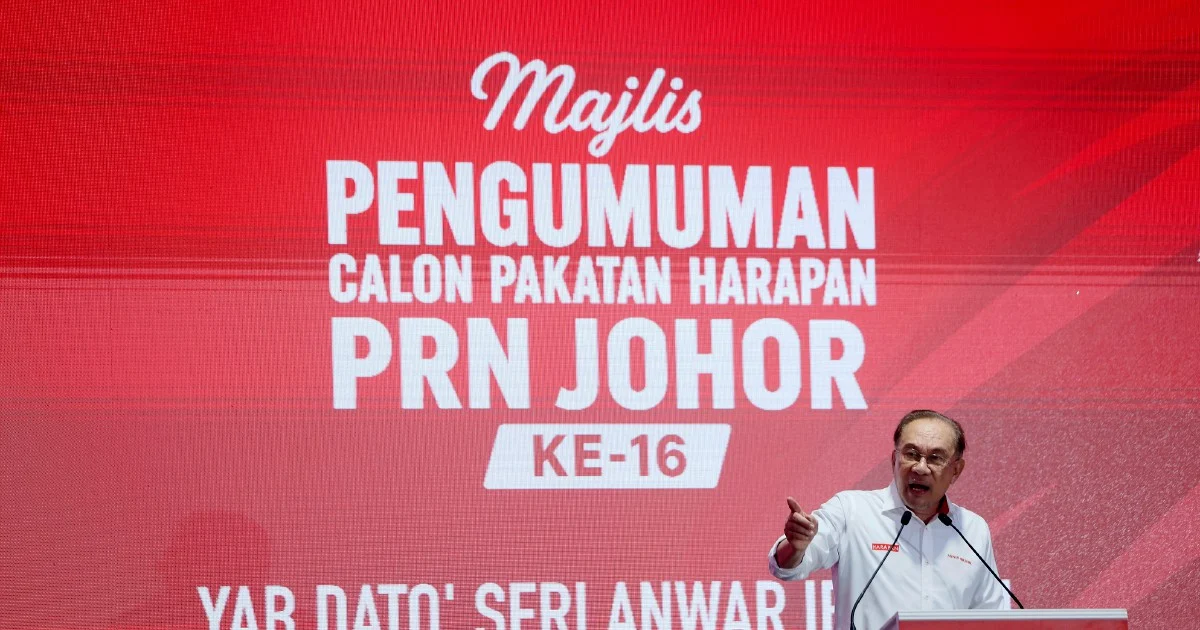
Prime Minister Datuk Seri Anwar Ibrahim has disclosed that the federal government has directed substantially more resources to Johor than the state has generated in tax and other revenue contributions over the past three years. Speaking in Tangkak, the premier highlighted that while Johor remitted approximately RM14 billion to federal coffers during this period, the state received RM16 billion in allocations back from the centre, resulting in a net transfer of RM2 billion in Johor's favour.
The statement underscores how Malaysia's fiscal federalism operates in practice, with wealthier or higher-revenue-generating states effectively subsidising the development of other regions through the federal budget. This redistributive mechanism is central to ensuring equitable development across the country, particularly benefiting states with smaller revenue bases or higher development needs. The disclosure by Anwar comes amid broader discussions about how federal funds are allocated and the ongoing debate about fairness in Malaysia's system of intergovernmental fiscal transfers.
Johor's position as a net recipient of federal allocations reflects the delicate balance the federal government attempts to maintain between rewarding economic productivity and ensuring nationwide development. The state, while economically significant with its port facilities, manufacturing sectors, and proximity to Singapore, still receives more in developmental and operational support than it contributes through federal tax collection. This pattern is not uncommon in federal systems, where some states naturally generate more revenue due to their economic concentration while others require greater investment to develop their infrastructure and services.
The RM2 billion net transfer to Johor represents a meaningful commitment from the federal government to the state's development agenda. This includes investments in infrastructure, education, healthcare, and other essential services that fall under federal responsibility or co-funded arrangements. Understanding these figures helps Malaysian citizens appreciate how their tax contributions are redistributed nationally and why certain fiscal policies favour particular regions or types of spending at different times.
For Malaysian investors and businesses, particularly those operating in Johor, such disclosures have implications for understanding the state's fiscal health and the federal government's continued commitment to regional development. The consistent allocation of funds above revenue contributions suggests that Kuala Lumpur views Johor as strategically important and worthy of sustained investment, which can provide confidence for private sector expansion in the state. This is particularly relevant given Johor's role as a manufacturing and logistics hub within the broader Southeast Asian context.
The premier's statement also reflects the government's broader fiscal strategy during a period of economic recovery and transformation. After the global pandemic disrupted economic activities and federal revenues, the administration has worked to maintain development spending in key states while managing overall fiscal constraints. Johor's situation exemplifies how the federal government continues to prioritise regional development even as it navigates tighter budgetary environments and pressing national commitments.
Comparative analysis of federal allocations across Malaysian states reveals varying patterns of contribution and receipt. Some states, particularly those with large urban populations or significant industrial bases, typically contribute more in revenue than they receive in direct allocations. Conversely, states with smaller economies or larger rural populations often receive proportionally more in federal support. This mechanism, while sometimes contentious, ensures that basic services and infrastructure are available across all states regardless of their individual revenue-generating capacity.
The three-year window mentioned by Anwar covers a period of significant economic volatility and government transition, making the figures particularly noteworthy. During this timeframe, Malaysia faced the lingering effects of the pandemic, elections, and a change in federal administration, all factors that influenced revenue collection and spending patterns. That Johor maintained a favourable position despite these challenges suggests both the state's continued economic relevance and the federal government's prioritisation of maintaining regional stability and development.
For Southeast Asian observers and foreign investors assessing Malaysia's regional development strategy, such transparency about federal-state fiscal relationships indicates a maturing approach to economic governance. The willingness of the prime minister to publicly disclose these figures suggests confidence in the system's integrity and a desire to build public understanding of how national resources are distributed. This transparency can enhance investor confidence by demonstrating that the government's commitment to regional development is backed by concrete allocations and financial transfers.
Looking forward, the pattern of Johor receiving more than it contributes likely reflects both current policy priorities and expectations about the state's future economic potential. The federal government's continued net investment in the state signals confidence in Johor's trajectory and its importance to Malaysia's broader economic agenda. For state-level policymakers in Johor, such federal backing provides a foundation for planning larger infrastructure projects and economic initiatives that might not be fully self-sustaining through state revenues alone.
The disclosure also serves as a reminder of the interconnected nature of Malaysia's federal system, where economic performance in one region supports development elsewhere. Johor's contributions to federal coffers, even if not fully returned through direct allocations, still support national priorities and services that benefit all Malaysians. This interdependence underlies the fundamental rationale for maintaining a unified fiscal system despite the complexities and occasional tensions it generates.

