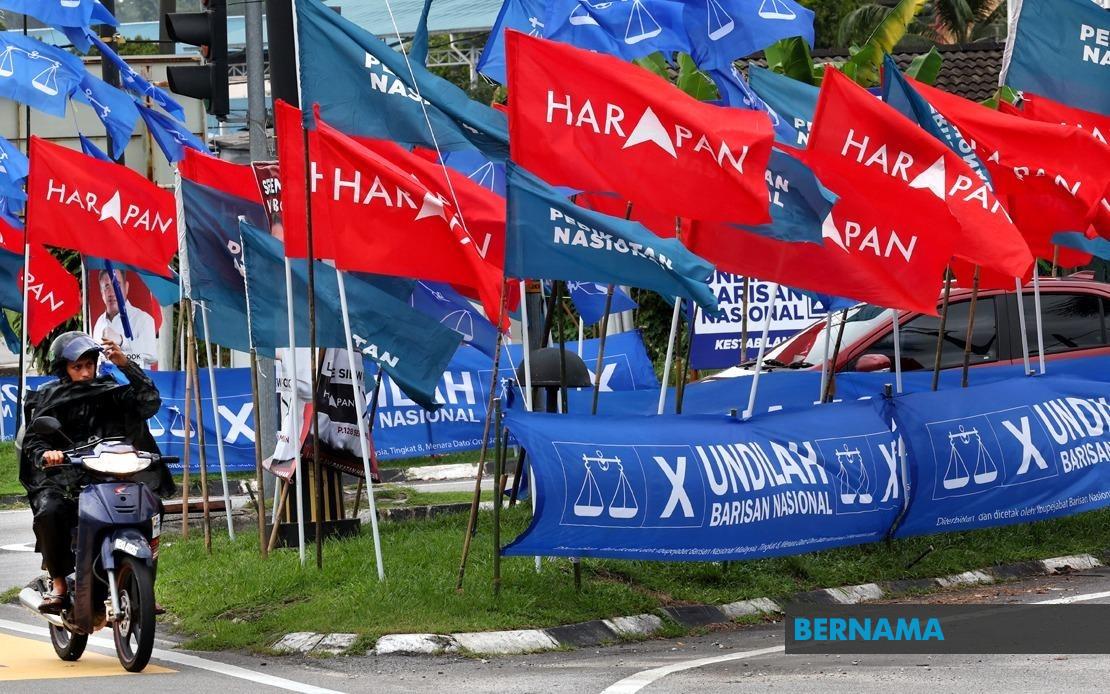
The Johor state election campaign has reached fever pitch, with candidates from competing political coalitions scrambling to consolidate support in the closing hours before campaigning officially concludes at midnight tomorrow. Polling day is set for Saturday, and with less than 48 hours remaining, the intensity of ground-level activities has noticeably accelerated. Across the 56 state seats up for grabs, 172 candidates representing various parties are deploying every available campaign tool to sway undecided voters and reinforce support among their respective bases.
Pakatan Harapan has mobilised its highest-level leadership to inject momentum into the final stretch. Prime Minister Anwar Ibrahim is scheduled to make campaign appearances at three key locations this evening, with particular focus on the hotly contested Puteri Wangsa seat. The coalition's strategy reflects a recognition that certain constituencies remain genuinely competitive. Maszlee Malik, the PH candidate for Puteri Wangsa, has used social media to amplify the call for voter turnout, invoking the concept of fear of missing out to encourage supporters to attend the "Grand Finale Harapan Johor Selatan" rally. This approach demonstrates how modern political campaigns in Malaysia increasingly blend traditional mass gatherings with digital mobilisation tactics to reach voters across different demographics and platforms.
Beyond headline-grabbing rallies featuring national figures, PH's ground campaign maintains momentum through individual candidate efforts. Dr A. Ruban, contesting Paloh, recently returned to campaigning after a brief medical hiatus, emphasising the intensity of the push by resuming ground activities almost immediately after treatment. Similarly, Johor PKR chairperson Datuk Seri Dr Zaliha Mustafa participated in a convoy operation involving 120 motorcyclists in support of the Kemelah candidate, demonstrating how party machinery mobilises multiple layers of support and engagement. These distributed efforts across constituencies ensure that PH's campaign presence remains visible at the grassroots level, complementing the high-profile appearances by senior leaders.
Barisan Nasional has adopted a comparable two-pronged strategy, combining leadership visibility with candidate-level engagement. Coalition chairman Datuk Seri Dr Ahmad Zahid Hamidi has personally visited Endau and Kempas constituencies to bolster the morale of party candidates and workers. Johor Menteri Besar Datuk Onn Hafiz Ghazi, contesting the Machap seat, continues to campaign across his constituency and has deployed digital outreach through Instagram to urge voters to grant BN their mandate. In Larkin, another BN candidate has implemented a structured engagement programme called "Ziarah Kasih" to meet residents individually and discuss the coalition's development agenda. This personalised approach suggests that BN recognises the need to directly address voter concerns rather than relying solely on broadcast messaging.
Perikatan Nasional, the third major coalition contesting the election, is holding its own mega rally in Endau tonight, featuring top party leadership including chairman Datuk Seri Ir Dr Ahmad Samsuri Mokhtar and PAS president Tan Sri Abdul Hadi Awang. The decision to concentrate resources on a specific constituency underscores PN's targeting strategy in Johor. PN's Kahang candidate, Mazlan Bujang, has publicly committed to continuous voter engagement until campaigning ends, framing individual voter meetings as intrinsically valuable rather than merely tactical necessities. This messaging reflects an attempt to position PN candidates as dedicated and accessible representatives willing to invest personal effort in constituent relations.
Smaller parties are also leveraging the final campaign days to amplify their presence. Parti Bersama Malaysia, contesting selected seats, has deployed a "Bersama Tour Truck" initiative featuring candidates such as Sahrudin Omar in Kota Iskandar. This mobile campaign approach allows smaller parties to maintain visibility across multiple locations without the resource demands of traditional rallies. Meanwhile, other independent candidates and representatives from smaller parties are conducting community dialogues in neighbourhood settings, a strategy that emphasises accessibility and intimate engagement with voters who may feel alienated by larger, more formal campaign events.
The intensity of campaign activity in these final hours reflects several underlying dynamics in Malaysian electoral politics. First, the competitiveness of the Johor contest suggests genuine uncertainty about electoral outcomes, prompting all parties to maximise effort rather than assume momentum. Second, the reliance on varied campaign methods—from national leadership rallies to individual door-to-door visits to digital outreach—indicates recognition that different voter segments respond to different communication channels. Third, the participation of state and national leaders across multiple parties demonstrates that Johor remains pivotal to Malaysia's broader political trajectory, making state-level elections increasingly central to national political competition.
The mobilisation of party machinery and senior leadership at this juncture also reveals attempts to overcome potential voter apathy or fatigue. Campaign activity on day 13 of what has become an extended mobilisation period must navigate the challenge of sustaining voter interest and participation. The emphasis on rallies featuring recognisable national figures serves partly to reinvigorate supporter enthusiasm among party activists and committed voters, who may serve as multipliers encouraging broader participation on polling day. For undecided voters, the barrage of final campaign activity functions as a final opportunity for parties to make their case before ballots are cast.
From a regional perspective, the Johor election holds significance beyond state borders. Johor remains Malaysia's second-largest state by population and a crucial economic centre, making its electoral outcome relevant to investor confidence and the composition of the federal parliament given the interconnection between state and national politics. Patterns emerging from Johor—whether voter preferences shift toward or away from incumbent coalitions, whether smaller parties gain traction, whether urban-rural divides become more pronounced—often presage broader national electoral trends. International observers and regional analysts will monitor Saturday's results as an indicator of Malaysian electoral sentiment more broadly, making the intensity of this final campaign push understandable not merely as a local phenomenon but as part of Malaysia's evolving democratic competition.

