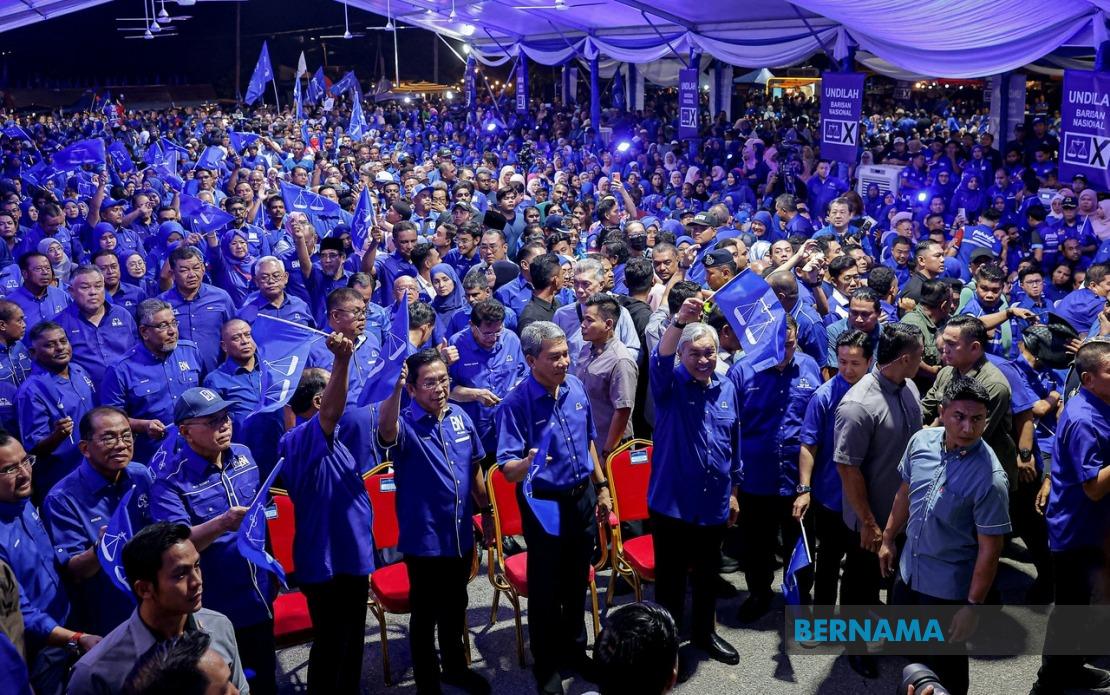
Barisan Nasional should harness the momentum from its historic Johor state election victory to secure triumph in the upcoming Negeri Sembilan polls, coalition chairman Datuk Seri Dr Ahmad Zahid Hamidi declared at the launch of BN's election machinery in Seremban on July 15. The call came as the coalition unveiled its candidates for the 16th Negeri Sembilan state election, setting the stage for what party leadership believes could be another transformative result for the century-old political alliance.
Ahmad Zahid's remarks reflected confidence built on an extraordinary performance in Johor, where BN captured 48 of 56 state seats and accumulated nearly 60 per cent of the popular vote—the coalition's strongest showing in the state's electoral history. That commanding result, the BN chairman suggested, demonstrates voter appetite for political stability and economic stewardship, assets the coalition intends to emphasise throughout the Negeri Sembilan campaign. The message to party operatives was unambiguous: immediate, intensive ground work would be essential, with door-to-door canvassing and sustained voter engagement forming the cornerstone of strategy.
The Johor outcome carries particular significance for BN's broader political recovery. Following years of electoral setbacks and internal turbulence, the Johor victory signalled that the coalition's rebranding and organisational renewal had resonated with ordinary Malaysians. That achievement rested fundamentally on internal cohesion, Ahmad Zahid stressed, with coalition partners subordinating individual interests to collective purpose. The UMNO president explicitly drew a parallel to the challenge facing his party in Negeri Sembilan, where similar discipline would be required to reverse recent disappointing performances.
Negeri Sembilan presents a notably different electoral landscape from Johor, however. In the 2023 state election, BN secured only 14 of 36 seats, a result the coalition has attributed partly to fragmentation and candidate selection disputes. Recovery to even Johor-like levels of support would require not merely transposing a winning formula, but adapting it to local conditions, grievances, and political dynamics. The upcoming contest thus tests whether BN's recent success reflects durable organisational improvement or represents a state-specific phenomenon.
Ahmad Zahid's exhortation for party members to transcend candidacy disputes touches on a persistent vulnerability within BN's ranks. Competition for nomination frequently generates resentment and defections, draining energy from campaign operations and sometimes creating openings for opposition parties. By framing the candidate selection process as secondary to the larger electoral objective, the BN chairman sought to reorient party psychology toward unified action. Whether such appeals sufficiently discourage dissident behaviour among disappointed candidates remains uncertain, particularly in constituencies where internal struggles have been acute.
The Deputy Prime Minister's emphasis on closure of ranks and organisational discipline reflects lessons BN claims to have absorbed from Johor. There, the coalition narrative suggests, disciplined execution and messaging cohesion translated latent voter preference into overwhelming seat gains. Applying that methodology in Negeri Sembilan would mean sustained, coordinated canvassing across all 36 constituencies, consistent messaging from candidates and machinery alike, and rapid response to opposition attacks. The Election Commission's schedule—nomination on July 18, early voting on July 28, and polling on August 1—provides a compressed timeframe for executing such comprehensive operations.
Negeri Sembilan's demographic and socioeconomic profile differs notably from Johor's, introducing variables that could affect campaign dynamics. The state encompasses both urban and rural constituencies, with economic structures and voter compositions varying significantly by district. Rural areas, traditionally BN strongholds, may provide baseline support, but Negeri Sembilan's towns have shown receptiveness to opposition messaging in recent elections. Campaign strategy thus requires calibrated messaging addressing both constituencies' distinct concerns—rural economic sustainability and urban cost-of-living pressures among them.
For Malaysian political observers, the Negeri Sembilan contest represents a crucial indicator of whether BN's recent trajectory toward recovery possesses genuine momentum. A decisive victory would validate the coalition's leadership claims and suggest voters increasingly perceive BN as capable of delivering on promises of stability and development. Conversely, a disappointing result would raise questions about the durability of the Johor breakthrough and suggest that state-specific factors, rather than fundamental voter realignment, explained that outcome. The election thus carries implications extending well beyond Negeri Sembilan's borders, potentially influencing opposition dynamics and shaping expectations for future national contests.
The presence of BN deputy chairman Datuk Seri Mohamad Hasan and other coalition leaders at the Tuanku Abdul Rahman Stadium event underscored the alliance's prioritisation of the Negeri Sembilan race. Hasan, himself a former Negeri Sembilan political figure, carries particular credibility in mobilising party resources and personnel toward the state campaign. Coalition partners' attendance signalled commitment to coordinated effort, a visible demonstration of the unity Ahmad Zahid repeatedly invoked.
For Negeri Sembilan voters, the election offers opportunity to assess competing visions of governance. BN's narrative emphasises political stability, economic competence, and developmentalism. Opposition parties, should they mount coordinated campaigns, would likely contest those claims while advancing alternative policy priorities and demanding greater accountability. The August 1 polling day will ultimately determine whether voters find BN's appeal sufficiently compelling to reverse the coalition's 2023 trajectory, or whether opposition parties can consolidate recent gains.

