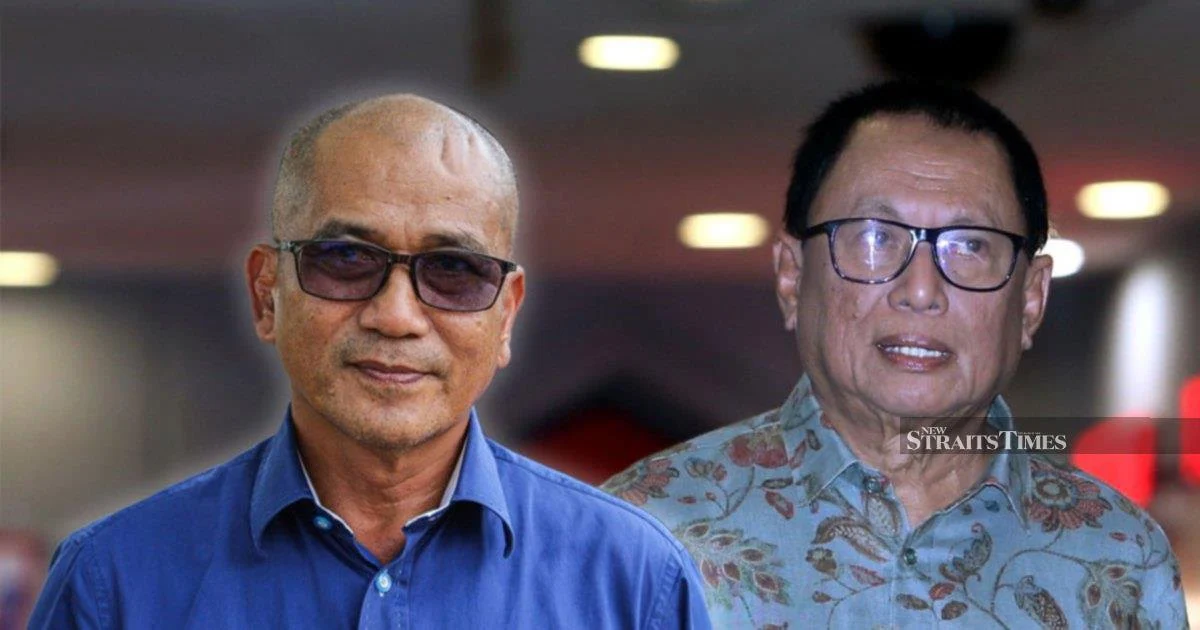
The leadership of the United Malays National Organisation in Johor has moved swiftly to counter allegations aired by Datuk Dr Mohd Puad Zarkashi, the former speaker of the state legislative assembly, regarding circumstances surrounding the dissolution of the chamber on June 1. Party officials characterised his remarks as serious defamation, signalling a hardening of positions within the state's political establishment.
The former speaker's allegations have touched a nerve among senior Umno figures operating within Johor's political sphere, prompting immediate and emphatic rejections. Rather than engaging substantively with specific claims, the party hierarchy has opted for a broader dismissal strategy, framing the accusations as unfounded and damaging to the party's reputation. This defensive posture reflects the sensitivity surrounding the assembly dissolution, which remains a contested chapter in Johor's recent political history.
The June 1 dissolution marked a significant moment in Johor politics, triggering electoral processes and reshaping the state's parliamentary alignments. The timing and manner of the dissolution have since become matters of dispute, with various political actors offering divergent interpretations of the events and motivations underlying the decision. Puad Zarkashi's intervention as a former officeholder carries particular weight given his previous proximity to decision-making circles and his institutional knowledge of assembly procedures.
For Malaysian political observers, the clash between Umno leadership and Puad Zarkashi illustrates the fractured landscape within the party itself. Umno, despite remaining the single largest Malay-Muslim political organisation in the country, has experienced considerable internal turbulence since the 2022 general elections. The Johor chapter reflects broader tensions that have seen various prominent figures either exit the party or occupy increasingly marginal positions within its hierarchy.
Puad Zarkashi's role as speaker until the assembly's dissolution positioned him as a key institutional figure. Speakers typically serve as custodians of parliamentary procedure and decorum, maintaining theoretical distance from partisan politics, though in practice they often maintain deep factional allegiances. His subsequent intervention in public discourse about the dissolution suggests either a genuine departure from institutional restraint or a recalibration of his political standing following the restructuring of the assembly.
The stakes surrounding the assembly dissolution extend beyond matters of procedure or constitutional interpretation. Electoral outcomes carry real consequences for ministerial positions, state-funded projects, and political patronage networks. In this context, allegations about the manner or reasoning behind the dissolution acquisition take on heightened significance, as they potentially implicate senior leadership in actions characterised as procedurally questionable or motivated by factional self-interest.
Umno's categorical rejection of Puad Zarkashi's claims without engaging in detailed point-by-point refutation may itself carry strategic messaging. Such an approach signals confidence within party ranks and conveys to party members that internal critics will face swift and forceful responses. Simultaneously, it risks validating critics' claims by declining to address them substantively, potentially strengthening rather than weakening allegations among independent observers.
For Johor specifically, the political climate remains fluid as the party navigates the aftermath of the assembly's reconstitution and the distribution of ministerial posts. The state maintains particular importance within Umno's overall political fortunes, given its substantial number of parliamentary seats and its role as a geographic and demographic power base. Political stability within Johor translates into stability for the broader coalition governing Malaysia, making intra-party disputes within Johor Umno matters of national consequence.
The wider context involves ongoing questions about institutional governance and the relationship between political parties and the constitutionally mandated separation of powers. Where elected officials blur lines between partisan advocacy and institutional duty, tensions inevitably emerge. Puad Zarkashi's former role as speaker presumably granted him insights into how procedural mechanisms functioned during the period immediately preceding the dissolution, potentially lending credibility to his subsequent public statements regardless of Umno's dismissal of them.
Observers tracking Malaysian politics will note that conflicts of this character tend to reflect deeper factional divisions within parties rather than representing isolated disputes between individuals. Puad Zarkashi's decision to speak publicly suggests either he lacks remaining political ambitions within Umno or calculates that his current standing within the party permits public dissent without catastrophic consequences. Either interpretation indicates underlying organisational fragmentation.
The coming months will likely reveal whether this dispute remains confined to rhetorical exchanges or escalates into more concrete political consequences. Umno's capacity to manage internal dissent while maintaining party cohesion during a period when the coalition faces electoral uncertainty represents a significant governance challenge. For Malaysia as a whole, the resolution of such internal party disputes carries implications for governmental stability and the functioning of democratic institutions at state and federal levels.

