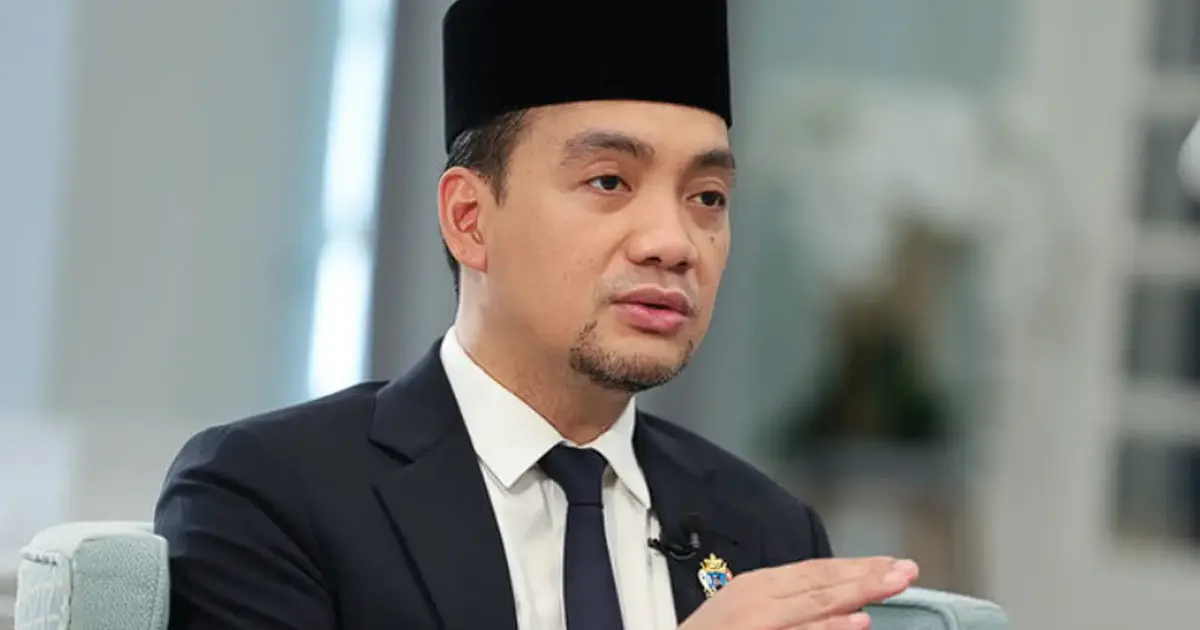
Onn Hafiz, serving as Johor's caretaker menteri besar, has moved to clarify the constitutional standing of the state assembly's dissolution following royal approval, pushing back against perceptions that the palace has overstepped its traditional role in political matters. His remarks come as the state prepares for fresh elections, with the dissolution process drawing scrutiny from observers concerned about the appropriate boundaries between the monarchy and the executive branch in Malaysia's federal system.
The caretaker leader's statement underscores a fundamental principle embedded in Malaysia's constitutional framework: that the Sultan's assent to such governmental acts represents a procedural requirement rather than an exercise of independent political will. This distinction carries particular significance in Johor, where the monarchy maintains traditionally strong historical connections to state governance and institutional authority. By framing the dissolution within constitutional parameters, Onn Hafiz seeks to position the decision as part of established legal process rather than as royal intervention in partisan politics.
Understanding this nuance requires recognising how Malaysia's constitutional monarchy operates across different jurisdictional levels. While the Yang di-Pertuan Agong presides at the federal level, state sultans exercise corresponding roles within their respective territories, including providing formal sanction to legislative actions. The dissolution of a state assembly, though initiated by the executive through the menteri besar, requires this constitutional formality. This mechanism exists partly to ensure executive power does not operate unchecked and to maintain the Crown's ceremonial oversight of state affairs.
Onn Hafiz's intervention reflects broader conversations unfolding across Malaysia regarding institutional boundaries and democratic practice. Recent years have witnessed increasing public discussion about the proper scope of royal authority, particularly when palace decisions coincide with electoral outcomes or partisan advantage. By explicitly characterising the Sultan's role as constitutional rather than discretionary, the caretaker leader attempts to establish clear separation between ceremonial endorsement and political decision-making. This rhetorical positioning matters for public confidence in both monarchical institutions and electoral integrity.
The timing of such clarifications also speaks to deeper anxieties within Malaysian political culture. When major constitutional acts occur—particularly those triggering elections—there is often heightened sensitivity about whether independent institutions remain appropriately insulated from partisan influence. Johor's dissolution, while legally sound, occurs within a competitive political environment where multiple coalitions are positioning for advantage. Onn Hafiz's statement appears designed to forestall criticism that the timing or circumstances of the dissolution reflected something beyond routine constitutional procedure.
For Malaysian voters and observers in the region, these explanations highlight the complex interplay between tradition, law, and democratic principle that characterises Southeast Asian monarchies. Unlike some democracies where ceremonial and executive functions are entirely separated, Malaysia's system preserves meaningful roles for the Crown in formal governmental processes. This arrangement can generate confusion about whether the Sultan's assent indicates substantive approval or merely formal compliance with constitutional requirement. Clarifying these distinctions becomes important for maintaining public understanding of how institutions actually function.
The broader implications extend beyond Johor to Malaysia's federal system as a whole. State assemblies operate with considerable autonomy in areas like land, agriculture, and local governance, and the dissolution process in any state carries potential consequences for the distribution of power across the federation. If royal assent is perceived as anything other than procedural, it risks undermining confidence in state-level democratic institutions. This concern becomes particularly acute in states where the ruling coalition at state level differs from that at federal level, potentially creating perceptions of inconsistency or improper intervention.
Onn Hafiz's clarification also reflects awareness that the international community increasingly scrutinises the relationship between monarchical institutions and democratic governance in Commonwealth nations. Malaysia's global standing depends partly on demonstrating that its constitutional arrangements safeguard democratic norms while preserving traditional institutions. By publicly articulating that royal actions in the dissolution process follow constitutional procedure rather than representing political choice, the caretaker leader contributes to reassuring both domestic audiences and external observers that institutional roles remain appropriately bounded.
The mechanics of how such clarifications reach the public sphere—through caretaker leadership statements rather than official palace pronouncements—reveals something about how Malaysian political culture manages potentially sensitive discussions about royal authority. By allowing a government figure to explain and contextualise constitutional actions, the system avoids putting the palace in the position of publicly defending its own decisions. This indirect approach serves both to protect royal dignity and to allow political actors to frame constitutional processes in ways that serve broader communication objectives.
For Johor's voters preparing for elections, understanding the distinction between constitutional procedure and political interference carries practical significance. It suggests that while the dissolution itself has occurred through proper legal channels, the actual electoral competition will proceed on different terrain, governed by campaign rules, electoral law, and voter preference rather than by institutional hierarchy. This separation—between the constitutional machinery that establishes the electoral moment and the democratic competition that follows—remains central to how Malaysia's system is meant to function.
Looking forward, the experience in Johor may influence how other state governments and the federal government handle similar constitutional processes, particularly if they wish to preempt criticism or concern about institutional boundaries. Clear, timely explanations of how constitutional provisions operate could become standard practice, helping both voters and international observers understand the technical aspects of governance without conflating legal procedure with political choice. As Malaysia continues evolving its democratic practice, such clarifications serve an important function in maintaining public confidence across institutional boundaries.

