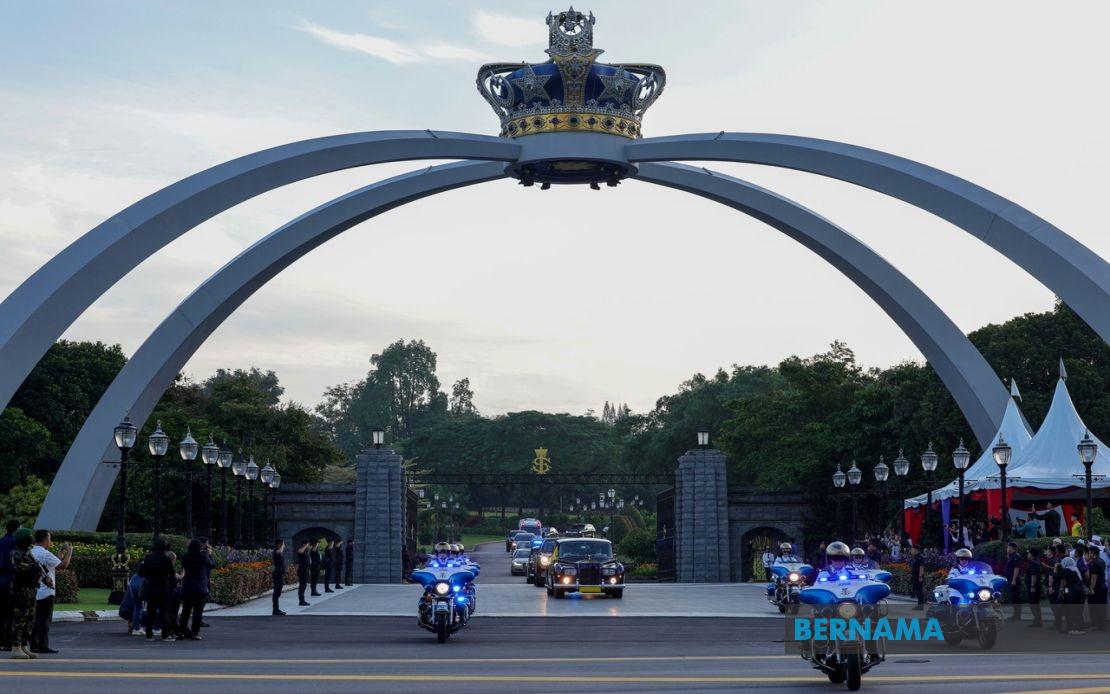
The ceremonial installation of Johor's next Menteri Besar will proceed at Istana Bukit Serene this afternoon, with the formal oath-taking scheduled for 3 pm. The Johor Palace issued invitations through WhatsApp confirming the event will take place at the state's principal royal residence, though details about the identity of the appointee have not been publicly released ahead of the ceremony. Media outlets have been granted access to cover proceedings from the Crown Arch entrance of the historic palace, signalling the significance the state administration attaches to the transition of leadership.
The swearing-in ceremony marks the culmination of a swift political process that began with Barisan Nasional's commanding performance at the ballot box. The governing coalition secured 48 of 56 state seats contested in yesterday's election, delivering one of the most decisive mandates in recent Johor political history. This overwhelming result provides the incoming administration with substantial room to govern without the typical fractious coalition management that has characterised Malaysian state politics in recent years.
Earlier today, Sultan Ibrahim Iskandar granted an audience to Barisan Nasional chairman Datuk Seri Ahmad Zahid Hamidi at Istana Pasir Pelangi. The meeting, which extended nearly an hour, saw the participation of Johor's BN chairman Datuk Onn Hafiz Ghazi, suggesting the gathering involved substantive discussions regarding the formation of the new state government. The Sultan's engagement in these consultations underscores the constitutional role Malaysia's hereditary rulers play in translating electoral mandates into executive appointments, a process that remains distinct from Westminster conventions.
Medialogistics around the ceremony have been carefully orchestrated, with journalists stationed at multiple locations since midday to capture the developing story. Clusters of media personnel have been monitoring activity both at the Menteri Besar's official residence in Saujana and at the palace gates, reflecting the competitive intensity of Malaysian political reporting. The controlled rollout of information—confirmed through official palace channels rather than premature political announcements—reflects efforts to maintain ceremonial dignity around the leadership transition.
The secrecy surrounding the appointee's name until the formal swearing-in represents standard practice when state-level executive positions are filled through established constitutional procedures. While Barisan Nasional's election victory provides clarity about which political faction will form government, the Sultan's prerogative in selecting the chief minister from among eligible assemblymen creates a final moment of formal uncertainty that serves ceremonial purposes. This constitutional framework, inherited from Malaysia's federal system, vests significant symbolic authority in the monarchy even when electoral outcomes appear decisive.
For Johor specifically, the transition follows a period of considerable political turbulence. The state has experienced leadership changes and coalition realignments that tested the stability of its administration. The emphatic BN victory yesterday provides an opportunity for sustained governance and policy continuity, presuming the incoming Menteri Besar can consolidate the coalition's legislative supermajority into effective executive authority. The scale of the mandate—securing four-fifths of available seats—substantially exceeds the bare majorities that have constrained governance in other Malaysian states.
The implications of this leadership installation extend beyond Johor's immediate borders. As Malaysia's second-largest economy by state gross domestic product and a crucial component of the nation's manufacturing and petrochemical sectors, Johor's political stability carries national significance. International investors and domestic businesses monitor transitions in major state administrations for signals about policy direction and regulatory consistency. The clear electoral mandate and ceremonial formality surrounding today's swearing-in are likely to be interpreted as endorsements of stable, predictable governance.
Regionally, Johor's political trajectory also influences broader Southeast Asian perspectives on Malaysian stability. The state's geographic proximity to Singapore and its role as a critical node in regional supply chains mean that prolonged political uncertainty would reverberate through the wider economy. The swift, constitutionally orderly transition happening today contrasts with more protracted leadership disputes that have occasionally paralysed other Malaysian states, potentially reinforcing international confidence in Malaysia's institutional resilience.
The formal ceremonial aspects of the swearing-in—the royal involvement, the specific timing, the controlled media access—reflect constitutional conventions that remain deeply embedded in Malaysian governance despite decades of democratic practice. These procedures serve important legitimising functions, connecting electoral outcomes to traditional sources of authority and ensuring that power transitions acquire both democratic and monarchical sanction. The ceremony this afternoon will instantiate these dual legitimacies through ritual performance.
Looking ahead, the incoming Menteri Besar will inherit not only a commanding legislative majority but also substantial challenges. Johor faces the typical pressures of Malaysian state governance: balancing development imperatives with environmental sustainability, managing federal-state coordination on shared policy domains, and delivering tangible improvements in public services that justified voters' electoral choice. The decisiveness of yesterday's result provides political capital for ambitious governance agendas, though translating electoral support into effective administration requires more than parliamentary numbers.

