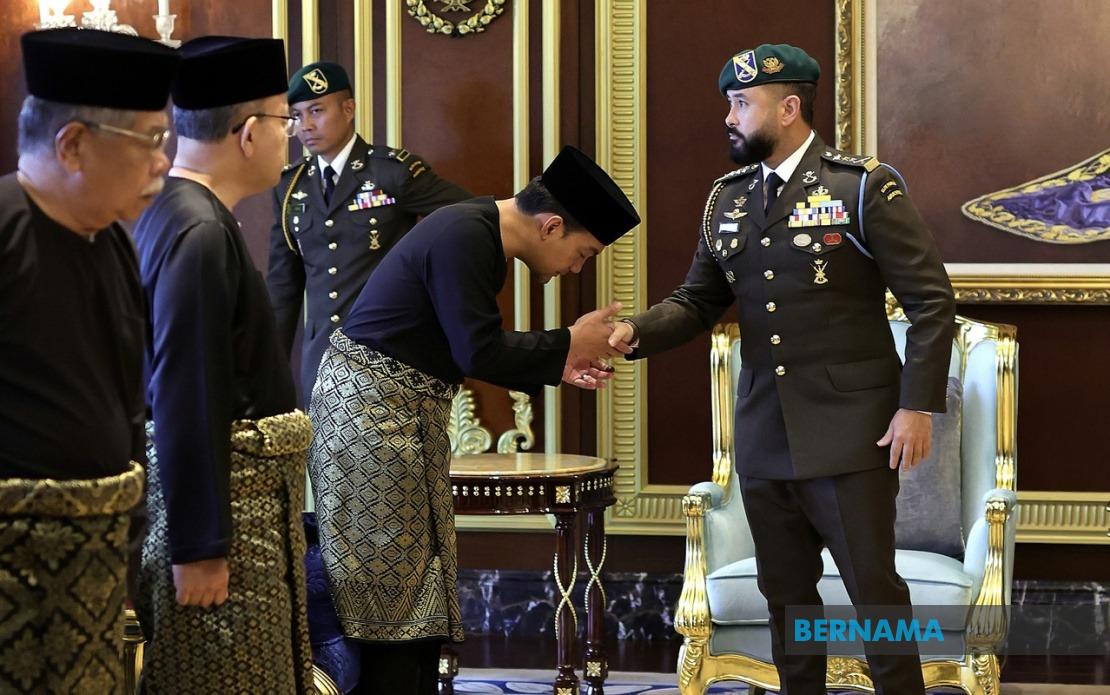
The newly configured Johor State Executive Council is set to be formally inaugurated at Istana Bukit Serene on July 17, marking an official transition to the next chapter of governance in Malaysia's southernmost peninsula state. The swearing-in ceremony will be presided over by the Regent of Johor, Tunku Mahkota Ismail, underscoring the constitutional significance of the occasion and the formal endorsement by the ruling institution of the state's fresh administrative leadership.
The ceremonial event comes as a natural progression following Datuk Onn Hafiz Ghazi's installation as Menteri Besar for his new term just days earlier on July 12. His appointment consolidated the mandate that emerged from the 16th Johor State Election, where the Barisan Nasional coalition secured a commanding 48 out of 56 state assembly seats. This substantial electoral victory provides the backbone of legitimacy for the incoming cabinet structure, granting the state government a clear parliamentary majority to advance its legislative and administrative agenda across the five-year term.
The palace has extended formal invitations to key institutional figures who will witness the proceedings, including Johor Council of Royal Court president Datuk Dr Abdul Rahim Ramli and state secretary Datuk Mohammed Ridha Abd Kadir. These attendees represent the intersection of royal patronage, traditional governance structures, and civil service continuity—a reflection of Malaysia's constitutional monarchy model where state executives operate within clearly defined hierarchical and ceremonial frameworks.
Media representatives have been granted access to document the ceremony, with the palace opening both main entrances from 9.30 am onwards. This accessibility reflects contemporary practices in Malaysian political institutions, where transparency in formal state functions is increasingly expected. The ceremony will likely be captured extensively by both local and national news outlets, given the significance of state-level administrative transitions in Malaysia's federal system.
Johor's electoral landscape underwent notable realignment during the recent poll. The Barisan Nasional's decisive performance—securing nearly 86 percent of available seats—represented a substantial popular endorsement and strengthens the coalition's position in the wider context of Malaysian politics. For Southeast Asian observers, Johor holds particular importance as the economic engine of southern Malaysia, with its industrial, agricultural, and tourism sectors exerting considerable influence on the broader regional economy.
The composition of the incoming Exco members will shape policy priorities ranging from infrastructure development to industrial investments and state revenue management. The incoming cabinet's configuration will likely reflect attempts to balance representation across Johor's major constituencies, maintain factional equilibrium within Barisan Nasional, and ensure administrative continuity with proven governance structures. Such calibrations are critical in Malaysian state politics, where cabinet appointments often signal broader strategic directions beyond mere titular assignment.
For businesses and investors operating within Johor, the formalization of the new executive council presents a definitive moment for understanding the state's administrative direction. With fresh mandates come renewed opportunities for infrastructure partnerships, industrial zone development, and cross-border initiatives with Singapore. The clarity provided by sworn-in leadership teams facilitates longer-term planning and investment commitments that underpin economic growth.
The role of the Regent in presiding over the ceremony carries symbolic weight beyond ceremonial formality. In Malaysia's constitutional system, the Regent acts as the state's custodian of institutional integrity and royal prerogatives. The Regent's presence validates the democratic process that produced the new government and reaffirms the continuity of state institutions across electoral cycles. This ceremonial anchor distinguishes Malaysia's political system from purely republican models, embedding governance within traditional and constitutional frameworks that command broad institutional respect.
Johor's political trajectory has witnessed considerable shifts across recent electoral cycles, making the consolidation of the Barisan Nasional coalition particularly significant. The state's diverse demographic composition—encompassing urban professionals, rural communities, and substantial Chinese and Indian populations—requires governing coalitions capable of managing competing interests while maintaining political stability. The incoming cabinet's ability to navigate these complexities will determine both state-level outcomes and Barisan Nasional's broader standing in future national political configurations.
The July 17 ceremony formally transitions Johor from an interim or extended previous administration into a constitutionally fresh period. While the core leadership remains continuous under Onn Hafiz Ghazi's stewardship, the renewal of the executive council's oath-taking marks a symbolic and administrative reset. This formal institutional moment, properly observed with appropriate ceremonial dignity, reinforces the rule of law and constitutional propriety that undergird Malaysian governance at the state level.

