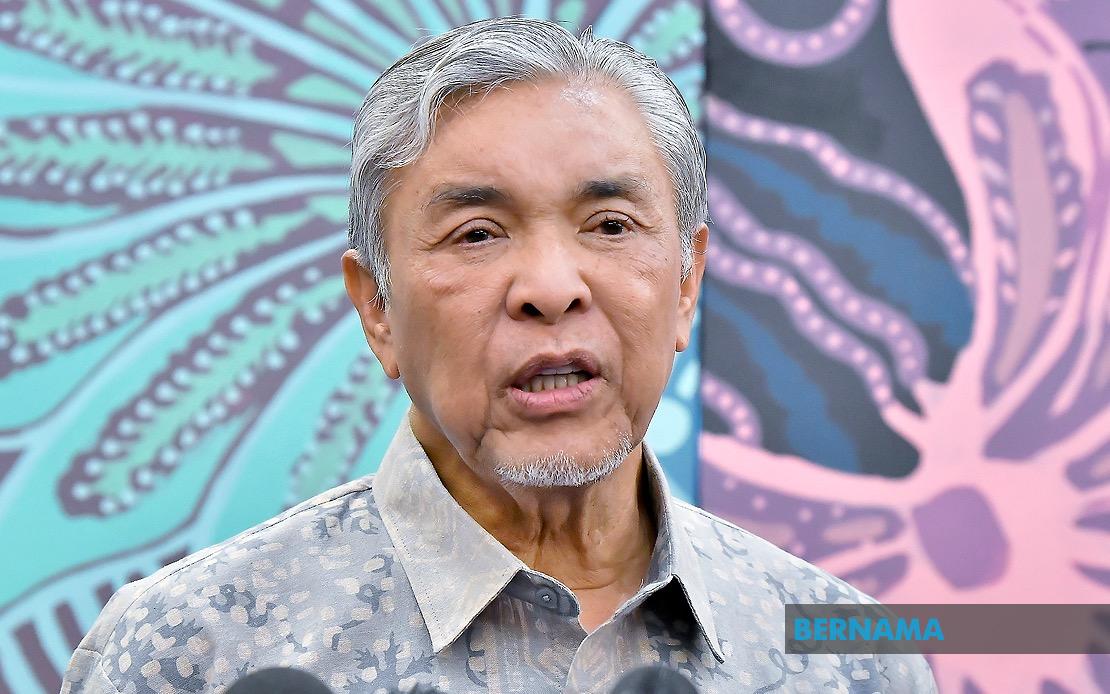
Deputy Prime Minister Datuk Seri Dr Ahmad Zahid Hamidi has moved to quash concerns about the South East Johor Development Authority's proposed expansion, emphasizing that the initiative centres on better coordinating development initiatives across the region rather than seizing land from residents and businesses in affected districts. Speaking at the KEJORA 2025 Excellent Service Awards ceremony in Kota Tinggi, Zahid underscored the distinction between expansion of KEJORA's operational mandate and the contentious issue of land ownership, a clarification he felt was vital given widespread public uncertainty about the agency's true intentions.
The expansion proposal builds on KEJORA's proven track record of successful project delivery across south-eastern Johor. The authority has achieved a 98.3 per cent success rate on its initiatives, establishing itself as a capable instrument for advancing regional development. This strong performance forms the backbone of the case for broadening KEJORA's remit to include additional districts, allowing the organization to apply its expertise and systems across a wider geographical footprint as economic activity and population growth accelerate throughout the southern peninsula.
Zahid, who holds the concurrent portfolio of Rural and Regional Development Minister, positioned the expansion as essential for supporting Johor's development aspirations in the south-eastern corridor. The region has experienced notable expansion driven by major industrial and tourism ventures, particularly around Pengerang, which has become a focal point for both state and federal development initiatives. By extending KEJORA's coordination role, the government aims to ensure that this growth occurs in a structured, integrated manner rather than through fragmented efforts by multiple agencies.
Crucially, the proposal has garnered substantial public endorsement according to a public feedback survey commissioned by KEJORA itself. The study found that 96 per cent of respondents supported the expansion initiative, suggesting that concerns about land acquisition may reflect isolated pockets of resistance rather than broad-based opposition. This data point has become central to the government's messaging about the expansion, presented as evidence that the initiative aligns with community preferences and local aspirations for improved development coordination.
However, the expansion remains contingent on formal approval from the highest authorities in the state. Zahid explicitly noted that implementation depends on securing the consent of His Majesty Sultan Ibrahim, the Yang di-Pertuan Agong, as well as the Regent of Johor, Tunku Mahkota Ismail. This requirement reflects the constitutional framework governing development authorities in Malaysia and ensures that state-level consent is obtained before any significant expansion of KEJORA's operational boundaries occurs.
The financial commitment to KEJORA's operations underscores the government's seriousness about the expansion. The Rural and Regional Development Ministry has allocated approximately RM138 million to KEJORA for development projects within the broader region. These funds will support a substantial pipeline of initiatives, with 107 programmes already implemented and approximately 350 smaller projects planned under the current allocation. This investment level demonstrates sustained government backing for KEJORA as a primary vehicle for implementing development policy in south-eastern Johor.
Particularly significant is the focus on Pengerang, which has emerged as a growth centre warranting special attention. Minister in the Prime Minister's Department (Law and Institutional Reform) Datuk Seri Azalina Othman Said, the Member of Parliament for Pengerang, has advocated for elevating the area to full district status. This proposal recognizes that Pengerang's rapid development—fuelled by major industrial complexes and expanding tourism infrastructure—has created administrative and service delivery challenges that exceed the capacity of its current local government structure.
Azalina's complementary proposal to construct a new hospital in Pengerang addresses pressing infrastructure gaps created by population growth. As the area attracts workers and investors while expanding its residential base, healthcare capacity has become increasingly strained. A dedicated hospital would not only serve immediate medical needs but also signal to businesses and potential residents that the state government is committed to providing world-class amenities necessary for sustained economic development and quality-of-life improvements.
The timing of the KEJORA expansion proposal reflects broader policy efforts to ensure that infrastructure and coordination mechanisms keep pace with rapid economic transformation in selected regions. South-eastern Johor's trajectory as an emerging industrial and tourism hub mirrors patterns seen across Malaysia's economic zones, where development frequently outstrips the administrative capacity of existing institutions. By proactively expanding KEJORA's mandate before bottlenecks emerge, the government seeks to avoid the coordination failures that have sometimes hampered development in other regions.
The expansion proposal also sits within a wider context of institutional strengthening in Malaysian regional development policy. Rather than creating entirely new agencies—an approach that often fragments authority and creates bureaucratic overlap—the government has opted to extend an existing, proven organization. This strategy leverages KEJORA's institutional knowledge, established working relationships with local stakeholders, and demonstrated competence in project execution. For Malaysian development practitioners and policy observers, the expansion signals confidence in organic institutional growth as an alternative to wholesale administrative restructuring.
For residents and businesses in affected districts, the clarification about development coordination rather than land acquisition carries practical significance. It suggests that KEJORA's expansion aims to enhance planning, infrastructure development, and inter-agency cooperation without displacing existing economic activities or transferring land titles to government control. This distinction addresses what appears to have been the primary source of public anxiety about the proposal and potentially removes a significant obstacle to implementation once royal consent is obtained.
Looking forward, the KEJORA expansion will likely serve as a test case for how Malaysian authorities can balance rapid regional economic development with institutional coordination and public confidence. The 96 per cent public support figure, if sustained as implementation proceeds, would suggest that transparent communication about government intentions can overcome initial skepticism. Conversely, if implementation encounters resistance or if perceptions shift during the approval and rollout phases, future regional development initiatives may face greater scrutiny regarding the potential for land acquisition and institutional overreach.
The convergence of KEJORA's expansion with proposals for Pengerang's elevation to district status and hospital construction suggests a coordinated strategy to position south-eastern Johor as a sustainably developed region capable of competing regionally and internationally. Whether these initiatives proceed together or separately will depend partly on parliamentary timelines and partly on the pace of securing royal approval. What appears clear, however, is that the Johor state government and federal Rural and Regional Development Ministry view this area as strategic and are willing to invest substantial political and financial capital in its transformation.

