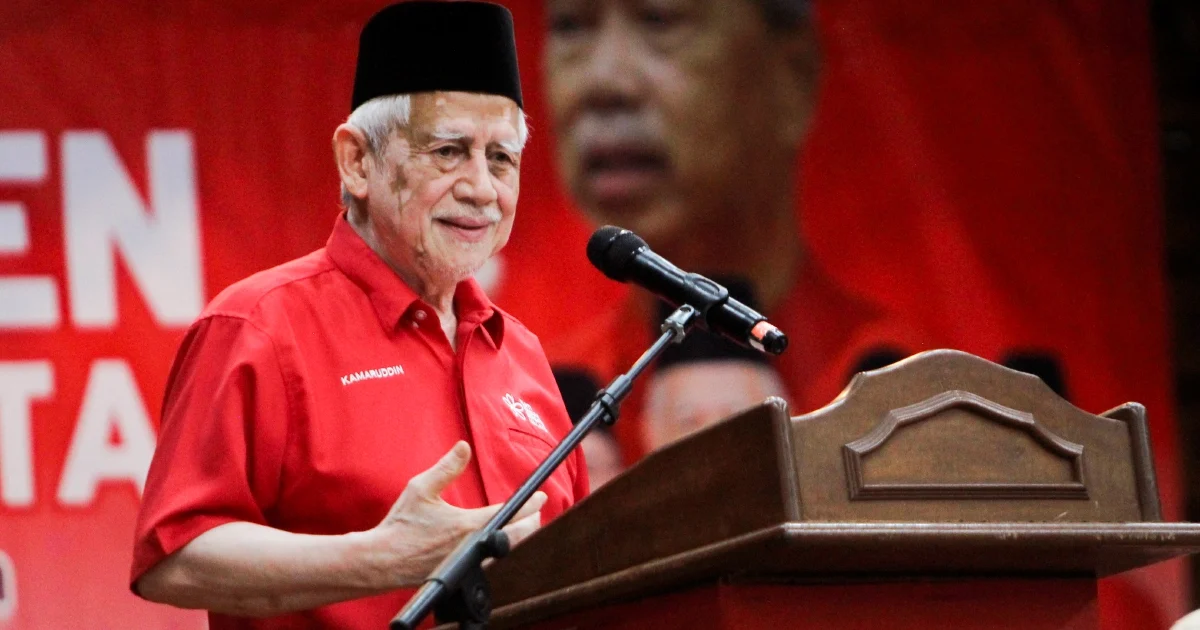
Kelantan Bersatu displayed remarkable composure following Perikatan Nasional's surprise decision to exclude Datuk Seri Mohamed Azmin Ali and Datuk Dr Mohd Radzi Md Jidin from the coalition's upper echelon, according to party officials in the state capital. The removal of these two prominent figures, announced during a late-night session, appeared to generate minimal disruption within Kelantan's branch of the Bersatu party, contrasting sharply with what observers had anticipated might be a destabilising move.
The development underscores the complex internal dynamics of Malaysia's political landscape, where coalitions regularly undergo restructuring at the federal level while state-level branches maintain their own operational independence. Perikatan Nasional, the Islamist-led coalition that has significantly shaped Malaysian politics in recent years, has proven willing to make decisive personnel changes despite potential fallout. The decision to sideline Azmin and Radzi signals that coalition leadership retains sufficient authority to enforce its decisions across member parties, even when affecting figures of considerable political stature.
Mohamed Azmin Ali, a seasoned politician with influence spanning multiple states and a track record spanning several party affiliations, had occupied a position within the coalition's framework. His removal carries implications beyond mere administrative reorganisation, as it reflects shifting power dynamics within what has been a fractious political alliance. Similarly, Mohd Radzi Md Jidin, who has held various state and federal positions, represented another anchor point that the coalition's leadership chose to reassess. The willingness to make such moves suggests confident leadership with a clear strategic vision, though it also raises questions about the stability of coalitions dependent on consensus among disparate party factions.
Kelantan's Bersatu contingent appeared to interpret the changes as routine political adjustments rather than existential threats to the coalition's cohesion. This measured response likely reflects several factors: the state's Bersatu structure may have anticipated such decisions, internal Kelantan dynamics might not be directly affected by federal leadership modifications, or the branch leadership may have assessed that accepting the reshuffle demonstrates loyalty to coalition directives. In Malaysian politics, swift acceptance of such decisions often carries strategic value, signalling party discipline and preventing any appearance of defiance that could invite further consequences.
The timing of the announcement—conducted during evening proceedings—might have been deliberately chosen to minimise immediate media scrutiny and allow party machinery time to align messaging before dawn commentary cycles. State branches receiving advance notice, as Kelantan Bersatu may well have, would naturally project steadiness. This pattern reflects established Malaysian political practice, where central party decisions are frequently pre-communicated to regional leadership to ensure coordinated responses and prevent public splits that weaken the broader coalition narrative.
For Kelantan specifically, which has emerged as a crucial state for Perikatan Nasional's electoral calculus and governance ambitions, the removal of two figures might even be welcomed if it clarifies decision-making structures or removes perceived obstacles to state-level cohesion. The state has experienced its share of internal political drama, and streamlining federal leadership could be viewed as creating space for state priorities to advance without competing power centres claiming attention and resources.
The implications of this reshuffle extend beyond the immediate parties involved. In Malaysian coalition politics, such moves typically signal that the dominant faction within Perikatan Nasional—likely the Pan-Malaysian Islamic Party and its associated networks—maintains sufficient control to enforce decisions without credible challenge from other components. This matters considerably for stability, as coalitions where one faction clearly dominates tend to experience fewer surprise breakdowns, even if internal tensions simmer beneath surface harmony.
For observers monitoring Perikatan Nasional's trajectory, the incident demonstrates the coalition's operational capacity for decisive action. Unlike some Malaysian political entities that drift through incremental changes, Perikatan Nasional moved directly to restructure without extended consultation or debate that might have provided opposition figures opportunity to mount resistance. Whether this reflects optimal governance or authoritarian tendencies within the coalition remains a matter of perspective and partisan interpretation.
Looking forward, how state branches including Kelantan Bersatu operationalise this change will merit attention. The absence of Azmin and Radzi from the leadership line-up may necessitate adjustments to committee assignments, policy portfolios, or diplomatic roles that these individuals previously occupied. Whether the coalition invests their political capital elsewhere or effectively sidelines them will provide clearer indication of whether this was temporary repositioning or permanent diminishment of their influence. For Kelantan, the next phase will likely involve careful navigation of state-level politics while demonstrating alignment with the reshaped federal coalition structure, a balancing act at which Malaysian politicians have become notably adept.

