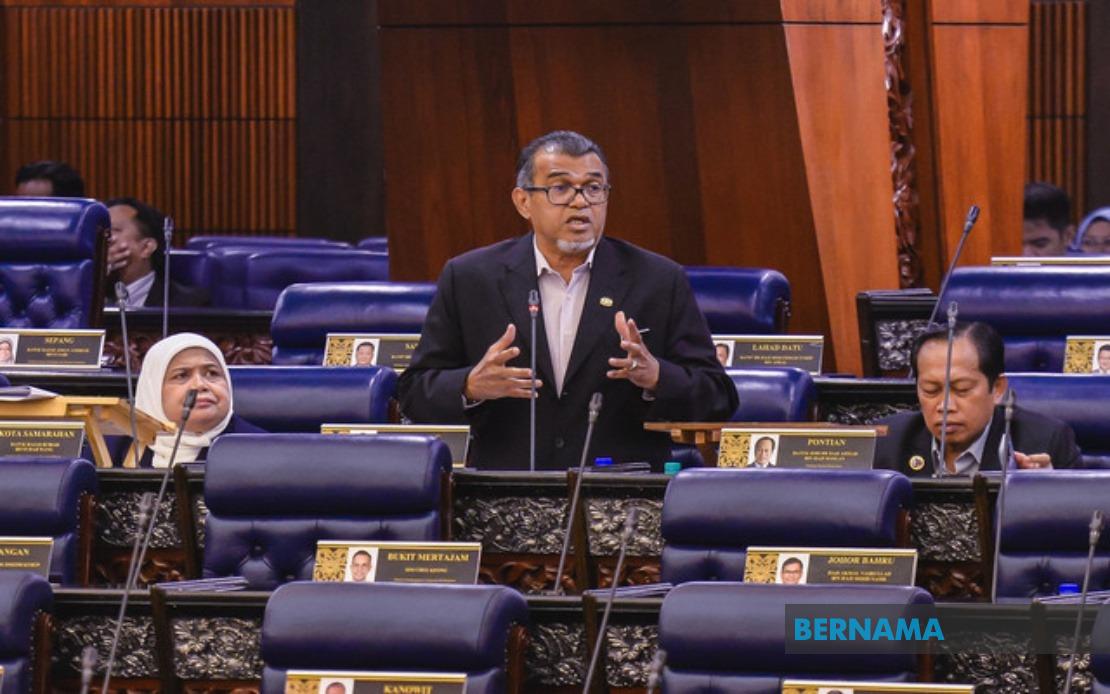
The long-awaited expansion of Kota Kinabalu International Airport remains in limbo despite financial backing already being secured, Deputy Transport Minister Datuk Hasbi Habibollah disclosed during parliamentary Question Time. The nearly RM500 million upgrade project cannot proceed until a series of land-related complications and site designation issues are clarified between federal authorities and the Sabah state government, he explained in response to queries about the airport's development timeline.
The infrastructure initiative forms part of a broader airport modernisation agenda announced in the 2026 Budget, when Prime Minister Datuk Seri Anwar Ibrahim unveiled a RM2.3 billion allocation targeting aviation facilities across Penang, Kota Kinabalu, Tawau and Miri. These four regional hubs are earmarked for comprehensive upgrades, with completion targeted by 2028. The ambitious schedule aims to enhance Malaysia's air connectivity and boost tourism competitiveness across the country's secondary cities and gateway regions.
Hasbi's disclosure reveals that while the financial architecture for the KKIA expansion is in place, the project faces practical hurdles that extend beyond budgetary concerns. The critical blockers involve securing appropriate land parcels for the expansion footprint, finalising the precise location of development works, and resolving matters pertaining to zones adjacent to the existing runway infrastructure. These elements require detailed coordination with Sabah's state authorities, whose approval remains outstanding. The deputy minister's cautious language suggests negotiations are ongoing rather than deadlocked, though no definitive timeline for resolution has been communicated.
In contrast to KKIA's stalled status, progress continues on another major Sabah airport project. The expansion of Tawau Airport is already underway, indicating that funding mechanisms and state-level cooperation can work smoothly when conditions align. This divergence underscores that the KKIA impediments are specific rather than systemic, rooted in the particular geography and land tenure complexities of Kota Kinabalu's location. Unlike Tawau, which may have had clearer land availability or fewer competing land-use claims, KKIA sits in a more developed urban environment where land acquisition and clearance typically presents greater challenges.
The expansion project's importance to Sabah's economic trajectory cannot be overstated. Kota Kinabalu International Airport serves as the commercial and tourism gateway to East Malaysia, handling passengers travelling to Sabah's beaches, diving destinations and business centres. Capacity constraints at the existing facility have long been identified as a potential bottleneck for visitor arrivals and regional development aspirations. An expanded airport would support increased flight frequency, larger aircraft operations, and improved passenger processing capacity—all crucial for attracting both leisure and corporate traffic.
Regional analysts view the KKIA expansion as part of Malaysia's strategy to develop secondary metropolitan areas and distribute economic growth beyond the Klang Valley concentration. Kota Kinabalu, alongside Johor Bahru and Penang, represents a crucial node in the government's devolved economic development framework. Investment in aviation infrastructure directly correlates with foreign direct investment attraction and tourism revenue generation, making delays in such projects significant from a macroeconomic perspective.
The land and site resolution process Hasbi referenced likely involves multiple layers of negotiation. These could include identifying state-owned land suitable for the expansion, navigating existing commercial or residential land claims, addressing environmental assessments, and potentially relocating any facilities currently occupying required space. Such processes typically require months of surveying, legal review, and interagency consultation. The fact that the deputy minister framed this as awaiting "the Sabah government's decision on the details" suggests the ball now rests squarely with state administrators rather than federal planners.
Meanwhile, Hasbi addressed a separate parliamentary question regarding Pangkor Airport's future, providing perspective on smaller regional facilities that have struggled to maintain viable commercial services. He noted that sea transport remains the dominant connectivity mode for Pangkor's tourism and resident populations, a reflection of the island's geography and accessibility patterns. Rather than pursuing airport restoration, authorities appear resigned to maritime transport's practical superiority for this particular destination.
Regarding Pangkor Airport specifically, Hasbi clarified that despite suspension of commercial services in May 2022, the facility has not been abandoned to operational obsolescence. Both Pangkor Airport and comparable island facilities at Redang and Tioman continue serving essential functions through private aircraft operations, military deployments, helicopter services, emergency medical evacuations and flying doctor missions. Malaysia Airports Holdings Bhd maintains staffing at these facilities to preserve infrastructure condition and readiness. This maintenance posture reflects a pragmatic long-term view rather than outright decommissioning.
The government remains theoretically receptive to commercial aviation revival at Pangkor should airline operators identify viable business cases, Hasbi indicated. However, such decisions ultimately depend on carriers' own financial assessments and route economics rather than governmental mandate. Previous services operated by Berjaya Air and SKS Airways proved unsustainable, suggesting structural challenges around passenger demand and operational costs that persist. The minister's emphasis on recognising air connectivity as a tourism sector driver reveals awareness of aviation's strategic importance, yet his candid acknowledgment of sea transport's superiority for Pangkor demonstrates mature acceptance of market realities.
The combined picture emerging from parliamentary exchanges highlights Malaysia's selective airport investment strategy: prioritising high-traffic regional gateways like Kota Kinabalu, Tawau and Penang for major expansion while accepting that smaller island airports will serve primarily non-commercial functions. This differentiation reflects constrained public resources and pragmatic asset allocation toward projects demonstrating the strongest economic multiplier effects. The KKIA delay, however, suggests that even flagship projects face real-world friction points in implementation, particularly when coordinating between federal and state authorities.

