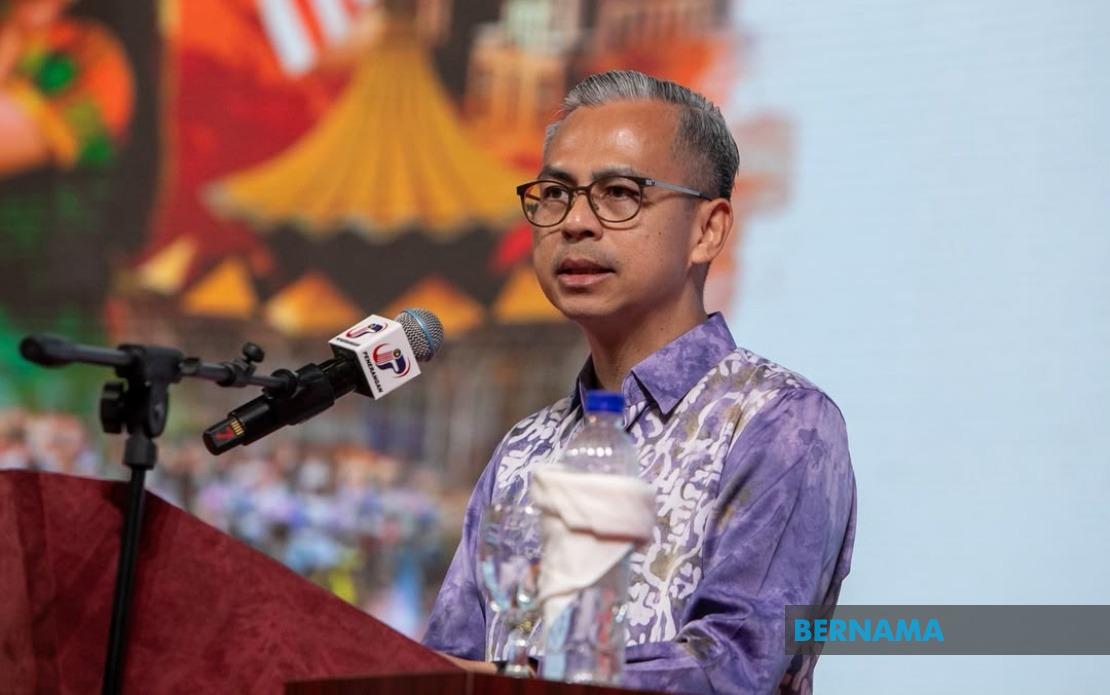
The Kembara Merdeka Jalur Gemilang (KMJG) convoy is set to retain its position as a cornerstone initiative for cultivating national pride and solidarity across Malaysia, according to Communications Minister Datuk Seri Fahmi Fadzil. Speaking at the official launch of the 2026 National Month and Fly the Jalur Gemilang campaign in Ipoh on July 19, Fahmi underscored the programme's continuing relevance in deepening Malaysians' connection to their nation's heritage and values during the annual commemoration period.
The convoy initiative will feature prominently in this year's National Month and Malaysia Day (HKHM) celebrations, which operate under the overarching theme of 'Malaysia MADANI: Kesejahteraan Dinikmati' (Malaysia MADANI: Shared Prosperity). This thematic framing reflects the government's broader development philosophy, intertwining national observance with economic and social wellbeing narratives that resonate across diverse communities. By aligning the KMJG convoy with this theme, organizers seek to demonstrate how patriotism and national consciousness extend beyond ceremonial dimensions into tangible improvements in citizens' lives.
Fahmi acknowledged that the forthcoming celebrations would operate within constrained fiscal parameters, requiring organisers to exercise measured spending while maintaining the quality and impact of commemorative activities. Despite budgetary limitations, he emphasized that sustaining momentum around patriotism and strengthening citizens' appreciation of national independence would remain non-negotiable priorities. This balancing act reflects broader government concerns about fiscal prudence without compromising the symbolic and unifying functions that national celebrations serve.
Central to this year's approach is the intensification of the One House, One Jalur Gemilang campaign, which encourages households nationwide to display the national flag as a visible manifestation of patriotic sentiment. The initiative transcends mere symbol-waving; it functions as a decentralized, community-driven expression of national identity that transforms private domestic spaces into public expressions of collective belonging. By dispersing flag displays across residential neighbourhoods rather than concentrating them in government facilities or commercial centres, the campaign leverages everyday spaces to normalize and reinforce patriotic consciousness among ordinary Malaysians.
The flag-flying initiative operates on multiple symbolic registers simultaneously. At the most basic level, it serves as a straightforward emblem of sovereignty and territorial identity. More subtly, it operates as a unifying mechanism in a diverse, multi-ethnic society where consensus-building around shared national narratives remains perpetually contested. The visibility of flags across neighbourhoods representing different ethnic and religious communities sends a message of inclusive nationalism, suggesting that patriotism transcends communal divisions and constitutes a shared civic responsibility that unites all Malaysians irrespective of background.
The campaign launch took place at the Sultan Azlan Shah Ministry of Health Training Institute (ILKKM SAS) in Tanjung Rambutan, with Prime Minister Datuk Seri Anwar Ibrahim serving as the official dignitary overseeing proceedings. The presence of such senior leadership reflects the government's commitment to positioning national unity and patriotic consciousness as top-tier policy concerns rather than peripheral cultural activities. National Unity Minister Datuk Aaron Ago Dagang and Perak Menteri Besar Datuk Seri Saarani Mohamad's attendance further underscored the multi-level governmental investment in these initiatives.
For Malaysian readers and Southeast Asian observers, the KMJG convoy's sustained prominence within official celebrations carries particular significance. Malaysia's trajectory as a multicultural nation-state has consistently required deliberate institutional efforts to construct and maintain national unity across ethnic, religious, and linguistic lines. The convoy's emphasis on patriotism and shared national love addresses fundamental nation-building challenges that remain central to Malaysian political discourse, particularly amid periodic communal tensions and competing visions of national identity.
The thematic connection between 2026 celebrations and the Malaysia MADANI development framework suggests that the government views patriotic consciousness and economic prosperity as mutually reinforcing rather than distinct spheres. This integration reflects contemporary governance trends wherein national identity narratives increasingly intertwine with welfare delivery and socioeconomic advancement. Citizens are implicitly positioned as stakeholders in a collective project of national development where patriotic commitment and material wellbeing constitute complementary objectives rather than competing claims on limited resources.
From a regional perspective, Malaysia's emphasis on maintaining cohesive national celebrations amid budget constraints provides comparative lessons for other Southeast Asian nations navigating similar challenges. The deliberate scaling of ceremonial apparatus while preserving symbolic potency demonstrates how governments can sustain nationalist messaging without proportional expenditure increases. This approach holds particular relevance for developing economies throughout the region facing competing budgetary demands across infrastructure, healthcare, and education sectors.
The Jalur Gemilang flag campaign represents a sophisticated understanding of how patriotic sentiment functions in contemporary Malaysian society. Rather than relying exclusively on government-organised events or top-down messaging, the One House, One Jalur Gemilang initiative harnesses dispersed household participation to generate organic, visible demonstrations of national consciousness. This approach recognizes that patriotism, when constructed through genuine community participation rather than imposed uniformity, generates more durable and authentic commitment to national cohesion.
Looking forward, the KMJG convoy's continuation signals the government's determination to sustain institutionalised platforms for national identity construction despite fiscal pressures. As Malaysia approaches 2026 celebrations, these initiatives assume heightened importance in reinforcing shared national purposes amid ongoing debates about plural identities, religious expression, and competing visions of Malaysian-ness. The convoy thus functions not merely as celebratory pageantry but as a deliberate instrument of nation-building that affirms official commitment to constructing inclusive national narratives capable of encompassing Malaysia's extraordinary diversity.

