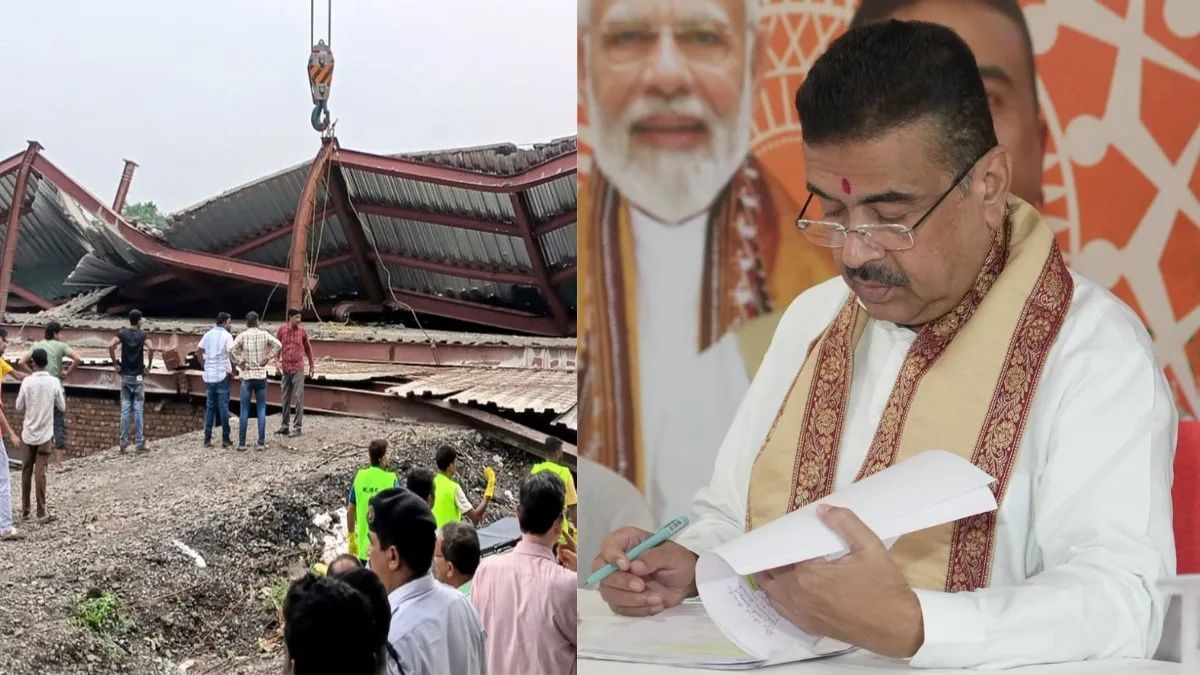
The rescue operation following the catastrophic collapse of a warehouse in Kolkata's Taratala locality has entered its second day with a mounting death toll now confirmed at 11 fatalities. Fresh remains recovered on Thursday afternoon at approximately 1:15 pm brought another victim to SSKM Hospital's Trauma Care Centre, though officials have yet to identify the deceased. The incident has prompted unprecedented coordination between federal and state authorities, with personnel from the Indian Army, the National Disaster Response Force (NDRF), and other emergency services maintaining a continuous presence at the debris site as fears persist that additional workers remain trapped beneath the collapsed structure.
West Bengal Chief Minister Suvendu Adhikari used his address to the state assembly to launch a forceful indictment of the administrative failures that preceded the disaster, directing particular criticism toward the Kolkata Municipal Corporation (KMC) during its previous administration under the Trinamool Congress (TMC). Adhikari presented documentary evidence suggesting that the warehouse structure received official approval despite substantial design deficiencies that should have prevented its construction. By producing papers bearing the signatures of former Kolkata Mayor Firhad Hakim, the Chief Minister sought to establish that regulatory mechanisms designed to protect public safety had been systematically compromised.
The examination of approval processes revealed what the Chief Minister characterised as pervasive irregularities throughout the permitting system. Rather than treating the collapse as an isolated structural failure, Adhikari positioned it as symptomatic of broader institutional corruption within the city's building control apparatus. He alleged that the practice of collecting unauthorised payments, commonly referred to as "cut money," had become so entrenched within the KMC that the phenomenon had transformed Kolkata itself into what he termed a "city of death." This rhetoric reflected deep frustration with inherited governance systems and signalled that the current administration viewed the disaster as an opportunity for fundamental reform.
The investigation has already yielded five arrests, demonstrating swift enforcement action in the immediate aftermath. Those detained include the on-site supervisor from the construction company, the vendor responsible for fabricating the iron structural components, the individual who held the lease to the land, the labour contractor serving as a Trimex supplier, and a broker implicated in facilitating the KMC building plan approval. Despite these detentions, the primary accused party identified as Azgar remains at large, with authorities continuing search operations. The breadth of the arrested group—spanning construction management, materials supply, property leasing, labour provision, and administrative facilitation—underscores how the structural failure implicated multiple points within the approval and execution chain.
Adhikari conveyed uncompromising determination to prevent similar occurrences, vowing that investigative processes would proceed without tolerance for negligence or obstruction. He acknowledged the exemplary performance of rescue personnel, particularly the army and NDRF, whose professional response has been instrumental in recovery operations. This public recognition served both to reassure citizens that emergency response capabilities remained robust and to distinguish the professional competence of rescue services from the administrative failures that permitted the dangerous structure to exist.
The government's response extends well beyond immediate criminal proceedings, encompassing a region-wide suspension of construction activities. For a four-week period, all building work except projects classified as essential services will cease across the Kolkata Municipal area and surrounding jurisdictions including Rajarhat-New Town, Maheshtala, Budge Budge, Pujali, Bishnupur, Sonarpur, and Baruipur. This moratorium represents a dramatic assertion of state authority and reflects acknowledgment that isolated enforcement actions cannot address systemic vulnerabilities in building oversight.
During the construction suspension, a comprehensive audit of all previously approved building plans within the affected territories will be undertaken. A high-level committee chaired by Additional Chief Secretary Rajesh Pandey has been constituted to oversee this examination, ensuring that the process involves senior government figures and carries institutional weight. The committee's composition reveals the multi-disciplinary approach deemed necessary for credible assessment, incorporating IIT Kharagpur's academic expertise, the Rail India Technical and Economic Service (RITES), Indian Railway Construction Limited (IRCON), the state Fire Services Department, the Public Works Department, and the Kolkata Municipal Corporation itself.
This reconstituted oversight body brings together engineering knowledge from institutions accustomed to managing large-scale infrastructure projects with practical experience from agencies responsible for public safety and construction regulation. The inclusion of technical institutes alongside operational departments suggests recognition that Kolkata's municipal building approval systems require not merely stricter enforcement but genuine technical upgrading and professional modernisation. The involvement of railway-sector engineering organisations particularly signals an intent to apply standards and methodologies proven effective in other critical infrastructure domains.
Adhikari articulated a principled stance regarding accountability and compensation, declaring that government would prioritise public safety above all competing considerations. Officials determined to have borne responsibility will face not only criminal prosecution and imprisonment but potentially confiscation of personal assets, with proceeds directed toward victim compensation. This approach extends consequences beyond conventional judicial penalties, converting individual property into compensation resources for affected families. Such measures acknowledge that traditional criminal sentences may prove inadequate recompense for lives lost and devastation inflicted, attempting instead to mobilise private wealth toward mitigation of harm.
The disaster reflects challenges familiar across rapidly urbanising South Asian cities, where building sector expansion frequently outpaces regulatory infrastructure capacity. Kolkata, like numerous regional municipalities, has grappled with approval systems struggling to balance rapid development pressures against safety imperatives. The Taratala incident exposes how institutional vulnerabilities, combined with opportunities for personal enrichment through approval manipulation, can precipitate catastrophe. For other metropolitan areas across Malaysia, India, and the broader region, the episode underscores necessity for systematic review of building oversight mechanisms and the risks inherent in allowing approval processes to become vehicles for unauthorised fee collection.
The comprehensive audit initiative and construction moratorium represent investments in short-term economic disruption aimed at preventing future disasters. Whether such measures achieve lasting institutional transformation or merely provide temporary reassurance depends substantially on whether the underlying incentive structures permitting approval irregularities become fundamentally reformed or merely temporarily constrained. The case will be closely observed across South Asia as a test of whether political commitment to regulatory modernisation can be sustained once immediate crisis attention diminishes.

