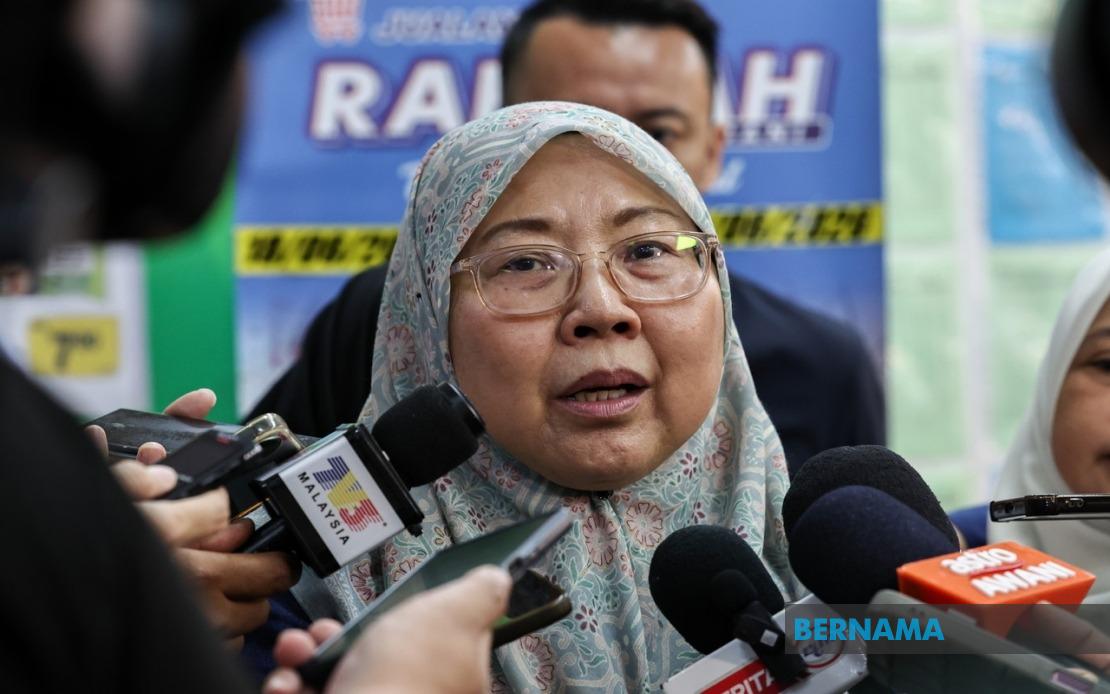
With polling day for the Johor state election set for July 11, the Ministry of Domestic Trade and Cost of Living (KPDN) has moved to reassure the public that critical supplies remain secure despite external economic headwinds. Deputy Minister Datuk Dr Fuziah Salleh underscored the ministry's confidence during an inspection of the Rahmah MADANI Sales Programme (PJRM) in Johor Bahru on June 19, emphasizing that both Johor and Negeri Sembilan have adequate stockpiles of essential commodities to weather the election period and the anticipated surge in demand from election personnel and visiting officials.
The international shipping environment has grown considerably more challenging in recent months, with logistical expenses rising sharply due to ongoing conflicts in the West Asia region. These increased costs threaten to ripple through regional supply chains and potentially inflate prices for imported goods. Yet the KPDN has not merely waited passively for disruptions to occur. Instead, the ministry has implemented a series of forward-looking interventions designed to maintain supply chain resilience and prevent the shortages that typically accompany major electoral events.
A centrepiece of the ministry's approach is an innovative restructuring of how subsidised cooking oil reaches consumers. The new system bypasses traditional wholesale intermediaries, instead creating a direct pipeline from repackers straight to points of sale. This streamlined arrangement reduces handling steps, cuts transaction costs, and accelerates product movement from factory to shelf. In Johor specifically, the state's monthly allocation of over 3,000 metric tonnes of subsidised cooking oil is parcelled out among 18 licensed repackers, who then distribute supplies to 95 authorised retail points including major chains such as Econsave supermarkets.
The deputy minister's inspection of an Econsave outlet in Taman Daya provided concrete evidence of the system's effectiveness. Stock levels recorded approximately 100 cartons of subsidised cooking oil available each day, a quantity deemed sufficient to satisfy local demand without running dry. This granular operational monitoring reflects the ministry's determination to prevent the empty-shelf scenarios that have occasionally damaged public confidence during previous election campaigns. By maintaining close oversight of inventory levels across the distribution network, the ministry can rapidly identify bottlenecks and redirect supplies where needed.
Beyond supply chain mechanics, the KPDN has also focused attention on demand-side controls to ensure subsidised goods are genuinely reserved for eligible Malaysian citizens. At checkout counters across the retail network, staff now require customers to scan the Rahmah programme app or present their MyKad identification card before purchasing subsidised items. These verification measures aim to plug leakage into the grey market, where unscrupulous traders might otherwise resell subsidised goods at inflated prices to those willing to circumvent official channels. Such controls represent an attempt to balance social objectives—providing affordable essentials to Malaysian households—with fiscal discipline and targeted benefit delivery.
The Rahmah MADANI Sales Programme itself has become a visible pillar of the government's cost-of-living support architecture. Between January 1 and June 13, 2026, the programme held 13,692 promotional events nationwide, a figure that underscores its scale and integration into retail operations. Johor alone hosted 920 such events distributed across all 56 state constituencies, a logistical feat that demonstrates thorough geographic coverage. These events attracted 2.3 million visitors to Johor alone and generated more than 1.46 million transactions, suggesting broad public participation and reliance on the initiative.
For Malaysian consumers, particularly those in lower-income brackets, such programmes deliver tangible relief from price pressures in essential categories. Cooking oil, in particular, features prominently in household budgets across the country. By subsidising bulk consumption and ensuring stable supply, the government signals commitment to protecting household purchasing power during a period of elevated global commodity costs. The direct relevance to Johor and Negeri Sembilan—both populated by voters heading to the polls—adds a political dimension that observers will not overlook. State elections invariably attract heightened sensitivity to supply and pricing of daily-use items.
The electoral timeline itself creates operational urgency. Candidate nominations occur on June 27, early voting takes place on July 7, and the main polling day falls on July 11. This compressed schedule means the period for ensuring stable supplies is narrow, making the ministry's advance planning essential. Election officials, poll monitors, and visiting supporters from across Malaysia will converge on the state, temporarily inflating demand for accommodation, food, fuel, and other essentials. The KPDN's forward visibility and pre-positioning of stocks reflects hard-earned lessons from past electoral cycles.
Global economic conditions, however, remain uncertain. Shipping costs linked to West Asia geopolitical tensions could spike suddenly, disrupting import timelines or forcing repricing of foreign-sourced inputs. Domestic production bottlenecks or unexpected weather events could also strain local supply. The ministry's repeated public assurances, while intended to build confidence, also signal awareness that risks exist. By projecting calm and preparedness, policymakers attempt to forestall panic buying that could itself trigger shortages.
For Southeast Asian readers observing Malaysia's approach, the case demonstrates how election management increasingly incorporates sophisticated supply chain coordination. Other regional democracies facing similar inflation pressures and election cycles may study the KPDN's direct-distribution model and app-based verification systems as potential blueprints for their own cost-of-living interventions. The effectiveness of the Rahmah programme in reaching millions of transactions suggests that digital and retail integration can scale public support programmes rapidly and with reasonable safeguards against misuse.
Looking ahead, the ministry's confidence will be tested by real-world events between now and July 11. Any disruptions—whether from international logistics, local supply issues, or demand spikes—could undermine the narrative of preparedness. Conversely, if supplies remain stable and prices hold firm throughout the election period, the KPDN will have validated its planning methodology and potentially set a precedent for managing future electoral cycles in an era of volatile global costs.