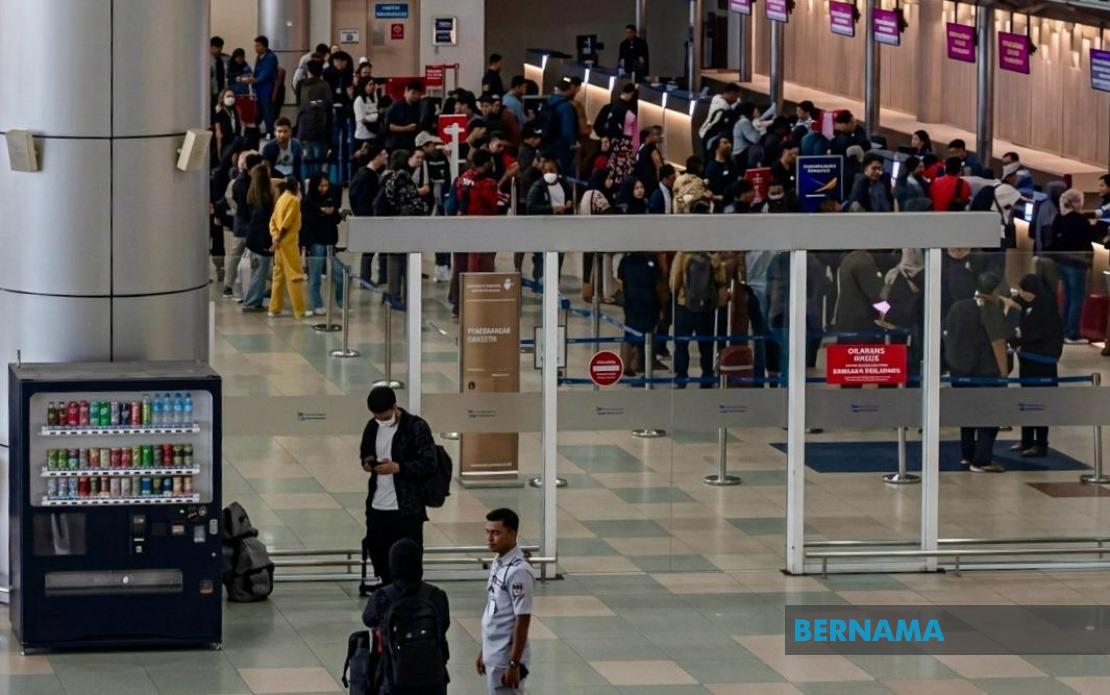
Labuan Airport's runway operations ground to a halt on Wednesday afternoon following the detection of explosive devices in proximity to the airport, triggering a comprehensive closure that has thrown flight schedules into disarray across the region. The Royal Malaysian Air Force issued a Notice to Airmen at 5pm, implementing an indefinite suspension of runway usage pending completion of urgent safety protocols and formal clearance from aviation authorities.
The discovery of the bombs, positioned approximately 150 metres from the active runway, prompted immediate coordination between military and civilian airport management. Joint inspection teams from the RMAF and Labuan Airport management mobilised to assess the extent of the threat and determine whether the runway could be safely returned to service. Officials have indicated that normal operations will resume only after the airfield has received formal safety certification following the completion of these investigations.
The disruption created immediate logistical challenges for regional air transport. Flight operators confirmed that services scheduled for departure between 4.05pm and 7.25pm that afternoon experienced cancellations or diversions, affecting routes to Kuala Lumpur, Kota Kinabalu, and Miri. Labuan, strategically positioned in the southern waters off Sabah's coast, serves as a crucial aviation hub connecting Malaysia's northern regions with interior communities. The suspension therefore carries outsized impact on regional connectivity, particularly for passengers relying on onward connections through these three major hubs.
The closure of the Labuan-Miri service proved particularly significant given the limited alternative transport options between these locations. Miri, situated in Sarawak's northern coast, depends substantially on air links for swift passenger and cargo movement. Similarly, the interruption of Labuan-Kota Kinabalu flights disrupted access to Sabah's primary commercial and administrative centre. Passengers seeking to reach Kuala Lumpur faced cascading delays as flights were systematically rerouted or postponed pending clearance.
Airport authorities addressed public concerns by recommending that all affected travellers contact their respective airlines directly for current information on flight status and revised travel arrangements. This advisory underscores the unpredictability surrounding reopening timelines, with officials deliberately avoiding specific estimates to avoid creating false expectations. The lack of a definite restart date reflects the gravity with which security personnel are approaching the investigation.
For Malaysia's aviation sector, such incidents underscore the complex security architecture required to maintain safe operations at regional airports. Labuan Airport, despite its critical role in inter-island connectivity, operates with staffing and equipment resources substantially more constrained than major international facilities. The requirement to conduct comprehensive security sweeps following any threat discovery therefore creates proportionally greater operational friction than at larger airports. This reality has long prompted discussion among aviation policy specialists regarding optimal resource allocation across Malaysia's dispersed airport network.
The incident also highlights vulnerabilities in Malaysia's maritime and aviation security perimeter. Labuan's position as an offshore financial centre and strategic trading location means it attracts commercial and military attention, making it a theoretically attractive target for various actors. The proximity of the discovered explosives to active runways suggested they were deliberately positioned rather than coincidentally located, intensifying security concerns across the broader region.
Regional carriers including Malaysia Airlines and Air Asia operate regular services through Labuan, meaning the closure rippled through their operational schedules across multiple routes. Passengers booked on connecting flights experienced compound delays, creating accommodation and catering costs beyond typical travel expenses. Business travellers, particularly those engaged in Labuan's oil and gas sector operations, faced disruptions to critical meetings and project deadlines.
The incident occurred against a backdrop of intermittent security incidents across Malaysia's transportation infrastructure, though aviation facilities have historically maintained robust protective measures. The bomb discovery represented one of the more serious direct threats to an active runway in recent memory, justifying the precautionary approach adopted by authorities. Comparable incidents at other Southeast Asian airports have demonstrated that thoroughness during initial response phases minimises risks of subsequent security failures.
Looking forward, the closure underscores the importance of maintaining surge capacity in Malaysia's regional airport security protocols. Labuan Airport's ability to rapidly restore operations will depend on the complexity of the situation officials encountered during initial inspection phases. Whether the discovered devices remain active, whether additional threats require sweeping of broader perimeter areas, and whether sabotage investigations divert resources all factor into estimated reopening timelines. Passengers travelling through the region in coming days should anticipate potential knock-on delays even after the runway formally reopens, as airlines work through accumulated booking backlogs and crew scheduling disruptions.

