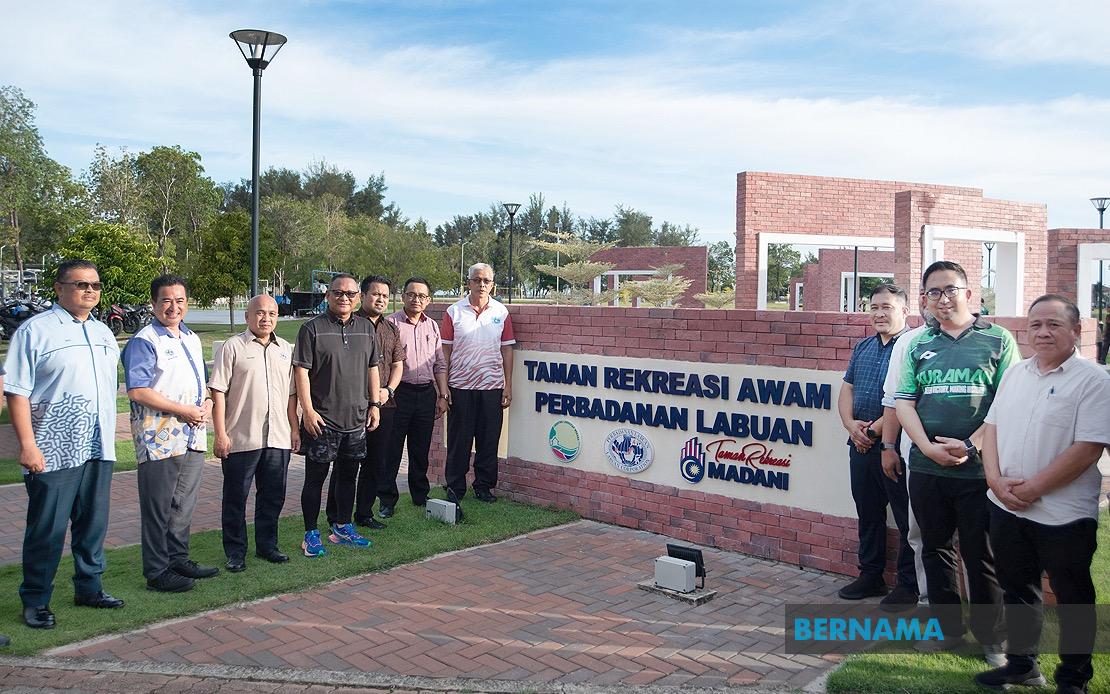
Labuan has taken a significant step toward enhancing public health infrastructure with the opening of the Labuan Public Recreation Park at Tanjung Purun, a centrally located facility redesigned to serve as a hub for active living and community engagement. The park's inauguration marks the completion of a RM495,382 upgrade executed under the Madani Recreation Park initiative, a government-backed programme aimed at improving recreational spaces across Malaysia's urban centres.
The transformation represents more than just physical infrastructure investment. According to Rithuan Ismail, chief executive officer of Labuan Corporation, the facility embodies a strategic vision to create inclusive public spaces where residents of all ages can participate in fitness activities, find respite, and strengthen social bonds within their neighbourhoods. This philosophy aligns with Malaysia's broader shift towards prioritising preventive health measures and community-centred urban planning, particularly as lifestyle diseases continue to rise across Southeast Asia.
The National Landscape Department, operating under the Ministry of Housing and Local Government (KPKT), funded the project in 2024 as part of its portfolio of urban renewal initiatives. The selection of the Tanjung Purun site was methodical, based on several practical considerations: its convenient position within Labuan's downtown district, existing accessibility infrastructure, appropriately sized land parcel, and crucially, the absence of complex land ownership disputes that often complicate municipal projects throughout Malaysia.
Prior to renovation, the location functioned as the LDA Field, a largely dormant public space that suffered from multiple deficiencies. Inadequate lighting discouraged evening use, a limited range of recreational amenities restricted activity options, and aging casuarina trees created maintenance and safety concerns. These cumulative issues rendered what should have been a prime community asset into an underperforming investment, a pattern recognised across many Malaysian municipalities where prime downtown real estate sits vacant due to poor upkeep or unclear purpose.
The reimagined park now features a comprehensive suite of recreational infrastructure designed to accommodate diverse user preferences and fitness levels. An 800-metre jogging track provides cardiovascular exercise opportunities suitable for morning and evening routines, while concrete seating areas offer spaces for socialising, supervising children, or simply enjoying the outdoor environment. Perhaps most notably, the facility includes outdoor fitness gym equipment, a cost-effective approach that makes structured exercise accessible without requiring membership fees or climate-controlled facilities—a significant consideration for lower-income residents across Labuan.
Particularly noteworthy is the park's emergence as a popular destination during evening hours, a pattern that reflects both improved lighting and the community's pent-up demand for safe, accessible recreation spaces. This temporal shift holds implications for urban safety and social cohesion, as activated public spaces during non-working hours can reduce antisocial behaviour whilst fostering neighbourhood connectivity across generational lines.
Labuan Corporation's commitment to the facility extends beyond the opening phase. Scheduled additions include three open courts designated for pickleball and sepak takraw, traditional and contemporary racquet sports that appeal to different demographic segments. These courts are projected to be operational by the end of 2024, further diversifying the park's appeal and positioning it as a competitive venue for organised recreational activities, potentially attracting tournaments and community events.
The pickleball addition is particularly significant given the sport's exponential growth across Southeast Asia, where it has transitioned from niche status to mainstream participation among diverse age groups. By incorporating such facilities, Labuan positions itself ahead of many comparable Malaysian municipalities in recognising emerging recreational trends and accommodating them within public infrastructure. Sepak takraw, conversely, represents continuity with cultural sporting traditions, bridging heritage activities with contemporary community engagement.
Corporate stewardship of public amenities requires sustained commitment beyond ribbon-cutting ceremonies. Rithuan's explicit call for public participation in facility maintenance reflects an understanding that infrastructure longevity depends on collective responsibility. This messaging proves particularly important in Malaysian context, where maintenance cultures for public facilities vary considerably across states and municipalities. By framing preservation as a community obligation rather than purely a government function, Labuan Corporation acknowledges that optimal facility utilisation requires shared investment in upkeep.
The park's development carries broader implications for Labuan's positioning within Malaysia's federal territory system. Labuan has historically sought to diversify its economic base beyond oil and gas sectors, and investments in quality-of-life infrastructure signal commitment to attracting and retaining talent, particularly young professionals and families. Public recreation facilities rank among quality-of-life factors that influence relocation decisions, making this park component of a larger competitive strategy within Malaysia's urban hierarchy.
For residents across Labuan and visitors from neighbouring jurisdictions, the upgraded park represents tangible evidence of municipal investment in accessible wellness infrastructure. The facility's inclusive design—accommodating joggers, strength trainers, families with children, and elderly residents simultaneously—demonstrates sophisticated thinking about multipurpose public space development. This contrasts with earlier generations of Malaysian parks, which often served singular functions or served particular demographic segments.
As Labuan Corporation proceeds with phased enhancements, attention to maintenance standards, programming, and community feedback will determine whether this investment achieves its stated objectives of fostering healthier, more connected communities. The park's success may also influence planning approaches elsewhere in Malaysia, particularly within smaller federal territories and municipal jurisdictions seeking models for transforming underutilised downtown areas into vibrant community assets.

